

Many cities around the world are dealing with a growing problem: urban heat islands (UHIs).
UHIs develop when buildings, roads, and other infrastructure made of materials such as steel, stone, and concrete absorb heat from the sun during the day and then release it back into the atmosphere in the afternoon and evening.
While this effect can be beneficial in colder regions by providing some thermal comfort, in already hot climates, it can significantly increase temperatures and pose serious health risks.
The urban heat island (UHI) effect refers to the phenomenon where temperatures in densely built-up city centres are higher than in surrounding rural areas.
Surfaces such as asphalt roads, pavements, and glass-covered buildings store more heat, while human activities—such as air conditioning, transport, and construction—generate additional waste heat.
Unequal heat: How cities experience UHI differently
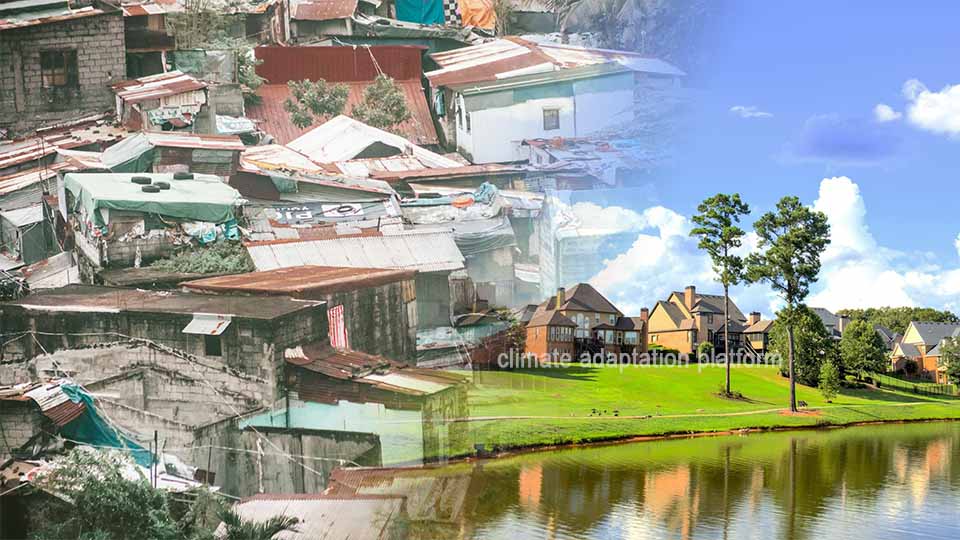
An article by the World Resources Institute (WRI) highlights that temperatures within a city can vary by as much as 10°C. Wealthier neighbourhoods often benefit from better urban planning, greener spaces, and heat-resistant building materials, which help mitigate extreme heat.
In contrast, lower-income communities and informal settlements frequently lack green spaces. Homes in these areas are often built using cheaper, heat-absorbing materials such as metal, which intensifies indoor temperatures and increases health risks.
The disparities are evident in cities such as Cape Town, Hermosillo, and Atlanta:
- Cape Town, South Africa: Projections suggest that by 2050, the city could experience more than 20 extremely hot days above 35°C and up to 10 heatwaves annually. Historical housing policies placed low-income communities in densely populated areas with limited vegetation, increasing their exposure to heat.
- Hermosillo, Mexico: Rapid urbanisation has replaced vegetation with roads and buildings. While shaded areas offer some relief, neighbourhoods without trees report higher instances of heat-related illnesses such as dehydration and dizziness.
- Atlanta, USA: Historical redlining practices have left lasting impacts. These policies led to underinvestment in certain neighbourhoods, resulting in fewer green spaces and greater vulnerability to extreme heat today.
Cooling solutions – How Cities are responding
Cities are now turning to data-driven solutions to address the UHI effect. WRI’s Cool Cities Lab platform enables urban planners to map heat hotspots and model effective cooling strategies.
In Cape Town, the platform helps identify areas where planting trees will have the greatest cooling impact. These long-term solutions are complemented by short-term measures, such as applying reflective coatings to rooftops, which can reduce indoor temperatures by up to 5°C.
In Hermosillo, authorities have developed new urban parks and increased greenery in underserved neighbourhoods to provide cooling and improve liveability.
Meanwhile, Atlanta has introduced policy measures. Following a 2023 heat-mapping study, the city passed an ordinance requiring all new and replacement roofs to use reflective “cool” materials starting in 2026.
Building climate-resilient Cities
The experiences of Cape Town, Hermosillo, and Atlanta demonstrate that urban heat is not only an environmental issue but also a social one. Climate change is intensifying the UHI effect, making it more urgent for cities to adopt equitable and sustainable solutions.
Addressing urban heat requires a combination of improved urban planning, increased green infrastructure, and policies that prioritise vulnerable communities.
As cities continue to warm, these strategies will be essential in creating healthier, more resilient urban environments.
Sources:
Lewellen, B. (2023, January 2023). Urban Heat Islands – What They Are And Why They Matter. Sustainability Trust. Retrieved from https://sustaintrust.org.nz/blog/urban-heat-islands
Redlining. (2022, April). Legal Information Institute. Cornell Law School. Retrieved from https://www.law.cornell.edu/wex/redlining
Mackres, E., Shabou, S., Anzilotti, E., & Palmieri, M. (2026, March 17). Most Cities Are Getting Hotter. Not All Residents Feel It Equally. WRI. Retrieved from https://www.wri.org/insights/cities-getting-hotter-heat-inequity
Leave a Reply