

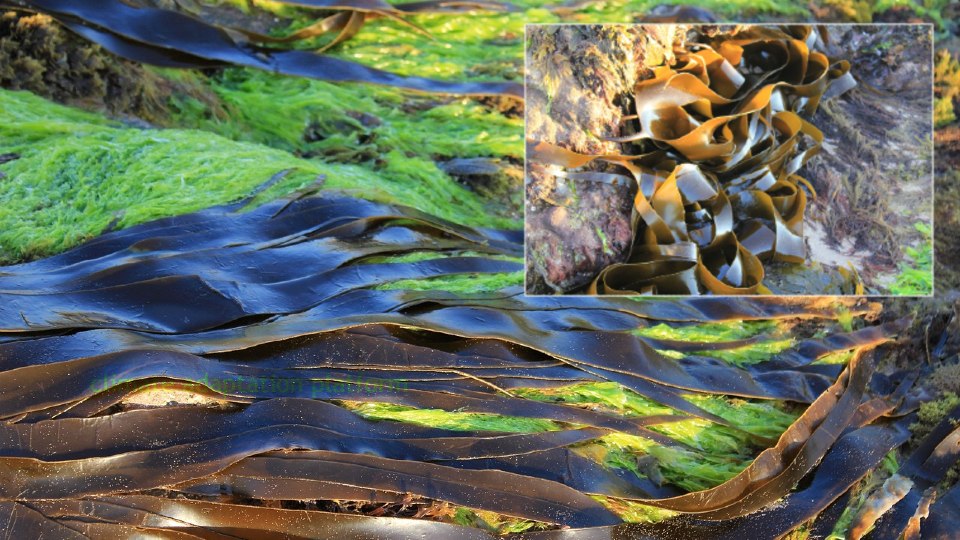
Seaweed, also known as macroalgae, is a large and diverse group of aquatic plants. Some common species, such as sugar kelp, show promise as sources of biofuels.
Climate advocates and researchers view biofuels as an alternative energy source that can help decarbonise sectors where electrification is not yet feasible, such as aviation and shipping.
Unlike traditional land-based biofuels, seaweed fuels are cultivated in the ocean, so they do not compete with land resources used for crop production or other biofuels.
Experts refer to seaweed fuel as the third generation of biofuels, derived from algae and cyanobacteria, which offer high productivity and minimal land use, although they face challenges in harvesting and processing. First-generation biofuels are derived from food crops such as corn, wheat, and sugarcane. These biofuels are primarily ethanol and biodiesel, produced by converting sugars, starches, and oils into liquid fuels. Second-generation biofuels, also known as advanced biofuels, utilise non-food biomass such as agricultural residues, perennial grasses, energy crops, and forestry waste. These biofuels aim to address the limitations of first-generation biofuels by using more sustainable feedstocks. Fourth-generation biofuels use genetic engineering to enhance organisms for better biofuel production. This includes traits such as improved sugar utilisation, increased lipid synthesis, and increased photosynthesis. (Lopez, 2024)
Researchers from the Netherlands and Aarhus, Denmark, designed a tank that could take in seaweed fuel – around 10% combined with petrol to run a car- and tested the GHG emissions of the seaweed fuel compared to gas station fuels (Fourneris, 2020).
What they found is that in terms of carbon monoxide (CO), carbon dioxide (CO2), nitrogen oxide (NOx) emissions, and particulate emissions, seaweed fuel’s emission of these gases is the same as those of other gas station fuels.
The only key difference is that seaweed absorbs carbon dioxide from the atmosphere as it grows in the sea. Researchers are convinced that seaweed fuel could be another viable biofuel, powering planes, heavy transport, and ships that still consume large amounts of fossil fuels.
Why is seaweed fuel sustainable?
Seaweed grows everywhere where there is sun and sea, and the sea covers around 70% of the Earth. It does not require cultivation, freshwater, or vast land areas to compete with food production, essential crops, or the growing of other biofuels like corn, sugarcane, soybeans, and others.
However, the challenge of producing seaweed oil right now is cost – how can it be reduced to make it competitive with other fossil fuels and a viable solution? Producing them on an industrial scale is the aim of the European project MacroFuels.
Producing enough seaweed to meet the demand for aviation fuel poses a significant challenge. Researchers at the Wrigley Institute for Environmental Studies on Santa Catalina Island, along with Marine BioEnergy, are working on solutions for large-scale kelp farming.
They are exploring the possibility of growing kelp at greater ocean depths, where nutrient levels are higher, allowing kelp to grow larger and more rapidly. Scientists assert that cultivating seaweed in just 0.5% of Earth’s oceans could provide enough resources to replace liquid fuels for all long-haul vehicles and aeroplanes worldwide.
Powering Planes with Seaweed Fuels.
According to Corinne Scown, deputy director of the energy analysis and environmental impacts division at Lawrence Berkeley National Laboratory in the US, the changes required to accommodate bio-jet fuels at airports and in planes are minimal compared to what’s needed to electrify aviation.
“One of the big advantages of this (biofuel from kelp) is that it can use all the existing refining infrastructure of the petrochemical industry,” adds Brian Wilcox, the co-founder and chief engineer at California-based company Marine BioEnergy, which has been working with scientists to develop kelp-based biofuels. “It, in many cases, looks like crude oil, and it goes through the same processes” (Kwesiga, 2021).
The potential of seaweed as a biofuel has led the U.S. Department of Energy to commit $20.2 million to algae-based biofuel projects, including seaweed-to-ethanol and biocrude pathways.
Sources:
Brears, R. (2026, January 19). Seaweed Biofuels and the Blue Energy Transition: A Low-Impact Pathway to Sustainable Energy | Global Climate Solutions. Global Climate Solutions. Retrieved from https://www.linkedin.com/pulse/seaweed-biofuels-blue-energy-transition-low-impact-pathway-brears-ae4te/
Fourneris, C. (2020, February 3). Could seaweed be the fuel of the future? Euro News. Retrieved from https://www.euronews.com/next/2020/02/17/could-seaweed-be-the-fuel-of-the-future
FACTSHEET PROS AND CONS SEAWEED FOR BIOFUEL. (n.d.). Bellona Europa. Retrieved from https://bellona.org/assets/sites/3/2017/03/FACTSHEET-seaweed-for-energy.pdf
Kwesiga, P. (2021, November 26). Is seaweed the future of flying? BBC. Retrieved from https://www.bbc.com/future/article/20211119-can-flying-ever-be-carbon-neutral
López, R. (2024, March 17). Understanding first, second, third, and fourth generation biofuels. JORD. Retrieved from https://www.jord.one/blogs/understanding-first-second-third-and-fourth-generation-biofuels#:.
U.S. Department of Energy Announces $20.2 Million in Projects to Advance Development of Mixed Algae for Biofuels and Bioproducts. (2024, November 14). U.S. Department of Energy. Retrieved from https://www.energy.gov/cmei/articles/us-department-energy-announces-202-million-projects-advance-development-mixed-algae
Leave a Reply