

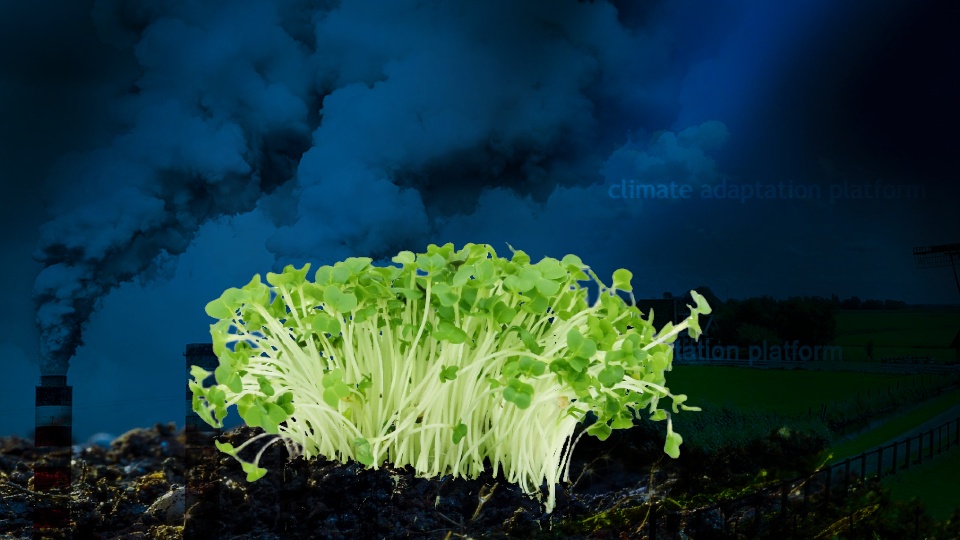
The threat of climate change grows more significant, affecting the essential crops that sustain human life. As temperatures rise and moisture levels become more erratic, biologists warn that our vital crops may soon face severe challenges.
The reality is that plants, while inherently equipped to adapt, may not adapt quickly enough to keep pace with the relentless pace of these environmental shifts.
The pace of research to understand how plants evolve in a rapidly warming climate is often too slow and usually based on a single, stand-alone experiment scattered across the world.
Moisés (Moi) Expósito-Alonso and a team of scientists conducted a unique experiment across 30 different climate zones and countries in Western Europe, the Mediterranean, the Middle East, and North America. They planted a specific plant species and observed it grow unattended for five years, except for the weeding.
The purpose of this research is not only to measure the speed of evolutionary adaptation but also to identify the gene variants or mutations within the population that facilitate adaptation to changing environmental conditions.
The finding of the large-scale experiment is published in the journal Science on 26 March 2026, titled “Rapid adaptation and extinction in synchronised outdoor evolution experiments of Arabidopsis”.
The experiment ran from the fall of 2017 to the spring of 2022, though the paper’s genomic analyses cover only three years, up to the spring of 2020. The researchers planted equal mixes of 231 unique plant strains of the common lab plant Arabidopsis thaliana at 30 sites in Western Europe, the Mediterranean, the Levant, and the US. Thale cress is an annual in the mustard family and a model organism in plant genetics because it is easy to grow and reproduces quickly.
They set up 12 identical repeat groups at each site, growing them for up to 5 years in places ranging from city gardens to harsh deserts like the Negev. This lets them test if evolution produces the same results when starting from the same mix. Using DNA sequencing of the original strains and over 2,500 samples from 70,000+ plant tissues collected in the first three years, lead author Expósito-Alonso and his team uncovered both known and novel adaptive genetic variants in the surviving plants.
A team of over 70 researchers conducted a study that identified millions of gene expression changes in plant populations, indicating that plants are adapting and surviving in new environments. In most climate zones, the populations not only survived but also adjusted to their local conditions.
For instance, several of the 12 plots examined in two locations with similar climates—specifically, the dry shrublands of Spain and Greece—showed comparable genetic changes. These alterations affected genes associated with key traits, including drought tolerance and flowering time.
Notably, these genomic changes were observed in 24 out of the 30 locations studied, demonstrating the consistency of these adaptations. However, some populations of thale cress, particularly those in extremely hot, dry sites, went extinct after three years, leaving barren plots.
Reporting on the findings from the first three years of the experiment, Dr Martijn van Zanten, one of the collaborators of the study, says, “This experiment has yielded many new insights.”
“It shows that thale cress populations in similar climates adapt in similar ways. For instance, after several years, the plots in Madrid closely resembled those in Greece, with the same variants performing well. By contrast, the variants that persisted there differed greatly from those in the far north, while northern locations were more similar to one another. This shows that how plant populations evolve is predictable and closely linked to the environment,” adds Van Zanten (Climate change has, 2026).
“Under the influence of weather and climate, some variants in the seed mix, namely those that are less well adapted to local conditions, gradually disappear. Others, by contrast, are doing progressively better after a few generations. This is real-time evolution by natural selection: plants best adapted to the local climate survive and increase in number. Such an experiment has never been done before with plants on this scale,” Van Zanten explains (Climate change has, 2026).
To learn more, read the study titled “Rapid Adaptation and Extinction in Synchronised Outdoor Evolution Experiments of Arabidopsis.” You can visit the link in the “Source” section below.
Sources
Wu, X., Bellagio, T., Peng, Y., Czech, L., Lin, M., Lang, P., Epstein, R., Abdelaziz, M., Alexander, J., Alonso-Blanco, C., Andersen, H. L., Berbel, M., Bergelson, J., Bossdorf, O., Burghardt, L., Caton-Darby, M., Colautti, R., Delker, C., Dimitrakopoulos, P. G., . . . Exposito-Alonso, M. (2026). Rapid adaptation and extinction in synchronized outdoor evolution experiments of Arabidopsis. Science. https://doi.org/adz0777
Climate change has shifted the optimal growing location for the plant thale cress, large-scale experiment shows. (2026, March 26). Utrecht University. Retrieved from https://www.uu.nl/en/news/climate-change-has-shifted-the-optimal-growing-location-for-the-plant-thale-cress-large-scale
Sanders, R. (2026, March 26). One-of-a-kind experiment tracked plant evolution in response to climate change at 30 sites worldwide. UC Berkeley News. Retrieved from https://news.berkeley.edu/2026/03/26/one-of-a-kind-experiment-tracked-plant-evolution-in-response-to-climate-change-at-30-sites-worldwide/
Leave a Reply