

The US could gain $1.6 trillion annually in health and climate benefits by replacing diesel school buses with electric models.
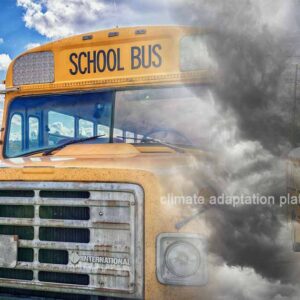
The US could gain $1.6 trillion annually in health and climate benefits by replacing diesel school buses with electric models.

From low-emission zones to greener public spaces, Istanbul’s neighbourhoods are pioneering sustainable tourism solutions for climate change.

The world’s oceans gain new protection as 60 countries ratify the High Seas Treaty, closing major regulatory gaps in international waters.

Scientists find that major carbon emitters are responsible for half the increase in the intensity of global heatwaves.

Following the National Climate Risk Assessment, Australia launched its Climate Adaptation Plan to strengthen resilience across key sectors.

NZ is lowering its emission targets because achieving the current range would be impractical and could create economic uncertainty.

Iran's capital, Tehran, with a population of nearly 10 million, is considering evacuating its residents amid its worst drought in decades.
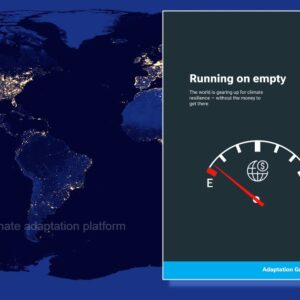
The Adaptation Gap Report provides updates on global progress in planning, implementation, and finance for adaptation to climate change.
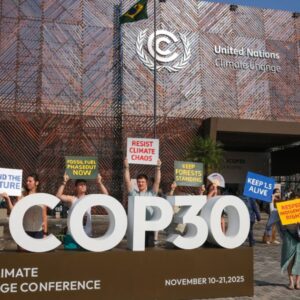
The 30th United Nations Climate Change Conference (COP30) in Belém, Brazil, took place from November 10 to 21, 2025. As the first COP to be hosted in the Amazon, the conference will spotlight connections between climate, biodiversity, food systems, and the rights of Indigenous Peoples and local communities. The first Conference of the Parties (COP)...
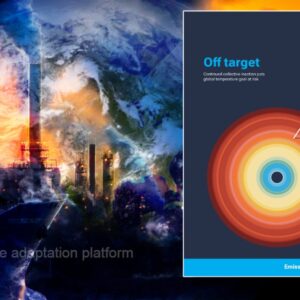
The UN Environment Programme (UNEP) released its "Emissions Gap Report 2025: Off Target", which shows that the 1.5°C target is unattainable.