

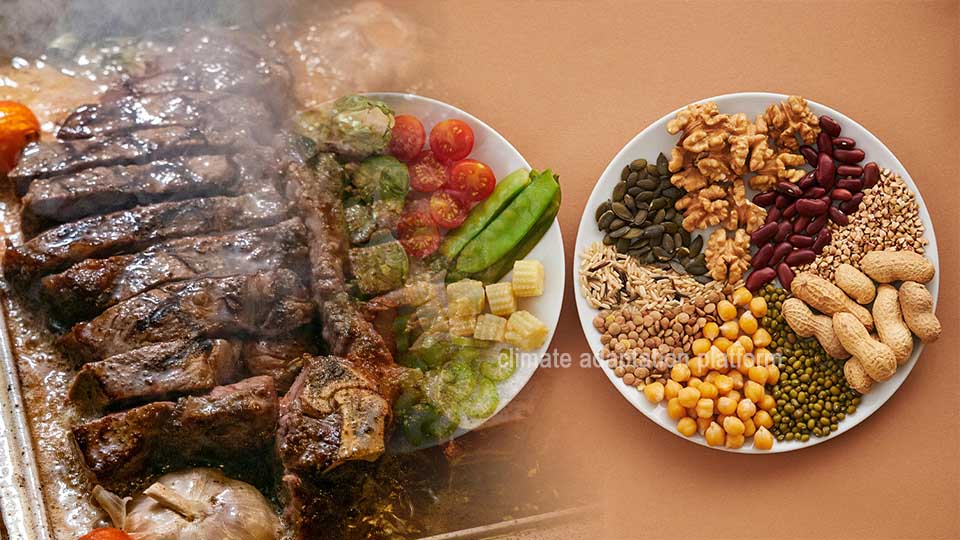
With the recent release of the new dietary guidelines by the U.S. Department of Health and Human Services and the Department of Agriculture for 2025–2030, Americans are being urged to “prioritise protein at every meal”.
This includes consuming animal-based protein such as eggs, poultry, seafood, and red meat, alongside a variety of plant-based protein sources, including beans, lentils, legumes, nuts, soy, and seeds.
This updated guidance forms part of a broader campaign to encourage healthier diets, as the United States faces what officials describe as a “health emergency”. The guidelines aim to steer people away from highly processed foods high in sodium and sugar, while also promoting physical activity.
They highlight that nearly 90% of healthcare spending is directed towards treating chronic diseases. Additionally, over 70% of American adults are overweight or obese, and around one-third of adolescents aged 12 to 17 have prediabetes.
The 2025–2030 Dietary Guidelines for Americans (DGA) are used by federal agencies, policymakers, and health professionals to shape public nutrition advice and programmes.
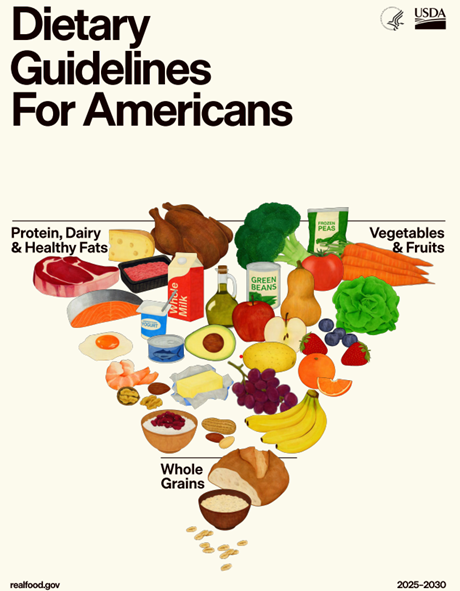
The “Inverted Food Pyramid” and Health Implications
The updated framework, often referred to as the “inverted food pyramid”, places protein and healthy fats, such as those found in butter, beef tallow, and full-fat dairy, at the centre of the diet, while discouraging the consumption of highly processed foods and refined carbohydrates.
Supporters argue that this approach could help reduce the risk of chronic conditions such as diabetes, obesity, and fatty liver disease. The changes have been welcomed by some medical experts, including the American Medical Association.
Bobby Mukkamala, the association’s president, praised the emphasis on limiting processed foods, sugar-sweetened beverages, and excess sodium, noting that these are key contributors to heart disease, diabetes, and obesity. He added that the guidelines reinforce the idea that “food is medicine”.
However, not all responses have been positive. The American Heart Association expressed concerns that increased consumption of red meat, particularly when combined with high salt intake, could raise the risk of cardiovascular disease due to higher levels of saturated fat and sodium.
Environmental Impact of Protein Choices
Americans are already among the highest meat consumers globally, tied with Portugal. According to a 2020 study by the Food and Agriculture Organisation (FAO), the average person in these countries consumes approximately 148.7 kilograms of meat annually.
While beef consumption averages 37.2 kilograms per person per year in the United States, poultry is the most-consumed meat at 57.7 kilograms annually, well above the global average.
From an environmental perspective, this trend offers some advantages. Poultry generally has a significantly lower carbon footprint than beef. For instance, chicken produces around 5.7 kg of CO₂ equivalent per 100 grams of protein, nearly nine times lower than beef. Pork also has a lower footprint than beef, although higher than poultry.
Dairy products such as cheese can also have relatively high emissions, sometimes exceeding those of certain meats when measured per unit of protein.
The Case for Plant-Based Protein
Despite these differences, shifting towards plant-based protein sources offers the greatest environmental benefits. Animal-based foods account for approximately 57% of global food-related emissions, compared to 29% from plant-based foods.
Experts emphasise that a balanced diet rich in plant-based proteins can meet nutritional needs while reducing environmental impact. Beans, lentils, soy, nuts, and seeds are not only excellent protein sources but also provide essential nutrients such as fibre and iron.
Raychel Santo, Senior Food and Climate Research Associate at the World Resources Institute (WRI), notes that beef and lamb have some of the highest environmental costs of any protein-rich foods, due to their greenhouse gas emissions, land use, and water pollution.
She adds that consumers today have more options than ever to choose protein sources that support both personal health and environmental sustainability.
Source:
STATEMENT: U.S. Releases New Dietary Guidelines. (2026, January 7). World Resources Institute. Retrieved from https://www.wri.org/news/statement-us-releases-new-dietary-guidelines
Roeder, A. (2026, January 8). Understanding the new Dietary Guidelines for Americans. Harvard T.H. Chan. School of Public Health. Retrieved from https://hsph.harvard.edu/news/understanding-the-new-dietary-guidelines-for-americans/
Dietary Guidelines For Americans 2025-2030. USDA. Retrieved from https://cdn.realfood.gov/DGA.pdf
Halpert, M. (2026, January 8). New US dietary guidelines call for more protein, less processed food. BBC. Retrieved from https://www.bbc.com/news/articles/c8e5d2k2w4lo
Bajaj, M. (2024, April 4). Americans are eating more meat than ever. Commons. Retrieved from https://www.thecommons.earth/blog/americans-are-eating-more-meat-than-ever
Gerretsen, I. (2025, January 14). What is the lowest-carbon protein? BBC. Retrieved from https://www.bbc.com/future/article/20221214-what-is-the-lowest-carbon-protein
Santo, R. (2026, January 9). In the Quest for Protein, Don’t Forget Plants. World Resource Institute. Retrieved from https://www.wri.org/insights/plant-based-proteins-environmental-impact?
Leave a Reply