

Airports around the world are essential economic engines and key employment centres. They provide a diverse array of jobs, including pilots, ground staff, maintenance crews, and retail and hospitality workers.
As gateways for communities, airports provide essential domestic and international connections and play a vital role in trade, travel, and tourism.
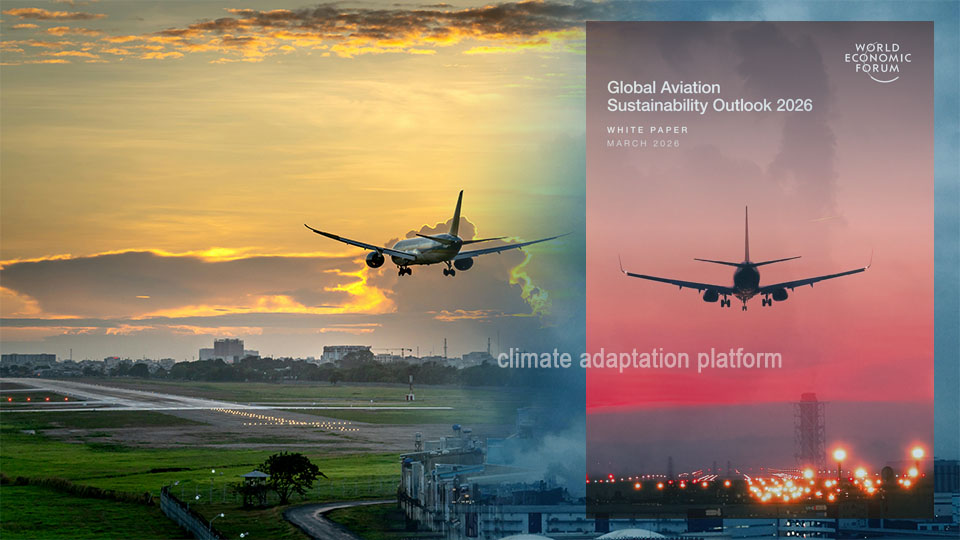
A new report by the World Economic Forum, Global Aviation Sustainability Outlook 2026, published on 11 March, reveals that the global aviation sector continues to grow strongly in both passenger numbers and cargo volumes. However, the industry faces significant headwinds in achieving its sustainability goals while aligning with the International Civil Aviation Organization net-zero aviation target.
Sustainable aviation fuel (SAF), a cornerstone of aviation decarbonisation, faces multiple challenges. These include rising clean technology costs, geopolitical disruptions, trade tensions, and increasing pressure to reduce emissions—all while maintaining safety, operational efficiency, and affordability.
Rising demand and fuel challenges
The report, drawing on insights from senior aviation executives, suggests that a more pragmatic approach to sustainability will shape industry discussions in 2026.
Global demand continues to surge. The aviation sector is projected to handle a record 9.8 billion passengers in 2026, alongside the highest-ever air cargo volume in 2025.
According to the Airports Council International, global passenger traffic could reach 10.2 billion in 2026 and 18.8 billion by 2045, underscoring aviation’s expanding role in global connectivity and economic activity.
The production of Sustainable Aviation Fuel (SAF) is on the rise, and several regions are becoming key production hubs. However, growth is limited by uncertainty regarding long-term demand and offtake agreements, as well as changing policy frameworks.
While there are mandates and roadmaps intended to promote SAF adoption, some stakeholders are sceptical about whether these targets can be met beyond 2030.
In 2025, SAF production reached 1.9 million tonnes—equivalent to just 0.6% of total jet fuel consumption, albeit double the previous year’s output. Hydroprocessed esters and fatty acids (HEFA) technology dominated production, while e-fuel development continues to lag.
The United States has taken a leading role in scaling up the production of sustainable aviation fuel (SAF), exemplified by LanzaJet’s facility in Georgia, which has achieved commercial-scale SAF production using the alcohol-to-jet (AtJ) pathway. Other countries, including China, Malaysia, Spain, Italy, and the Netherlands, are also making progress in SAF production.
Additionally, new facilities are being developed in France, Germany, and the United Kingdom. However, challenges such as high costs and project delays or cancellations in parts of Europe and the Asia-Pacific region highlight ongoing market volatility.
Trade tensions and a shift towards pragmatism
Global trade tensions have added further complexity to the aviation sector. In 2025, the aviation and aerospace industries were significantly affected by trade disputes, tariffs, and export controls.
Biofuel supply chains proved particularly vulnerable. Disruptions to feedstock supplies—especially used cooking oil—demonstrated how geopolitical tensions can quickly impact SAF availability and pricing. Frequent changes in tariffs and trade policies created uncertainty for manufacturers, airlines, and airports, reshaping the sector’s operating environment.
At the same time, a more fragmented global trade landscape has encouraged countries to strengthen domestic manufacturing capabilities, including aircraft production, fuel supply, and energy infrastructure. This shift is influencing long-term fleet planning and competitive dynamics across regions.
Despite these challenges, industry collaboration remains strong. Stakeholders continue to support cleaner aviation, although many now favour adjusting the pathway to net zero rather than abandoning it. This includes prioritising cost-effective solutions and addressing practical bottlenecks.
The report concludes that as the sector approaches 2026, a more practical approach to sustainability will take precedence.
Key priorities will include identifying cost-effective pathways for decarbonization, strengthening the resilience of energy and supply chains, improving policy coordination, and leveraging digitalisation and artificial intelligence to enhance efficiency.
Achieving these aviation decarbonisation and growth goals will require stronger collaboration between the public and private sectors, regulatory stability, and coordinated action on a global scale.
Source:
Global Aviation Sustainability Outlook 2026. (2026, March 11). Word Economic Forum. Retrieved from https://www.weforum.org/publications/global-aviation-sustainability-outlook-2026/
Leave a Reply