

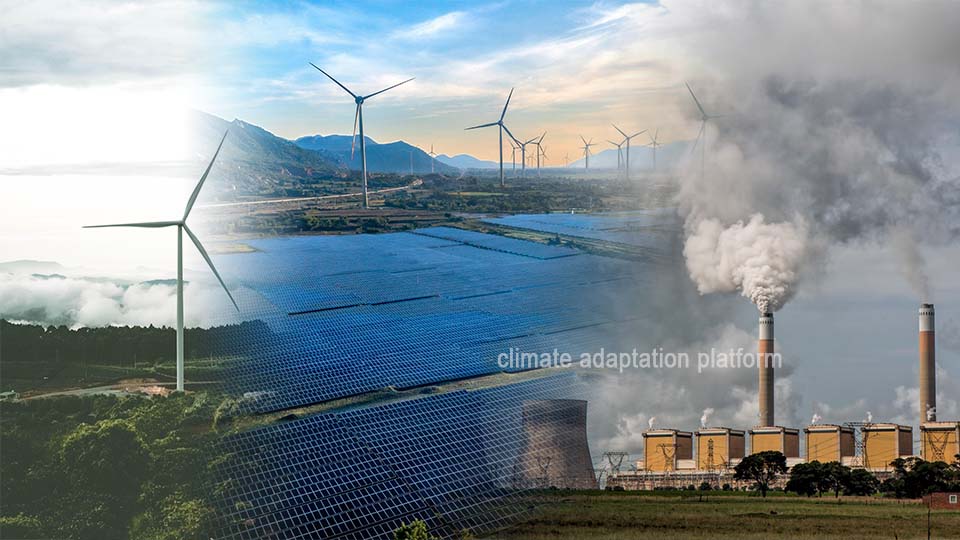
The United States has experienced steadily rising energy demand since the 2020s. Electricity demand in 2025 increased by 2% and was 9% higher than 2020 levels.
A major contributor to this growth is the rapid expansion of data centres across the country, whose electricity demand is expected to rival that of entire cities. While clean energy is expanding rapidly to help meet the nation’s growing energy needs, fossil fuel generation is also increasing, with higher coal output and the construction of new gas plants.
An article by the World Resources Institute (WRI), titled “Despite Unprecedented Challenges, Clean Energy Is Still Growing in the US. The Future Is More Uncertain”, highlights how the US power sector is undergoing rapid transformation. Clean energy continues to grow strongly, but policy changes, rising energy costs, and increasing electricity demand are making the sector’s future more uncertain.
Record-breaking growth in clean energy
Around 90% of new power capacity added in the US now comes from renewable sources, although fossil fuel capacity continues to expand. Data from the U.S. Energy Information Administration (EIA) 2026 report show that the U.S. installed a total of 55.9 GW of new capacity, including 49.6 GW from utility-scale solar, batteries, and wind, and 6.4 GW from small-scale solar systems. Battery storage capacity is also growing rapidly, with installations rising by 39% between 2024 and 2025.
The International Energy Agency (IEA) 2026 report further shows that planned utility-scale renewable developments through 2030 include 119.1 GW of solar, 65.5 GW of battery storage, and 21.1 GW of onshore wind capacity.
Clean energy is expected to account for a growing share of the US electricity mix in 2025. Combined wind and solar generation now make up 17% of electricity production, surpassing coal’s 16.6% share. Renewable sources, including hydropower, account for almost a quarter (24%) of US utility-scale electricity generation.
Data centres and electrification drive demand
Data centres, particularly hyperscale facilities operated by major technology companies such as Meta, Amazon, and Google, are among the leading drivers of rising electricity demand in the US. In 2025 alone, purchase agreements covering 25.5 GW of clean energy were signed, with these companies dominating demand. Energy purchases include solar, wind, battery storage, nuclear, hydropower, geothermal energy, and gas generation paired with carbon capture technology.
Utilities project that national electricity demand could rise by 32% by 2030, largely due to data centre expansion. Other forecasts suggest that data centres could account for between 9% and 17% of total US electricity consumption by the end of the decade.
Electrification and manufacturing are also contributing to increased power demand, particularly in regions such as California and the northeastern United States, driven by growing adoption of electric vehicles (EVs), heat pumps, and electric water heaters.
Fossil fuels continue expanding amid policy uncertainty
Despite the growth of renewables, coal and natural gas remain important parts of the US energy mix. Coal generation rose by 13% between 2024 and 2025 following federal support measures for coal plants introduced by the current administration. Coal output is projected to continue growing until 2028.
Although natural gas generation declined by 3% between 2020 and 2025, plans remain in place to expand utility-scale gas generation into the 2030s. According to the EIA’s December 2026 report, an additional 44.8 GW of natural gas capacity is expected to be added between 2026 and 2030.
The EV sector, however, has experienced mixed results. EV sales in 2025 fell by 4% compared with 2024, while manufacturers scaled back projects worth approximately US$20 billion. At the same time, used EV sales rose by 35%, and the country’s public charging network continued to expand rapidly. Around 18,000 direct current fast-charging (DCFC) ports were installed in 2025, marking a 30% increase over the previous year.
The installation of heat pumps and electric water heaters also continued to outpace gas-powered alternatives for the fourth consecutive year.
Meanwhile, household electricity costs are increasing. Average electricity bills rose by 7% between 2024 and 2025, partly due to utilities upgrading power grids and strengthening infrastructure against disasters and extreme weather events.
Policy and permitting challenges are also affecting the clean energy sector. The current administration has tightened federal permitting requirements, delayed approvals for onshore and offshore wind projects, and introduced new barriers to projects that rely on certain foreign-sourced components.
Developers are rushing to begin construction before “safe harbour” deadlines expire, while simultaneously dealing with grid connection delays, market uncertainty, and permitting bottlenecks.
The WRI article concludes: “Despite a turbulent year of fundamental policy changes, clean energy pushed forward in 2025, even delivering another record-breaking year for solar and storage. Developers brought tens of gigawatts of clean energy online and moved quickly to break ground on clean energy projects, locking in access to federal incentives and ensuring that new solar and wind will continue to be developed in the near-term.”
Source:
Bird, L., Goldsmith, I., Light, A., & McLaughlin, K. (2026, April 8). Despite Unprecedented Challenges, Clean Energy Is Still Growing in the US. The Future Is More Uncertain. WRI. Retrieved from https://www.wri.org/insights/clean-energy-progress-united-states
Leave a Reply