

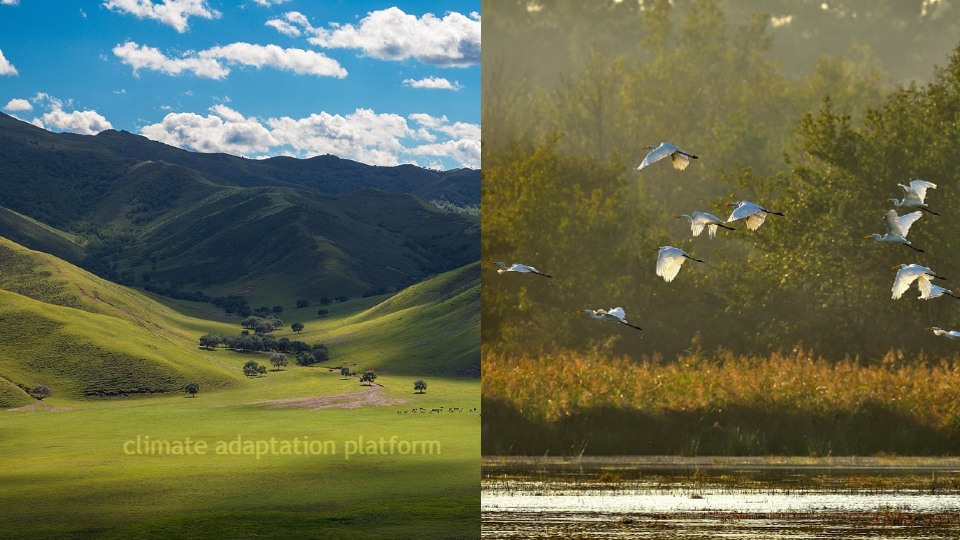
A new study published in the journal PNAS on 23 February 2026 examined the mounting threats and pressures facing grasslands and wetlands as they are rapidly converted to agricultural land.
According to Dr Siyi Kan, who led the study titled “Overlooked and Overexploited: Extensive Conversion of Grasslands and Wetlands Driven by Global Food, Feed, and Bioenergy Demand,” grasslands and wetlands are more than just green spaces; they store between 20% and 30% of the world’s terrestrial carbon.
These non-forest ecosystems also support 40% of all known animal and plant species, providing essential ecosystem services that directly benefit local communities and global socio-economic systems, Kan explains.
Forests have so far received much of the attention in research and policy, while these non-forest ecosystems are often understudied and underprotected, the study notes.
Wetlands, for instance, serve as a critical link between land and water. They are linked to rivers, lakes, aquifers, and estuaries, functioning as nature’s kidneys by filtering pollution, including nitrogen from farms. They also reduce the risk of flooding by absorbing water during heavy rain and gradually releasing or percolating it.
Along the coast, wetlands mitigate the risks of sea-level rise while providing habitat for many species. Additionally, wetlands have the highest carbon density among terrestrial ecosystems and account for up to 30% of the world’s organic soil.
Grasslands are also a major carbon sink, storing around 34% of carbon, slightly less than forests’ 39%. Grasslands store 90% of this carbon deep underground, so when grasses are burned down, a significant portion of the carbon remains untouched.
Grasslands around the world also hold great cultural, historical, and spiritual importance for Indigenous people and local communities.
The 2026 study analysed wetland and grassland conversions between 2005 and 2020 and identified the specific commodities driving these conversions. It finds that the conversion rate in these non-forest ecosystems was almost 4 times that in forests.
While drivers of conversion varied across regions, worldwide, 50% was linked to pasture, 27% to cropland used for food, 17% to growing feed for livestock, and 6% to uses mainly for bioenergy. Brazil leads globally in non-forest conversion rate at 13%, followed by Russia, India, China, and the USA at around 6% each.
Study findings also show that a significant share of crops grown on these converted lands, particularly for animal feed like corn and soy, is exported. In Brazil and Argentina, 70-80% of these feed crops are exported to international markets such as China and Europe.
Read the study for more information. See the links in the “Sources” section below.
Source:
Kan, S., Levy, S. A., Mazur, E., Samberg, L., Persson, U. M., Sloat, L., Segovia, A. L., Parente, L., & Kastner, T. (2026). Overlooked and overexploited: Extensive conversion of grasslands and wetlands driven by global food, feed, and bioenergy demand. Proceedings of the National Academy of Sciences, 123(9), e2521183123. https://doi.org/10.1073/pnas.2521183123
Gustin, G. (2026, February 25). Grasslands and Wetlands Are Being Gobbled Up By Agriculture, Mostly Livestock. Inside Climate News. Retrieved from https://insideclimatenews.org/news/25022026/grasslands-wetlands-gobbled-up-by-agriculture-livestock/
Mazur, E., Sloat, L., Samberg, L., Levy, S., & Kan, S. (2026, February 25). Agriculture Is Taking Over Grasslands, Wetlands and Other Overlooked Ecosystems. World Resources Institute. Retrieved from https://www.wri.org/insights/global-ecosystem-conversion-grassland-wetland-savanna-to-agriculture
Why wetlands are important. (n.d.). Department of Conservation. Retrieved from https://www.doc.govt.nz/nature/habitats/wetlands/why-wetlands-are-important/
Nature-based solutions: Wetlands. (2026). Climate Change and Nature. Retrieved from https://climateandnature.org.nz/solutions/new-zealand-ecosystems/wetlands/
Kan, S. (2026, February 26). Overlooked non-forest ecosystems under agricultural threat: global study highlights grasslands and wetlands. Environmental Change Institute. Retrieved from https://www.eci.ox.ac.uk/news/overlooked-non-forest-ecosystems-under-agricultural-threat-global-study-highlights-grasslands
Leave a Reply