

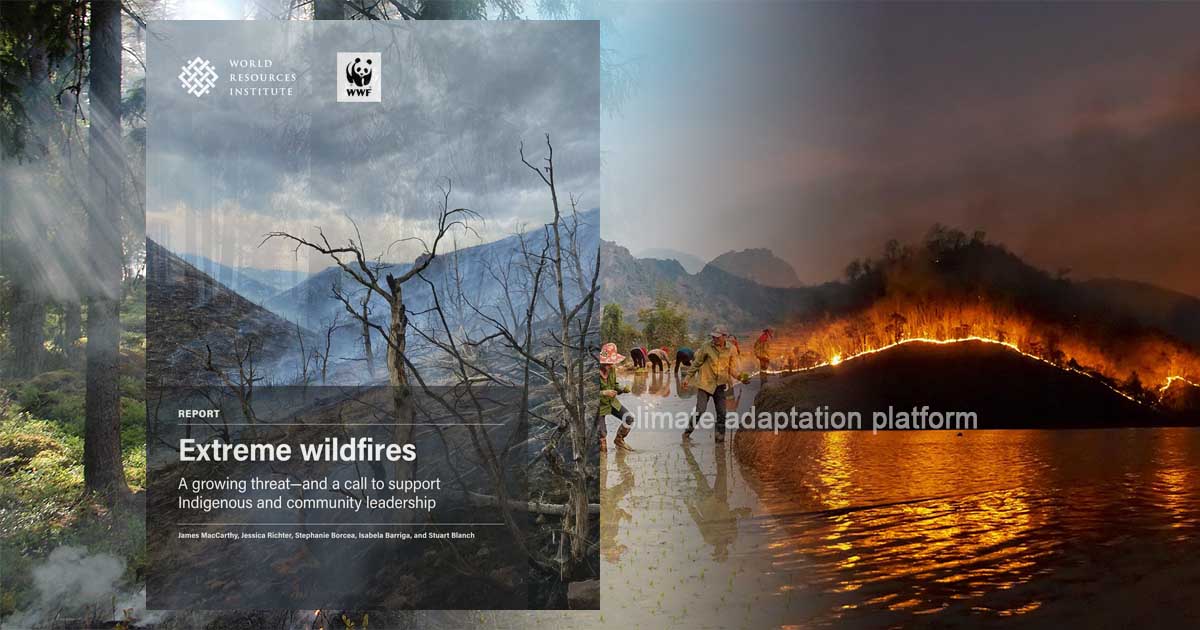
Indigenous fire management practices used by Indigenous Peoples and local communities are among the most effective wildfire prevention strategies in the world.
However, a new analysis by the World Resources Institute (WRI) shows that lands managed by Indigenous Peoples and local communities across four countries, the United States, Canada, Australia and Brazil, are experiencing increasing tree cover loss from forest fires and other causes.
What the WRI analysis reveals
The WRI report analysed satellite data from 2001 to 2024 in four fire-prone countries and compared tree cover loss from both fires and other drivers across three land management categories: Indigenous- and community-held lands, state-managed protected areas, and all other lands. The study highlights the underlying drivers of forest loss and explores how restoring autonomy to Indigenous Peoples and local communities can help reduce wildfire risk.
The findings show that Indigenous- and community-managed lands lost only 6% of their tree cover in these four countries combined over the last two decades. In contrast, state-managed protected areas lost 11% of their tree cover, while other land types lost 18%.
In all countries except Canada, Indigenous- and community-held lands experienced decreases in overall forest loss, even in areas with fewer formal protections. In Canada, the tree cover loss rate is consistent across all land management types.
The WRI data show that forest fires remain the biggest driver of tree cover loss, accounting for 62% of tree loss on Indigenous and community lands, 72% in protected areas, and 32% across all other land types.
How fire impacts differ across the four countries
Among the four countries, Brazil has seen the highest levels of fire-driven tree cover loss. From 2001 to 2024, Brazil experienced a fifteen-fold increase in tree cover loss linked to decades of deforestation. Much of this occurred in the Amazon rainforest, home to more than half of Brazil’s Indigenous population. Around 1.3 million hectares of forest, an area roughly the size of Puerto Rico, were burned on Indigenous and community lands in just 2016 and 2024.
In south-eastern Australia, extreme fires during the devastating 2019–2020 fire season burned 1.2 million hectares of Indigenous-held forest. Despite having the smallest share (8%) of Indigenous- and community-managed forests among the four countries, Australia accounted for 32% of fire-related tree cover loss on these lands.
Across Canada and the United States, climate change is extending fire seasons and increasing the likelihood of extreme heat and drought, leading to severe wildfires such as those seen in Canada in 2023. Over the study period, approximately 2.3 million hectares of forests on Indigenous lands burned in these two countries.
The role of indigenous leadership in fire resilience
The study emphasises that climate change, deforestation, and long-standing fire suppression policies are fuelling extreme wildfires and threatening communities, ecosystems, and carbon-rich forests.
At the same time, it underscores the critical role of Indigenous leadership and secure land rights in reducing wildfire risk, preventing deforestation and preserving biodiversity.
Key recommendations from the report include:
- Secure and uphold Indigenous and community land rights to strengthen forest stewardship and reduce wildfire risks.
- Revive cultural burning traditions that safely reduce fuel loads and restore healthy fire regimes.
- Provide funding and training for Indigenous- and community-led fire brigades to improve local preparedness, response and recovery.
- Expand access to fire monitoring tools and early warning systems for faster detection and response.
- Reduce emissions and protect forests to mitigate climate change and limit the risk of climate-driven fires.
- End deforestation and land-clearing burns to prevent escaped fires that lead to extreme wildfires.
Learn more or download the report: REPORT Extreme wildfires: A growing threat—and a call to support Indigenous and community leadership.
Source:
MacCarthy, J., J. Richter, S. Borcea, I. Barriga, and S. Blanch . 2025. “Extreme wildfires: A growing threat—and a call to support Indigenous and community leadership.” Report. Washington, DC: World Resources Institute. Available online at doi.org/10.46830/wrirpt.23.00006.
Extreme Wildfires: A Growing Threat—and a Call to Support Indigenous and Community Leadership. (2025, September 11). World Resource Institute. Retrieved from https://www.wri.org/research/extreme-wildfires-growing-threat-and-call-support-indigenous-and-community-leadership
MacCarthy, J., Richter, J., Borcea, S., & Barriga, I. (2025, September 24). As Extreme Wildfires Threaten Forests, Indigenous Leadership Offers Solutions. World Resource Institute. Retrieved from https://www.wri.org/insights/extreme-wildfires-indigenous-community-leadership
Leave a Reply