

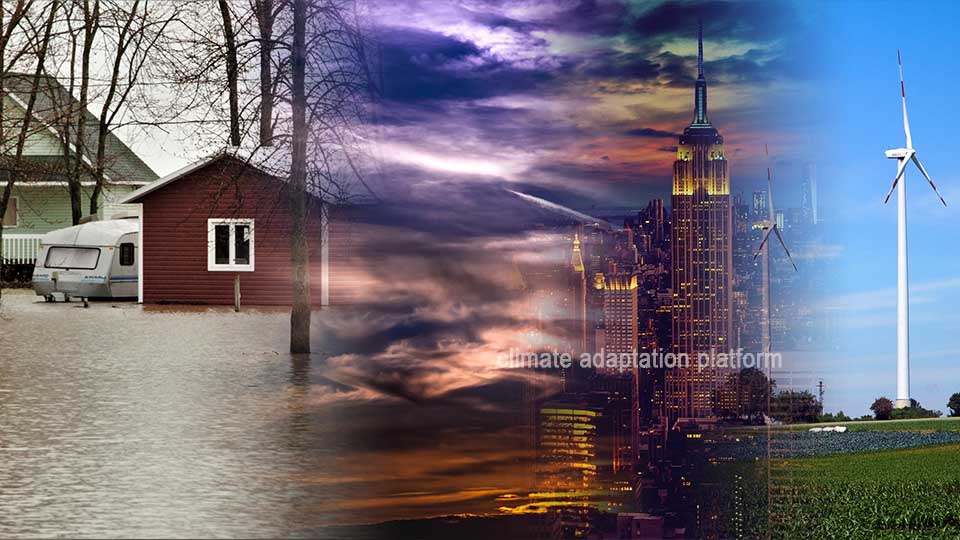
Climate change hazards, including floods and landslides triggered by hurricanes and heavy rainfall, such as those recently seen in the Appalachian Mountains, wildfires in the western United States, extreme heat, prolonged drought and rising sea levels, are forcing millions of Americans to relocate to safer areas. This trend is projected to intensify in the coming decades.
Sea-level rise alone could drive the net migration of more than 13 million US residents by 2100, according to current projections. In addition to households, businesses are also expected to move operations away from high-risk areas.
This large-scale relocation will place additional pressure on housing markets, infrastructure and public services in receiving communities. However, it also presents a strategic opportunity to integrate climate adaptation and mitigation into future development.
What is “Compounded Resilience”?
Researchers at North Carolina State University propose a framework known as “compounded resilience” in their paper, “Compounded Resilience: A Step Towards Achieving Climate Mitigation and Adaptation in the U.S. Built Environment”. The concept calls for integrating climate adaptation and climate mitigation into a unified development strategy.
For instance, when a city expands due to relocation pressures, or when local authorities revise zoning regulations and building codes, they can embed climate-ready standards into new developments.
Rather than addressing emissions reduction and climate risk separately, compounded resilience encourages local governments to design policies that simultaneously reduce greenhouse gas emissions and strengthen protection against climate-related hazards.
Taking this approach early in the development process is more cost-effective and less disruptive than retrofitting infrastructure at a later stage.
Relocation as an opportunity for low-carbon development
The study highlights that climate-driven relocation offers an opportunity to reshape the built environment. In the United States, commercial and residential buildings account for approximately 30 per cent of total greenhouse gas emissions.
Reducing these emissions requires improving insulation, installing energy-efficient appliances and fixtures, and increasing the use of onsite renewable energy systems. At the same time, decarbonising the electricity grid remains essential.
Georgina Sanchez, co-author of the study and Director of Research Engagement at NC State’s Center for Geospatial Analytics, explains:
“All of these development and redevelopment decisions represent an opportunity for local governments to adopt policies that better prepare infrastructure and neighbourhoods for the new conditions driven by climate change. Policies designed to incentivise adaptation strategies that make communities more resilient to flooding or other increasing challenges can be intentionally linked with efforts to reduce greenhouse gas emissions and mitigate climate change itself. This combined approach is what we call ‘compounded resilience.’”
By aligning adaptation and mitigation strategies, cities can ensure that future growth supports both climate safety and emissions reduction. As climate migration accelerates, forward-looking planning may determine whether relocation becomes a burden or a catalyst for sustainable transformation.
Source:
Galik, C.S., Sanchez, G.M. Compounded resilience: a step towards achieving climate mitigation and adaptation in the U.S. built environment. Mitig Adapt Strateg Glob Change 31, 7 (2026). https://doi.org/10.1007/s11027-025-10273-2
Shipman, M. (2026, January 6). How to Make Communities More Resilient to Climate Change. NC State University. Retrieved from https://news.ncsu.edu/2026/01/compounded-resilience-communities/
Leave a Reply