

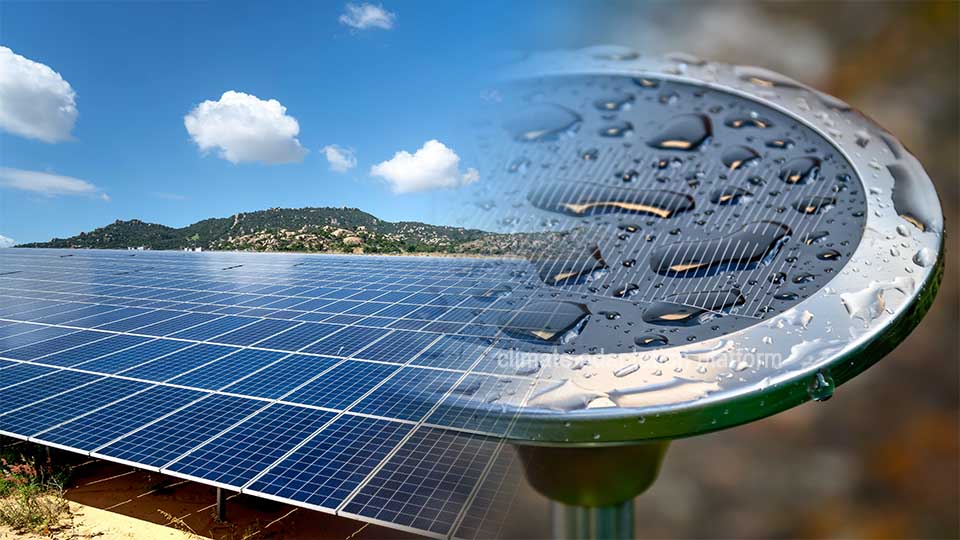
The sun emits solar radiation in the form of light, and solar energy technologies capture this radiation and convert it into usable energy. The most common of these technologies is photovoltaic (PV) systems, which generate electricity directly from sunlight.
According to the “International Energy Agency” (IEA), a combination of supportive government policies, declining technology costs, and faster permitting processes has driven the rapid expansion of solar energy projects worldwide. Solar capacity additions between 2025 and 2030 are expected to double compared with the 2019–2024 period.
In 2023, solar power recorded the largest growth in electricity generation among renewable technologies. Solar PV generation increased by a record 320 terawatt-hours (TWh), a 25% rise from the previous year, bringing total generation to more than 1,600 TWh.
This growth pace is broadly aligned with the trajectory required to achieve net-zero emissions by 2050. However, the IEA notes that global solar capacity will still need to double by 2030 to remain on track.
How solar energy works
The amount of sunlight reaching the Earth’s surface in just 90 minutes is sufficient to meet global energy demand for an entire year. While harnessing all of this energy remains technologically challenging, advances in solar innovation continue to expand what is possible.
Solar panels work by using photovoltaic cells made primarily from silicon. When sunlight strikes these cells, it excites electrons, generating an electric current. This direct conversion of sunlight into electricity allows solar panels to power homes, businesses and industries without producing greenhouse gas emissions during operation.
One of the earliest solar panels was developed in 1883 by American inventor Charles Fritts. Although early designs were inefficient by modern standards, they laid the foundation for today’s highly efficient solar technologies.
Japan’s spherical solar innovation
Innovation in solar technology continues to evolve. A notable example comes from Japan, where the company Kyosemi has developed spherical solar cells known as “Sphelar”.
Unlike conventional flat solar panels, which capture sunlight most effectively from one direction, these spherical cells can absorb light from multiple angles. Their shape allows them to generate electricity even in variable or low-light conditions, reducing the need for solar tracking systems that constantly adjust panel positions to follow the sun.
Sphelar cells are tiny, transparent silicon spheres measuring approximately 1.88 millimetres in diameter. Because of their size and transparency, they can be embedded into glass surfaces, including windows, enabling buildings to generate electricity without altering their architectural design. Their flexibility also allows them to be integrated into curved or irregular structures.
In addition, Kyosemi manufactures these cells from molten silicon droplets, a process that reduces material waste and lowers production costs compared with conventional wafer-based panels.
The future of solar energy
From traditional photovoltaic panels to advanced spherical solar cells, technological progress continues to strengthen the role of solar power in the global energy transition.
With sustained investment, policy support and innovation, solar energy is poised to play a central role in achieving net-zero emissions and building a cleaner, more resilient energy system for future generations.
Source:
Goodbye to solar panels: Japan has just broken a rule that had remained intact for more than 140 years and proves that solar panels do not have to be flat. (2026, January 14). Econews. Retrieved from https://www.ecoticias.com/en/goodbye-to-solar-panels-japan-has-just-broken-a-rule-that-had-remained-intact-for-more-than-140-years-and-proves-that-solar-panels-do-not-have-to-be-flat/25615/
How Does Solar Work? (n.d.) U.S. Department of Energy. Retrieved from https://www.energy.gov/eere/solar/how-does-solar-work
Solar PV. (2025). IEA. Retrieved from https://www.iea.org/energy-system/renewables/solar-pv
Orozco, D. (2026, January 18). Goodbye to flat solar panels—Japan revolutionizes energy with spherical cells that capture light from all angles. El Adelantado. Retrieved from https://eladelantado.com/en/japan-energy-spherical-cells-light-angles/
Leave a Reply