

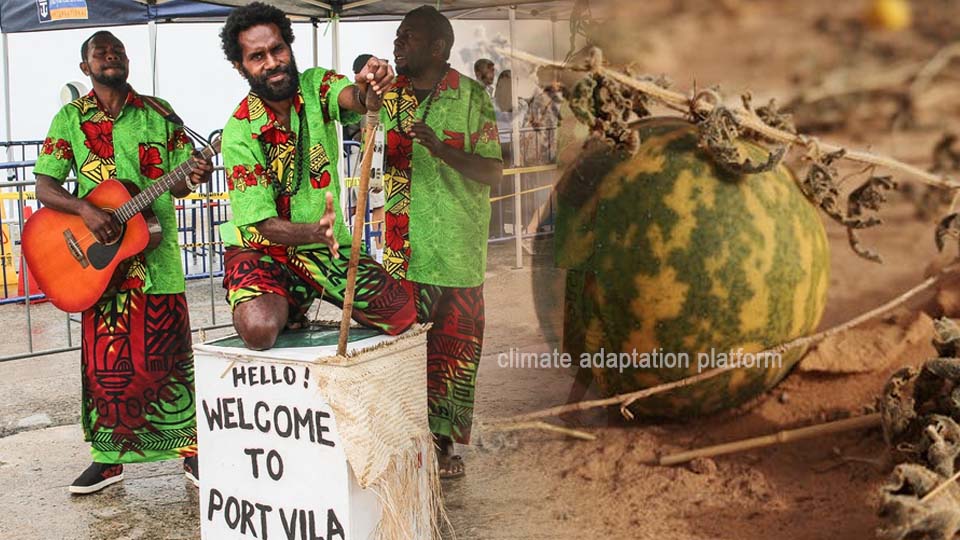
Vanuatu is a small island developing state (SIDS), 2,000 kilometres (more than 1,200 miles) from the east coast of Australia.
Like other SIDs, it is increasingly experiencing extreme weather events, such as cyclones, flooding, and soil erosion, driven by climate change.
Recent extreme events that have ravaged the nations composed of 83 islands include the Tropical Cyclone Pam in 2015, when it affected 96% of Vanuatu’s crops and livestock populations, contaminated water sources, and disrupted subsistence fisheries; Cyclone Harold in 2020, and Judy and Kevin in 2023, both inflicted the same devastation on the island nation.
The 2025 World Risk Report ranked Vanuatu 44th out of 193 countries for disaster risk from such extreme natural events and the negative effects of climate change.
Ni-Vanuatu is Vanuatu’s indigenous population, comprising not one but many cultures.
The article in Mongabay relates the threats posed by climate change and extreme weather events to Vanuatu’s food security, particularly affecting the Ni-Vanuatu. It also discusses how the growth of globalisation and world trade has altered their lifestyle and their diets.
The article notes that before the start of the 20th century, Vanuatu relied on subsistence farming for livelihoods and food. However, global trade has shaped their lifestyle and diets; imported foods like white rice, wheat flour, and canned products have slowly replaced their traditional foods like taro, cassava, and others – foods with longer shelf lives that require cash but are not necessarily nutritious.
The article notes that subsistence farming has also declined over the past four decades, when families had five to eight taro gardens; now they have only one to two. Preserving these taro farms and taro varieties, as has been done for many generations, could strengthen their food security. Taro is a staple food in Vanuatu, with many cultivars; however, the decline in taro farming has also put some varieties at risk of extinction. Making the remaining few varieties prone to pests and diseases, which are projected to increase due to the changing climate.
Fortunately, some Ni-Vanuatu locals like Richard Rojo, with the support of Sunset Santo Environmental Network (SSEN), have seen the value of cultivating and preserving taro to strengthen their food resilience, and since then have started to expand these taro farms in many Vanuatu islands, starting in Vanuatu’s remote west coast of Espiritu Santo Island.
Sunset Santo Environmental Network (SSEN) is an Indigenous-led network of community champions working for climate-resilient and socially just development on the island. SSEN was established in 2017, following a Critical Ecosystem Partnership Fund (CEPF) workshop that called for the establishment of a local conservation network to develop locally driven biodiversity conservation strategies.
From these beginnings, SSEN has grown to a network with over 250 volunteers, representing the interests of 42 communities on the west and northwest coasts of Santo Island. SSEN has supported and empowered individuals, villages, and communities to create six Community Conservation Areas and to design and implement effective, inclusive, resilient, and sustainable development strategies in keeping with traditional livelihoods (The Santo Sunset, 2024).
A significant reliance on imported food can have a negative health effect when it leads to an increase in the consumption of highly processed foods, high in salt, sugar, refined carbohydrates, and fats, and a shift from diets high in fibre and cereals, resulting in a rise in non-communicable diseases.
A study, Analysing the impact of trade agreements on national food environments: the case of Vanuatu, examines how international trade agreements particularly, the World Trade Organisation affect Vanuatu’s food systems and environment, shows that the country’s trade agreements with 32 countries has increased the volume of its food imports and specifically on less healthy food such as fatty, sugary snacks and beverages including ice cream, confectionary, savoury snacks like crisps and noodles.
The encouragement of foreign direct investment in Vanuatu’s food production and manufacturing has increased processed food production by foreign companies operating in Vanuatu, rather than the food being imported from abroad.
This liberalisation of the business environment, by gradually removing rules and restrictions that used to control or limit business activities, with the aim to grow domestic industries and support small local businesses, produced an unintended side effect – it made it much easier for companies, especially foreign ones, to bring in and sell less healthy food products.
The study also finds that Vanuatu has a fragmented food regulation – it is disorganised and lacks coordination across different government sectors. Economic interests are being prioritised over public health concerns in policy decisions, and international trade agreements limit Vanuatu’s ability to create policies that would promote healthy eating, because these agreements require harmonising rules across countries and reducing trade barriers.
Despite the challenges, there are provisions within WTO agreements that Vanuatu could use to better align trade policy with health goals and strengthen nutrition policies – but policymakers need to understand these provisions to use them effectively.
Vanuatu’s food security is facing dual threats: climate change and the consequences of globalisation. While the erosion of traditional farming and dietary practices poses a risk to both nutrition and cultural heritage, local initiatives like the Sunset Santo Environmental Network (SSEN) offer hope by preserving indigenous crops and promoting resilience.
For Vanuatu to achieve a healthy and secure food future, policymakers must bridge gaps in food regulation, strategically leverage trade agreements, and prioritise the health and well-being of the Ni-Vanuatu people.
Source:
Kidd, M. (2026, January 26). Vanuatu communities move to protect taro, an ancestral climate-resilient crop (analysis). Mongabay. Retrieved from https://news.mongabay.com/2026/01/vanuatu-communities-move-to-protect-taro-an-ancestral-climate-resilient-crop-analysis/
The Ni-Vanuatu People. (2019). The Havannah Vanuatu. Retrieved from https://thehavannah.com/the-ni-vanuatu
The Santo Sunset Environment Network. (2024, March 5). Global Center on Adaptation. Retrieved from https://llahub.gca.org/stories/ee42a6bb-26ff-4aa1-ba67-3231732a7dd5
Ravuvu, A., Lui, J.P., Bani, A., Tavoa, A.W., Vuti, R., Win Tin, S.T., 2021. Analysing the impact of trade agreements on national food environments: the case of Vanuatu. Globalization and Health 17.. https://doi.org/10.1186/s12992-021-00748-7
Leave a Reply