

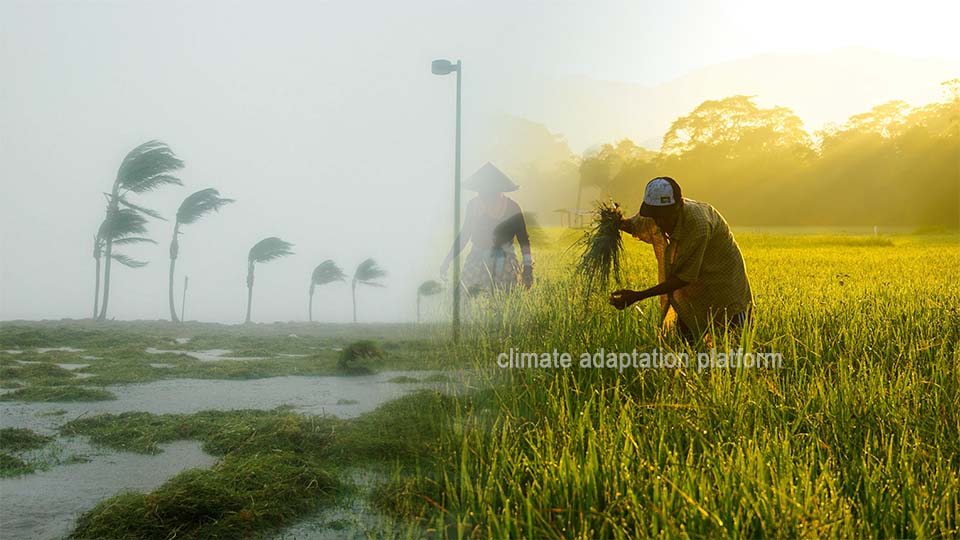
In the Philippines, another country that is highly vulnerable to extreme natural events such as floods, strong typhoons, and droughts. These extreme events are becoming more frequent and intense due to climate change, posing a significant threat to food security in the region.
In response, indigenous leaders, researchers, farmers, chefs, and policymakers gathered in Bacolod City Philippines in November 19-23, 2025, to advocate for the practice of agroecology, a sustainable farming approach that integrates ecology, Indigenous knowledge, and social action as a means to produce “good, clean and fair food for all” (Fabro, 2026).
The event, the international NGO Slow Food organised and partners in the Philippines, features Indigenous food, local food, and the application of agroecology to cultivate food that offers an alternative to industrial agriculture to address the urgent environmental challenges affecting local food production and indigenous practices and way of life with the aim to galvanize more support to scale up locally-led solutions across the region.
Understanding Agroecology
The Food and Agriculture Organisation of the United Nations defines agroecology as “a holistic and integrated approach that simultaneously applies ecological and social concepts and principles to the design and management of sustainable agriculture and food systems.
It seeks to optimise the interactions between plants, animals, humans, and the environment while also addressing the need for socially equitable food systems within which people can exercise choice over what they eat and how and where it is produced.”
One of agroecology’s core principles consists of “building food systems based on the culture, identity, tradition, social and gender equity of local communities that provide healthy, diversified, seasonally and culturally appropriate diets” (HLPE, 2019).
In simple terms, agroecology is the practice of growing food that is locally led, driven by people’s choices and preferences, and culturally, locally appropriate and traditionally acceptable to them.
Indigenous knowledge as a climate solution
Arby Duero, advocacy officer with the Forest Foundation Philippines (FFP), framed agroecology as a nature-based solution, an approach that uses ecosystems to address social and environmental challenges. For Duero, conservation projects should not be pursued solely for conservation; they have also strengthened food security and livelihoods for locals, where conservation initiatives are implemented.
For example, she cites how coastal residents in the Philippines practise both fisheries and land farming, which complement each other to boost food security. When seas are rough during typhoons, Indigenous communities rely on their traditional root crops, such as sweet potato and cassava, for food. Planting these root crops along the shore also helps stabilise soil and reduce erosion.
A review, “A review, “Towards resilient food systems: Interactions with indigenous knowledge,” published in Trends in Food Science & Technology in February 2025, describes Indigenous Peoples’ traditional knowledge and practices to produce food while protecting the environment, pointing out that these practices must be valued and integrated into our current food systems to strengthen food security and sustainability.
It notes that the benefits of Indigenous food systems include being highly diverse, adaptive, flexible, resilient, self-sufficient, resource-efficient, long-standing, traditional, circularity-oriented, and in harmony with the natural environment. These benefits are desirable for food system restoration and future food systems.
Indigenous food is climate-resilient because it is already adapted to local conditions. Their practice of cultivating and gathering food stems from knowledge and traditions that have been proven and passed down over many generations, and is carried out in harmony with the seasons and nature, making it sustainable for local people.
This practice contrasts with industrial farming, where vast resources such as land, water, and fertilisers are used to produce thousands of tons of food, with adverse environmental and ecosystem impacts.
Leveraging this knowledge and practice can help develop strategies to feed the world more sustainably, the review notes.
Source:
Fabro, K. (2026, January 2026). Philippines hosts new Asia-Pacific hub for sustainable agriculture, cuisine. Mongabay. Retrieved from https://news.mongabay.com/2026/01/philippines-hosts-new-asia-pacific-hub-for-sustainable-agriculture-cuisine/
Agroecology Knowledge Hub. (2026). Food and Agriculture Organization of the United Nations. Retrieved from https://www.fao.org/agroecology/overview/en/
The 13 principles of Agroecology. Agroecology. Retrieved from https://www.agroecology-europe.org/the-13-principles-of-agroecology/
Knorr, D., & Augustin, M. A. (2025). Towards resilient food systems: Interactions with indigenous knowledge. Trends in Food Science & Technology, 156, 104875. https://doi.org/10.1016/j.tifs.2025.104875
Leave a Reply