

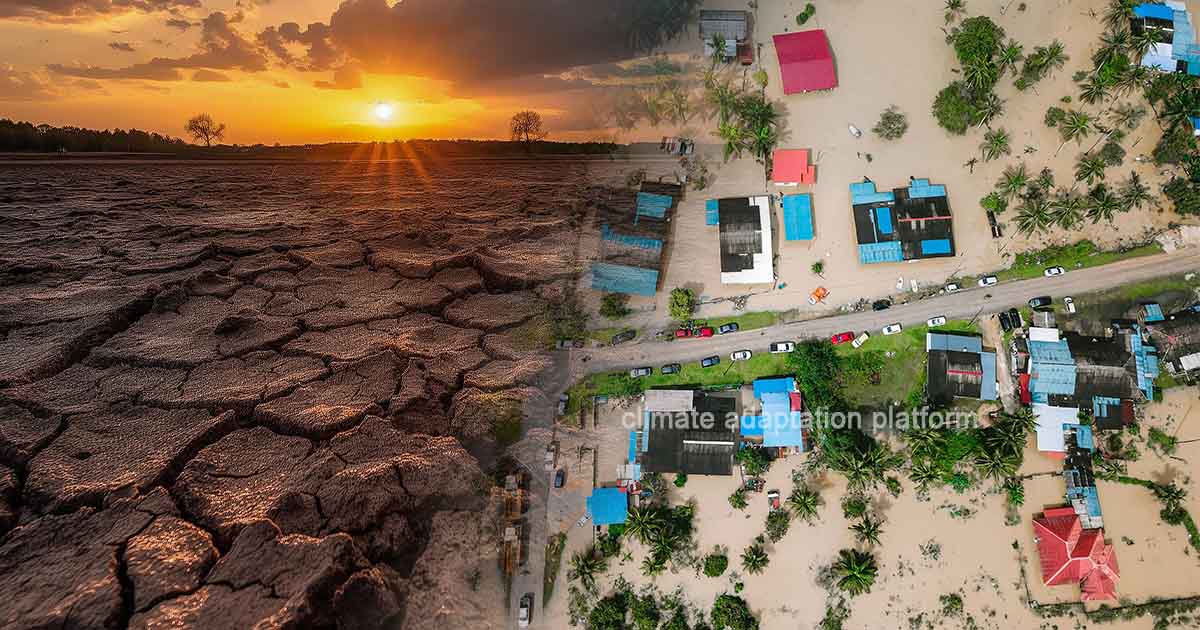
Greece is increasingly experiencing extreme weather swings, with prolonged droughts followed by intense flooding. This volatile pattern creates dangerous conditions in which water moves rapidly into rivers and streams, overwhelming them, as dry and compacted landscapes are unable to absorb and retain moisture.
An article published by 360, titled “Running dry, then underwater: Greece’s path to building resilience against climate threats”, explores how climate change is altering Greece’s water cycle, the factors exacerbating its impacts, and the strategies that could help the country reduce its vulnerability.
From drought to deluge: A dangerous climate pattern
The combination of extended droughts followed by sudden, heavy rainfall is driving destructive flash floods across Greece. Prolonged dry periods cause soil to harden and lose its ability to absorb water. As a result, when intense rainfall occurs, water rapidly runs off the land rather than soaking in, significantly increasing flood risk.
Drought conditions also weaken or kill vegetation that would otherwise stabilise soil and retain moisture. When rain finally arrives, parched and sparsely vegetated landscapes accelerate surface run-off, overwhelming waterways and triggering flash floods and severe soil erosion. Similar patterns have been observed not only in Greece, but also in California, Australia, Central Europe, and across the Mediterranean region.
Policy gaps and governance failures
The article highlights how government inaction has worsened the impacts of extreme weather events. Greece failed to update its river basin management plans in 2021 for the 2022–2027 period. After issuing formal notices in February and November 2023, the European Union referred Greece to the Court of Justice of the European Union for failing to revise its river basin management plans under the Water Framework Directive (Directive 2000/60/EC) and its flood risk management plans under the Floods Directive (Directive 2007/60/EC).
The Water Framework Directive aims to ensure the good qualitative and quantitative status of Europe’s water bodies, including rivers and lakes. It seeks to reduce pollution while ensuring sufficient water for both human needs and ecosystems. As a cornerstone of the European Green Deal, the Directive requires Member States to review and report their river basin management plans every six years. According to an EU press release dated 13 March 2024, Greece has not yet reviewed, adopted, or reported these plans.
Proper river basin and watershed management is critical. Watersheds replenish lakes, rivers, streams, and groundwater systems that support communities, agriculture, ecosystems, and economies. Poor management can lead to water scarcity or pollution, with impacts extending beyond national borders in shared river basins.
Building resilience through smarter water management
The 360 article outlines several strategies to reduce flood risks and strengthen climate resilience:
- Establishing early warning systems (EWS): Modern EWS can now predict flash floods days in advance, enabling earlier prevention and response.
- Improving mapping and data: Accurately mapping rivers and streams that remain dry for much of the year but flood during heavy rainfall can inform flood defence design and infrastructure planning.
- Reconnecting rivers with floodplains: Relocating levees further from rivers and deepening riverbeds can increase water-carrying capacity.
- Integrating nature-based solutions: Planting trees and vegetation helps stabilise soil and reduce erosion, while restoring wetlands can slow water flow and improve water retention.
- Upgrading infrastructure: Modernising dykes, canals, and irrigation systems to reflect current and future climate conditions can help manage both droughts and floods.
The article notes that such local and small-scale interventions cost roughly one-fifth of the damage caused by flooding. These measures can also create local jobs and be financed through European funding programmes, an opportunity Greece often overlooks.
In conclusion, the article advocates for a transition from reactive rebuilding to proactive, resilient, and climate adaptation planning to effectively tackle compound climate risks.
Source:
Greece: Deadly floods near Athens after heavy rain. (2017, November 16). BBC. Retrieved from https://www.bbc.com/news/av/world-europe-41998379
One dead in flash floods on the Greek island of Crete. (2022, October 16). Reuters. Retrieved from https://www.reuters.com/world/europe/one-dead-flash-floods-greek-island-crete-2022-10-15/
Smith, H. (2025, April 4). Greece’s Aegean islands reel from ‘lake of mud’ flash floods before Easter rush. The Guardian. Retrieved from https://www.theguardian.com/world/2025/apr/04/greece-aegean-islands-flash-floods-mud-rainfall-easter-tourists
Koundouri, P., & Alamanos, A. (Running dry, then underwater: Greece’s path to building resilience against climate threats. (2025, May 12). https://360info.org/running-dry-then-underwater-greeces-path-to-building-resilience-against-climate-threats/
The Commission decides to refer GREECE to the Court of Justice of the European Union for failure to finalise the revision of its water plans. (2024, March 13). European Commission. Retrieved from https://ec.europa.eu/commission/presscorner/detail/en/ip_24_1235
McFadden, C. (2022, March 26). Watersheds and river basins: Here’s why they are vitally important. Watershed Information & Conservation Council. Retrieved from https://www.napawatersheds.org/news_items/view/15269
Leave a Reply