

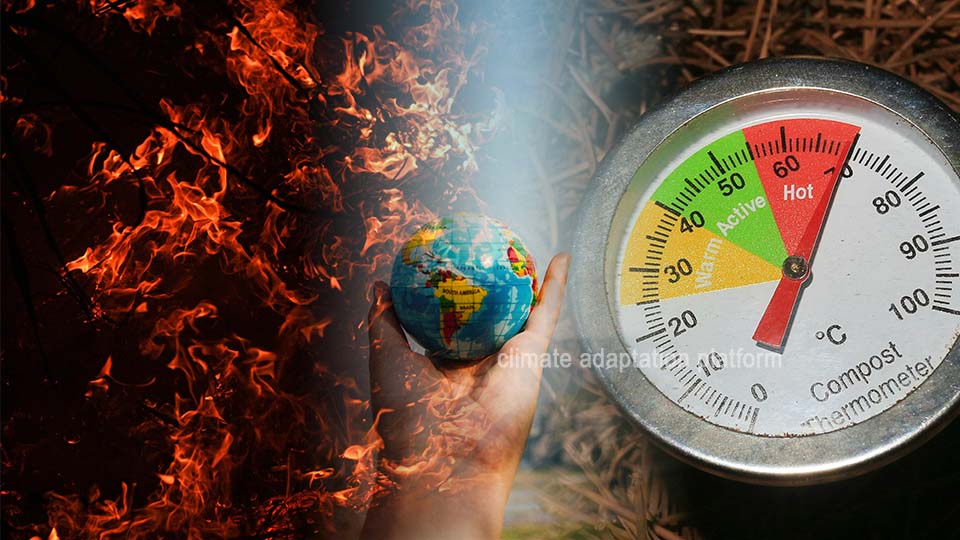
The World Meteorological Organization’s (WMO) Greenhouse Gas Bulletin, released in October 2025, reveals that atmospheric carbon dioxide (CO₂) concentrations reached a new record high in 2024.
The increase is driven by human activities, a rise in wildfires globally, and a weakening ability of natural “carbon sinks” such as forests, wetlands, and the oceans to absorb emissions.
In 2024, atmospheric CO₂ levels reached 424 parts per million (ppm), an increase of 3.5 ppm compared with 2023. According to the WMO, the rate of CO₂ growth has more than tripled since the 1960s, rising from an annual average increase of 0.8 ppm to 2.4 ppm between 2011 and 2020. The jump from 2023 to 2024 represents the largest annual increase since systematic measurements began in 1957.
Greenhouse gas concentrations reach record levels
Data from the WMO’s Global Atmosphere Watch show that all major long-lived greenhouse gases reached record concentrations in 2024. Average global levels were 423.9 ppm for carbon dioxide, 1,942 parts per billion (ppb) for methane (CH₄), and 338.0 ppb for nitrous oxide (N₂O).
Compared with pre-industrial levels before 1750, these concentrations represent increases of 52% for CO₂, 166% for methane, and 25% for nitrous oxide. Methane and nitrous oxide, the second and third-most important long-lived greenhouse gases linked to human activity, also reached their highest recorded levels in 2024.
Methane is responsible for around 16% of global warming and has a relatively short atmospheric lifetime of about nine years. Approximately 40% of methane emissions originate from natural sources, such as wetlands, while 60% come from human activities, including livestock farming, rice cultivation, fossil fuel extraction, landfills, and biomass burning.
Nitrous oxide emissions stem from both natural processes and human activities, particularly fertiliser use, industrial processes, and combustion.
Weakening carbon sinks and rising climate risks
“There is concern that terrestrial and ocean CO₂ sinks are becoming less effective, which means more carbon dioxide remains in the atmosphere and accelerates global warming,” said Oksana Tarasova, Senior Scientific Officer at the WMO. “Sustained and strengthened greenhouse gas monitoring is critical to understanding these feedback loops.”
Rising atmospheric CO₂ concentrations are also driving ocean acidification, a process in which the oceans absorb carbon dioxide, thereby lowering pH levels. Acidification interferes with the ability of marine organisms such as corals, shellfish, and some plankton species to form calcium carbonate shells and skeletons, threatening marine ecosystems and food chains.
Long-term impacts locked in
Because carbon dioxide and other greenhouse gases persist in the atmosphere for decades to centuries, continued emissions will affect the climate far into the future. Rising concentrations lock in higher global temperatures and increase the frequency and intensity of extreme weather events.
According to the US National Oceanic and Atmospheric Administration (NOAA), current CO₂ levels are higher than at any point in human history. The last time atmospheric concentrations were comparable was around three million years ago during the Mid-Pliocene Warm Period. Global surface temperatures were 2.5-4°C warmer than pre-industrial levels, and sea levels were at least 5 metres higher than in 1900.
NOAA further warns that if fossil fuels continue to dominate global energy systems, annual CO₂ emissions could exceed 75 billion tonnes by 2100, pushing atmospheric concentrations towards 800 ppm or higher, levels not seen on Earth for nearly 50 million years.
Source:
Carbon dioxide levels increase by record amount to new highs in 2024. (2025, October 15). World Meteorological Organization. Retrieved from https://wmo.int/news/media-centre/carbon-dioxide-levels-increase-record-amount-new-highs-2024
WMO Greenhouse Gas Bulletin – No. 21. (2025, October 16). World Meteorological Organization. Retrieved from https://wmo.int/publication-series/wmo-greenhouse-gas-bulletin-no-21
Lindsey, R. (2025, May 21). Climate change: atmospheric carbon dioxide. NOAA. Retrieved from https://www.climate.gov/news-features/understanding-climate/climate-change-atmospheric-carbon-dioxide
Leave a Reply