

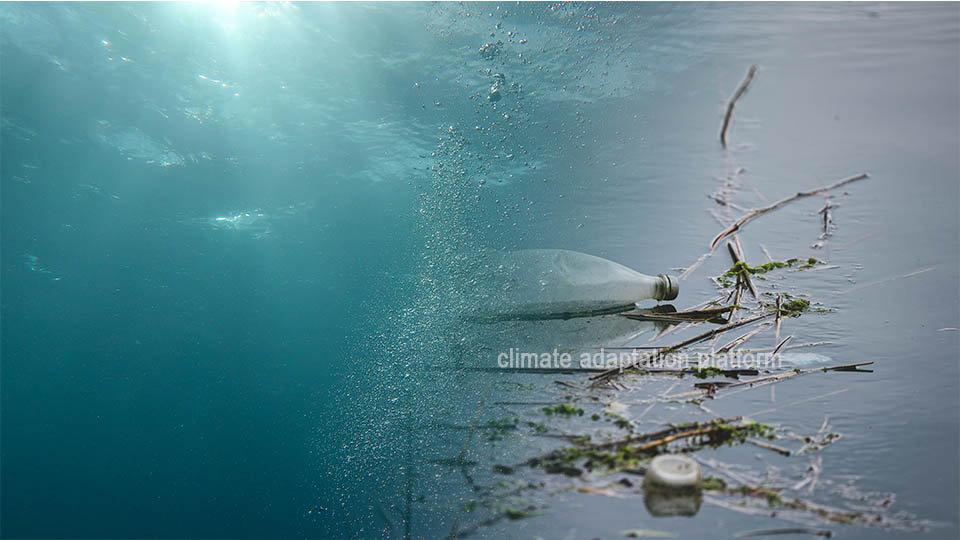
Plastics are everywhere in our daily lives; they are present in nearly every piece of equipment, tool, and product we use. This includes computers, phones, packaging, containers, work tools, and equipment across various industries, as well as personal hygiene products.
Each year, approximately 12 million tonnes of plastic waste enter the environment, of which 40% is single-use plastic. A projection shows that by 2060, plastic waste entering our seas and oceans could exceed 200 million tonnes due to growing demand and consumption of plastic. When plastics enter the environment, they break down into tiny pieces, smaller than 5 millimetres – called microplastics (MPs).
A new study, “From pollution to ocean warming: The climate impacts of marine microplastics”, published in February 2026, shows that microplastics can weaken the oceans’ ability to absorb carbon dioxide, a critical process that regulates the Earth’s temperature.
The study is composed of an international team of researchers from China, Hong Kong, Pakistan, and the United Arab Emirates to investigate how microplastics actively contribute to climate change.
The ocean serves as the planet’s most significant carbon sink, absorbing roughly one-fourth of the Earth’s carbon emissions. However, the presence of microplastics threatens to disrupt the ocean’s critical capacity for carbon sequestration.
The study notes that the widespread accumulation of microplastics in the environment – from deep ocean waters, freshwater sources, soil, air, Arctic ice, and even human bodies – poses serious threats. Microplastics can carry disease-causing organisms and toxins, disrupt ecosystems, harm marine life, and reduce soil fertility.
Key points in the study include:
- When plastics break down in the ocean due to sunlight, heat, and physical wear, they release chemicals and organic compounds, which increase dissolved organic carbon (DOC). As DOC increases, seawater pH decreases, making it more acidic.
- As microplastics degrade, they also release greenhouse gases, and over time, these changes could lead to ocean warming, acidification, and biodiversity loss.
- Microplastics disrupt carbon sequestration by affecting phytoplankton and zooplankton, which are key agents of carbon cycling. The ocean’s biological carbon pump, which transfers carbon from the atmosphere into deep-sea layers, is being undermined by microplastic pollution.
- The combined effects of microplastics, warming, and acidification threaten the stability of marine ecosystems. These disruptions threaten food security and coastal communities worldwide.
The researchers emphasise that microplastic pollution and climate change cannot be addressed in isolation or in silos and urge policymakers to adopt an integrated approach to slow microplastic production and mitigate the effects of climate change.
A better understanding of how microplastics affect the ocean’s ability to sequester carbon, their contribution to greenhouse gas emissions, and the resulting impacts on biodiversity is crucial for addressing climate stability.
Recognising this interconnectedness is essential for developing practical solutions to two of the most pressing issues of our time: plastic waste pollution and climate change.
Read the study: From pollution to ocean warming: The climate impacts of marine microplastics.
Source
Nawab, A., Khan, M. T., Ihsanullah, I., Nafees, M., & Shah, A. M. (2026). From pollution to ocean warming: The climate impacts of marine microplastics. Journal of Hazardous Materials: Plastics, 2, 100032. https://doi.org/10.1016/j.hazmp.2025.100032
Leave a Reply