

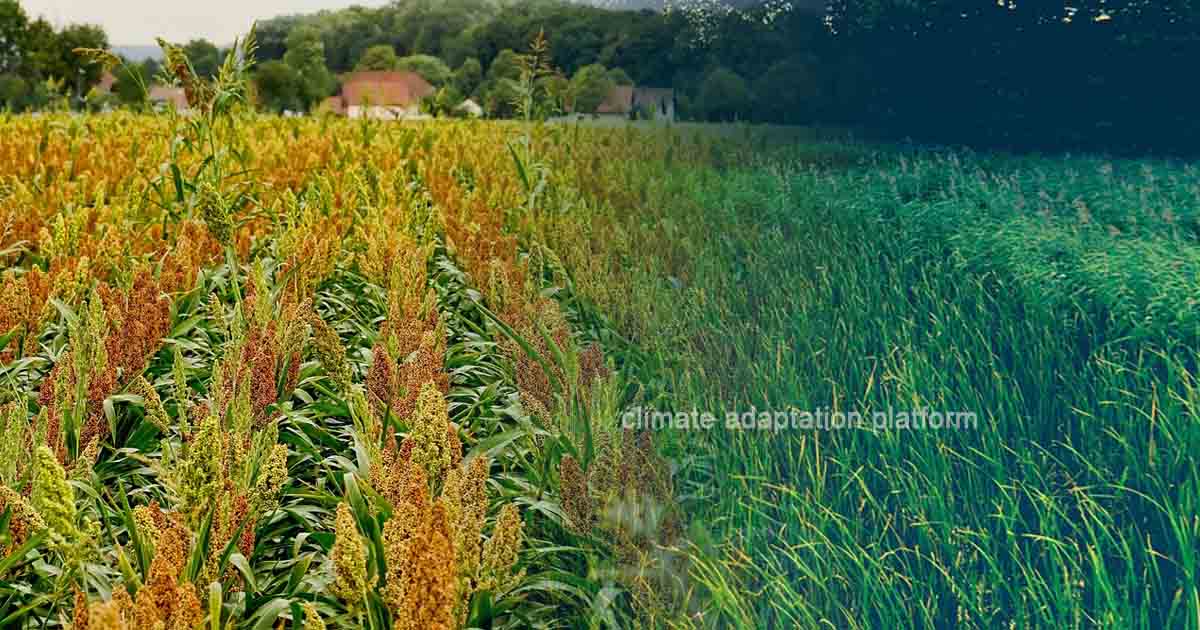
High school students from Tapobali, a small village on Indonesia’s Lembata Island, are applying practical solutions to protect their community’s food security and adapt to rising temperatures and increasingly erratic rainfall. Tapobali is home to just 367 residents spread across 553 hectares on the southern coast of the island in East Nusa Tenggara province.
Climate impacts and local challenges
Access to the nearest town, Lewoleba, is both costly and inconvenient due to uneven roads and unreliable mobile phone reception, according to Agutinus Bala Ledun, the elected village head, in an interview with Mongabay Indonesia. Villagers regularly endure droughts lasting up to 9 months, with climate models projecting even hotter, drier conditions in the years ahead.
Residents still vividly recall periods of hunger when corn and rice crops failed in 2003 and 2014. In 2024, corn harvests across several Lembata villages dropped by more than half due to intensified and prolonged drought linked to the El Niño climate pattern. High temperatures and extreme rainfall have also accelerated the spread of plant diseases and pest outbreaks, further driving down yields.
Sorghum as a climate-resilient solution
Sorghum, a flowering grass that grows over six feet tall and produces nutrient-dense grains, has emerged as a promising alternative. Globally, the fifth-most-cultivated cereal crop, sorghum, is renowned for its resilience to drought, heat stress, and poor soil conditions. Although it originated in Africa, its cultivation has spread across Asia, the Americas, and Australia, where it supports human diets, livestock feed, and even biofuel production.
With support from the Samdhana Institute, a Southeast Asian civil society organisation, students received 83 million rupiah (£3,900) to help establish small businesses, including cake production and roasted coffee blended with sorghum.
Using the funding, students began planting sorghum on their school’s agricultural plot. Their efforts quickly inspired local farmers to replace corn and rice with sorghum, and many villagers are now requesting seeds to plant in their own gardens.
A healthier and more reliable staple
Sorghum also offers notable health benefits. With its low glycaemic index, it provides a healthier alternative to refined rice, which contributes to Indonesia’s growing diabetes burden.
Of the region’s staple crops, rice, corn, and tubers, sorghum is the most tolerant of low rainfall while still producing reliable yields. Unlike corn, which is harvested annually, sorghum can be harvested up to three times a year.
In 2024, the Indonesian government introduced Regulation Number 81 to promote food diversification in rural areas, requiring state agencies to support locally suitable crops such as cassava and sorghum.
A decade earlier, Indonesia’s National Atomic Energy Agency (BATAN) and the International Atomic Energy Agency (IAEA) introduced two improved sorghum variants. One variant, Samurai 2, can yield up to 8.5 tons per hectare, approximately 1.5 times that of existing varieties.
Strengthening food security through diversification
As Indonesians face escalating climate impacts today and in the decades ahead, diversifying staple crops and adopting drought-resilient varieties like sorghum offers an effective path to greater food security.
The initiative in Tapobali demonstrates how locally led adaptation, supported by climate-resilient crops, can reduce community vulnerability and ensure a more stable food supply in a warming world.
Sources:
Rosary, E. (2025, September 17). Grassroots community seeds sorghum in eastern Indonesia to adapt to climate change. Mongabay. Retrieved from https://news.mongabay.com/2025/09/grassroots-community-seeds-sorghum-in-eastern-indonesia-to-adapt-to-climate-change/
Srivastava, A. K., Riaz, A., Jiang, J., Li, X., Uzair, M., Mishra, P., Zeb, A., Zhang, J., Singh, R. P., Luo, L., Chen, S., Yang, S., Zhao, Y., & Xie, X. (2025). Advancing Climate-Resilient Sorghum: The Synergistic Role of Plant Biotechnology and Microbial Interactions. Rice, 18(1), 1-21. https://doi.org/10.1186/s12284-025-00796-2
Leave a Reply