

Kelp forests are among the most widespread and valuable marine ecosystems on the planet. Covering roughly a quarter of the world’s coastlines, they provide significant ecological, economic, and cultural benefits.
Kelp also helps draw carbon dioxide from the atmosphere and serves as an extremely biologically productive habitat for a wide range of marine species, including fish, urchins, sea lions, sea otters, and even whales.
Because of these functions, kelp forests are crucial for fisheries, recreation, and various industrial activities. They produce oxygen, improve water quality, and help reduce coastal damage from storms.
However, kelp forests around the world are increasingly under threat due to the rapidly expanding seaweed industry, local human pressures, and the accelerating impacts of climate change.
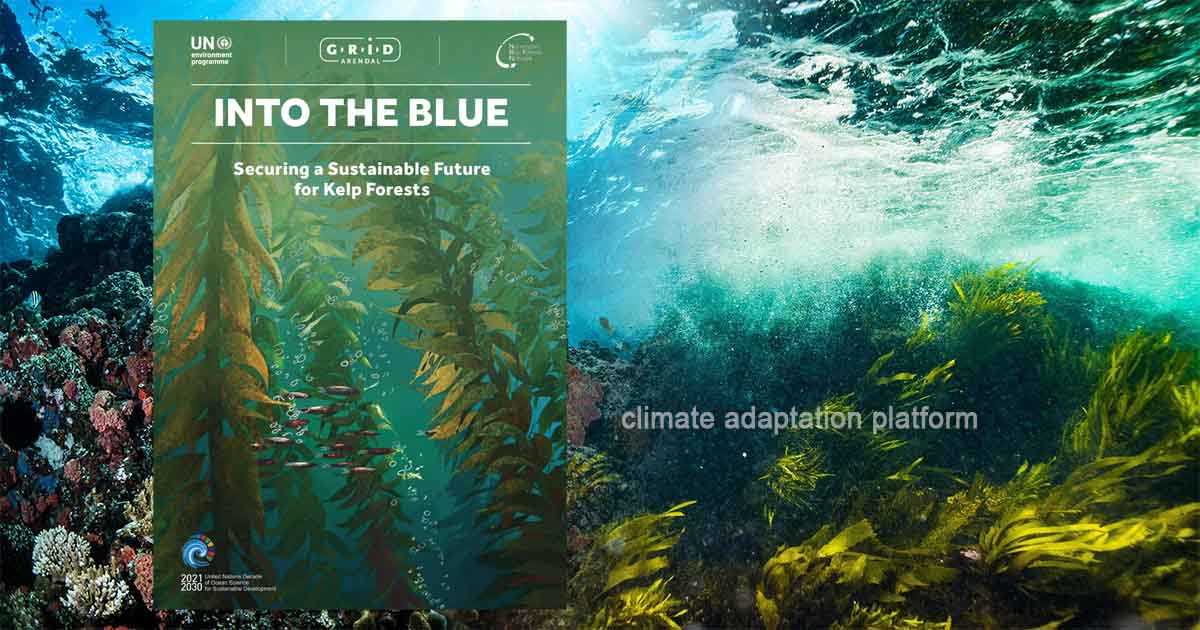
According to a 2023 United Nations Environment Programme (UNEP) report, Into the Blue, Securing a Sustainable Future for Kelp Forests, 40–60% of global kelp forests have declined over the past 50 years.
Research reveals the true value of Kelp ecosystems
The UNEP report provides the first comprehensive global assessment of the status of kelp forests, aiming to strengthen understanding of their value. It highlights major knowledge gaps and offers recommendations for protecting and managing these ecosystems sustainably through policy interventions and long-term planning.
Further insight comes from a study published in Nature in April 2023, titled “The value of ecosystem services in global marine kelp forests”. While the cultural and socioeconomic importance of kelp forests is widely acknowledged, the study argues that the magnitude and economic value of their ecosystem services remain poorly understood. Placing a monetary value on these ecosystems, from the fisheries they support to their carbon sequestration capacity, is becoming increasingly central to conservation and resource management.
The study examined six major forest-forming kelp genera, Ecklonia, Laminaria, Lessonia, Macrocystis, Nereocystis, and Saccharina. It estimated the global environmental and economic value of kelp forests at approximately US$500 billion per year. This valuation is based on three core ecosystem services:
- fisheries production,
- nutrient removal (such as nitrogen runoff and pollution), and
- carbon sequestration.
The authors estimate that kelp forests support fisheries worth around US$29,900 per hectare per year, remove nutrients valued at approximately US$73,800 per hectare per year, and collectively sequester 4.91 megatonnes of CO₂ annually. However, the relative economic value of carbon sequestration remains low due to weak global carbon pricing.
Notably, the study emphasises that a hectare of kelp forest can produce an average of more than two tonnes of fisheries output each year, nearly a tonne of which could be harvested sustainably under a 38% extraction rate. Kelp forests also support more than 1,000 associated organisms, including commercially important species such as lobsters and abalone, contributing significantly to local economies. Yet overfishing and ecosystem degradation continue to threaten these environments.
The valuation does not include many other crucial services provided by kelp forests, such as coastal protection, storm buffering, tourism, recreation, cultural importance, and education. As a result, the US$500 billion figure is likely a considerable underestimate of their actual global value.
Why economic valuation matters for conservation
Emerging research shows that kelp forests are far more valuable than previously understood, in some cases up to three times higher than earlier estimates.
Assigning a monetary value to their ecosystem services provides governments, policymakers, and communities with a tangible basis for decision-making when considering protection, restoration, or sustainable management.
It also raises awareness of the existential threats facing these ecosystems, from pollution and overfishing to sedimentation, warming oceans, and broader climate change impacts.
To learn more about the global value of kelp forests and the urgent need to protect them, readers can explore both the UNEP report and the Nature study.
Source:
United Nations Environment Programme (2023). Into the Blue: Securing a Sustainable Future for Kelp Forests. Nairobi.
Eger, A. M., Marzinelli, E. M., Beas-Luna, R., Blain, C. O., Blamey, L. K., K Byrnes, J. E., Carnell, P. E., Choi, C. G., Hessing-Lewis, M., Kim, K. Y., Kumagai, N. H., Lorda, J., Moore, P., Nakamura, Y., Pérez-Matus, A., Pontier, O., Smale, D., Steinberg, P. D., & Vergés, A. (2023). The value of ecosystem services in global marine kelp forests. Nature Communications, 14, 1894. https://doi.org/10.1038/s41467-023-37385-0
Leave a Reply