

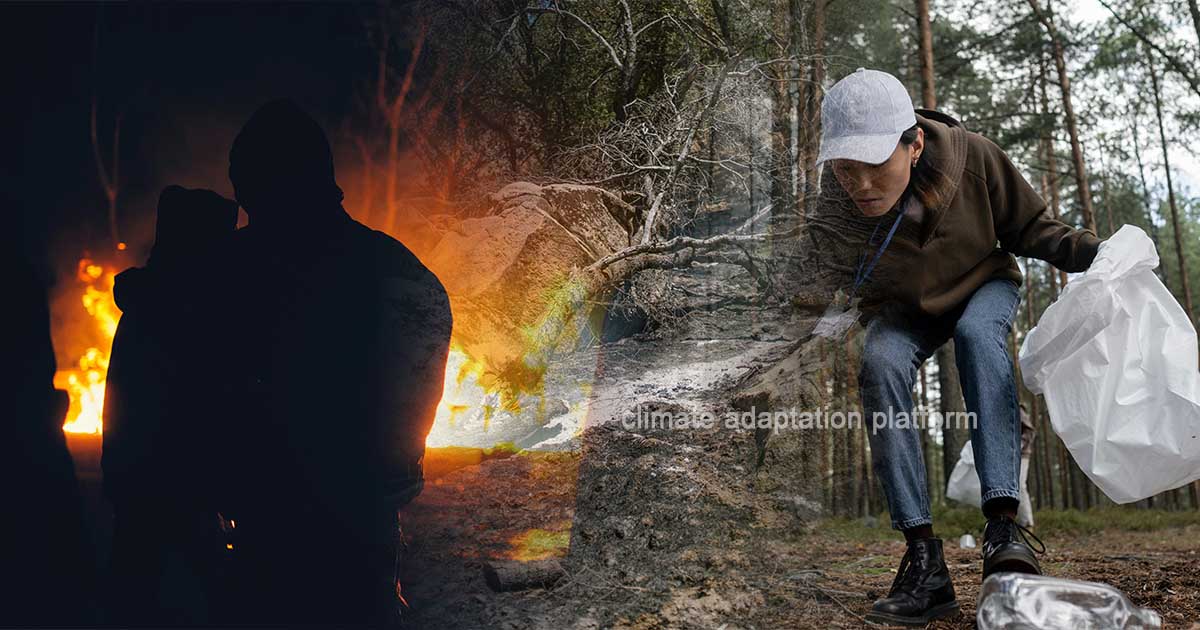
Climate change and environmental degradation are increasingly recognised as significant stressors affecting people’s mental health. One prominent manifestation is eco-anxiety, feelings of worry, fear, or distress triggered by climate impacts or the anticipation of environmental collapse.
Growing awareness of eco-anxiety
A 2023 study, “Coping with eco‑anxiety: An interdisciplinary perspective for collective learning and strategic communication”, describes eco-anxiety as an emerging and escalating phenomenon linked to worsening environmental and climate-related challenges. The authors argue that responding effectively requires an interdisciplinary approach that acknowledges eco-anxiety as part of a larger socio-ecological crisis.
The paper reviews existing research and identifies four priority areas for collective action:
- Framing climate messages to motivate positive action
- Using storytelling to inspire behavioural and cultural change
- Sharing knowledge and resources through networks and platforms
- Applying positive deviance to guide innovative solutions
Media coverage, the study notes, often contributes to eco-anxiety. Much climate communication is framed in overwhelmingly negative or catastrophic terms, both visually and linguistically, leading to feelings of helplessness and doom.
In contrast, storytelling can support social and behavioural change by engaging people emotionally, shifting social norms, and offering narratives of hope and agency. Similarly, knowledge-sharing networks enable collaboration between researchers, mental-health professionals, policymakers, community leaders, and climate advocates, helping build collective understanding and climate resilience. Positive deviance, identifying individuals or communities who creatively and successfully respond to climate stressors, offers further pathways for adaptation and wider learning.
New evidence on climate anxiety in Canada
A recent study published in Nature Mental Health on 21 October 2025, “Prevalence, magnitude and distribution of climate change anxiety in Canada: an interdisciplinary study”, aims to estimate the prevalence, magnitude, and distribution of climate-related anxiety across demographic groups and regions in Canada.
Researchers combined psychological measures, including the Climate Change Anxiety Scale, with a national survey involving 2,476 diverse participants. Their findings show that around 2.35% experienced clinically significant symptoms of climate-related anxiety.
Climate anxiety was most prevalent among:
- Indigenous Peoples
- Women
- Residents of Northern Canada
- People with household incomes below CAD $60,000
A Science Magazine article highlights the study’s definition of climate anxiety as “a persistent and profound worry about the climate crisis”, which may include generalised anxiety, difficulty concentrating, sleep disturbances, or somatic symptoms such as headaches or gastrointestinal distress. These symptoms can affect daily functioning at work, in relationships, and within communities.
Indigenous Peoples face both higher exposure and greater cultural vulnerability. Their livelihoods, traditions, and ancestral lands are deeply connected to ecosystems already experiencing rapid degradation. Women, who statistically report higher rates of anxiety and mood disorders overall, also show elevated levels of climate concern.
Meanwhile, residents in Northern Canada face immediate, visible climate impacts such as permafrost thaw, melting ice, and shifting species patterns, making climate stress a daily experience rather than an abstract worry. Lower-income households have fewer resources to adapt, relocate, or cope, compounding emotional distress.
Why understanding eco-anxiety matters
These findings highlight eco-anxiety as an emerging issue that merits serious attention, not only from mental health professionals but from policymakers, educators, and climate advocates seeking to design effective climate adaptation strategies.
The combined evidence underscores the need for climate communication that empowers rather than overwhelms, for mental-health support systems attentive to climate-related distress, and for climate adaptation policies that protect vulnerable groups.
Addressing eco-anxiety also means acknowledging the emotional dimensions of climate change and ensuring that people feel capable, supported, and informed as environmental challenges intensify.
Sources:
Wang, H., Safer, D. L., Cosentino, M., Cooper, R., Van Susteren, L., Coren, E., Nosek, G., Lertzman, R., & Sutton, S. (2022). Coping with eco-anxiety: An interdisciplinary perspective for collective learning and strategic communication. The Journal of Climate Change and Health, 9, 100211. https://doi.org/10.1016/j.joclim.2023.100211
Harper, S.L., Cunsolo, A., Aylward, B. et al. Prevalence, magnitude and distribution of climate change anxiety in Canada: an interdisciplinary study. Nat. Mental Health (2025). https://doi.org/10.1038/s44220-025-00521-4
Wang, H., Safer, D. L., Cosentino, M., Cooper, R., Van Susteren, L., Coren, E., Nosek, G., Lertzman, R., & Sutton, S. (2022). Coping with eco-anxiety: An interdisciplinary perspective for collective learning and strategic communication. The Journal of Climate Change and Health, 9, 100211. https://doi.org/10.1016/j.joclim.2023.100211
Leave a Reply