

The Asia–Pacific region is home to around 60% of the world’s population, accounting for approximately 4.3 billion people. It also includes two of the world’s most populous countries, China and India.
Alongside rapid population growth, the region has emerged as the world’s fastest-growing economic powerhouse. Since the turn of the century, economic progress has lifted around one billion people out of extreme poverty.
However, this growth has come at a significant environmental cost. Unsustainable and inefficient extraction of natural resources has placed immense pressure on ecosystems, contributing to climate change, pollution, waste generation, and biodiversity loss.
Extreme heat – an escalating threat
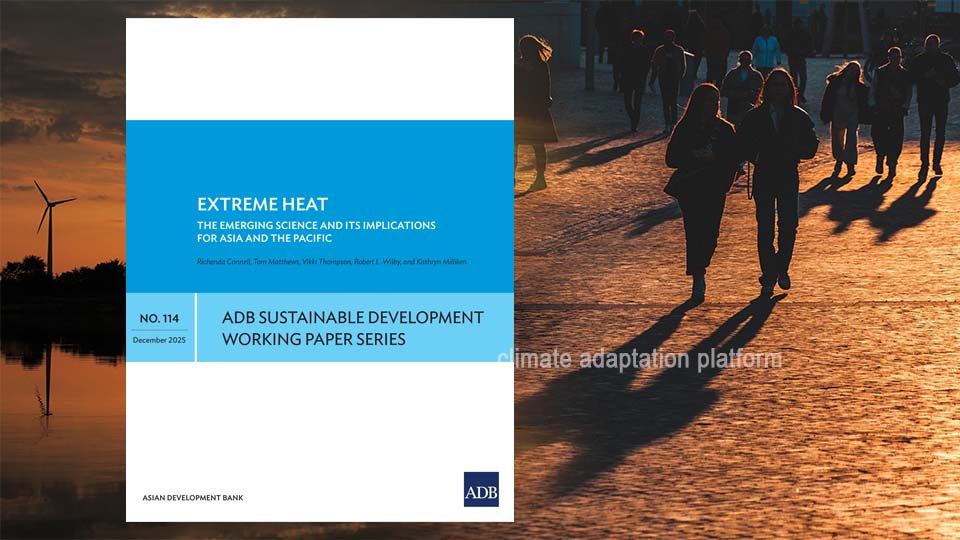
The region is now facing another deadly and accelerating threat: extreme heat and heatwaves. A recent paper published by the Asian Development Bank (ADB), “Extreme Heat: The Emerging Science and Its Implications”, reviews recent extreme heat events across the Asia–Pacific and examines future climate projections.
Rising temperatures are already affecting people’s health, education, productivity, food production, and water security, while placing stress on critical sectors and infrastructure throughout the region.
The report reveals that 75% of the region’s workforce is already exposed to excessive heat, putting millions of jobs and lives at risk. Heat stress is projected to threaten around 80 million jobs by 2030. In urban areas, the urban heat island (UHI) effect is intensifying, making cities at least 2°C hotter than surrounding rural areas.
Climate projections and forecasting gaps
Under a 1.5°C global warming scenario, Shanghai’s climate could resemble that of present-day Karachi. At 4°C of warming, large parts of the region may experience temperature increases exceeding 6°C, with more than 40 days each year above 35°C. India, Pakistan, and China are expected to face the most severe heatwaves, while Pacific island nations will increasingly experience marine heatwaves that also influence land temperatures.
The paper highlights advances in climate modelling, weather forecasting, and monitoring that are producing faster, more localised heat forecasts. However, significant gaps remain.
The region needs greater investment in heat-related monitoring systems, in collecting worker productivity data, and in establishing heat thresholds to protect vulnerable populations and sectors.
Socioeconomic and sectoral impacts
Extreme heat poses serious risks to health, education, employment, food security, water supplies, and infrastructure. Those most vulnerable include older people, children, pregnant women, people with disabilities, and outdoor workers.
The report finds that outdoor worker capacity could decline by more than 50% in parts of Asia by 2030. The risk of maize crop failure could rise from 6% today to 54% under a 2°C warming scenario. Heatwaves are also linked to disrupted education, increased mental and physical illness, damage to marine ecosystems, and growing risks to water, energy, transport, and IT infrastructure.
Key recommendations for a heat-resilient future
Based on its findings, the ADB report outlines five core recommendations.
First, countries should upgrade climate risk assessment tools by integrating the latest science on extreme heat to strengthen climate adaptation planning.
Second, governments must improve heat forecasting and early warning systems by investing in monitoring, modelling, and data collection.
Third, greater investment is needed in the resilience of public services, including passive cooling in buildings, particularly low-income housing and urban planning measures that reduce heat through green infrastructure.
Fourth, stronger protections are required for workers. Existing workplace safety approaches often underestimate heat risks. Updated heat measurements, improved protective measures, social programmes, financing tools, and heat insurance for workers and crops are essential.
Finally, regional cooperation is critical. Countries across Asia and the Pacific must share knowledge, data, and solutions to accelerate action on extreme heat.
As the report concludes, these threats “signal severe implications for people’s health and livelihoods, services, infrastructure, and domestic economies”. The impacts are already being felt and are expected to intensify.
Embedding the latest science into government and private-sector decision-making is essential to building a heat-resilient future for Asia and the Pacific.
Sources:
Connell, R., Matthews, T., Thompson, V., Wilby, R., & Milliken, K. (2025 December). Extreme Heat The Emerging Science and Its Implications for Asia and the Pacific. ADB. Retrieved from https://www.adb.org/publications/extreme-heat-asia-pacific
Population Trends. (2025). UNFPA. Retrieved from https://asiapacific.unfpa.org/en/topics/population-trends-9
Our impact in Asia Pacific. (2025). UNEP. Retrieved from https://www.unep.org/regions/asia-and-pacific/our-impact-asia-pacific
Leave a Reply