

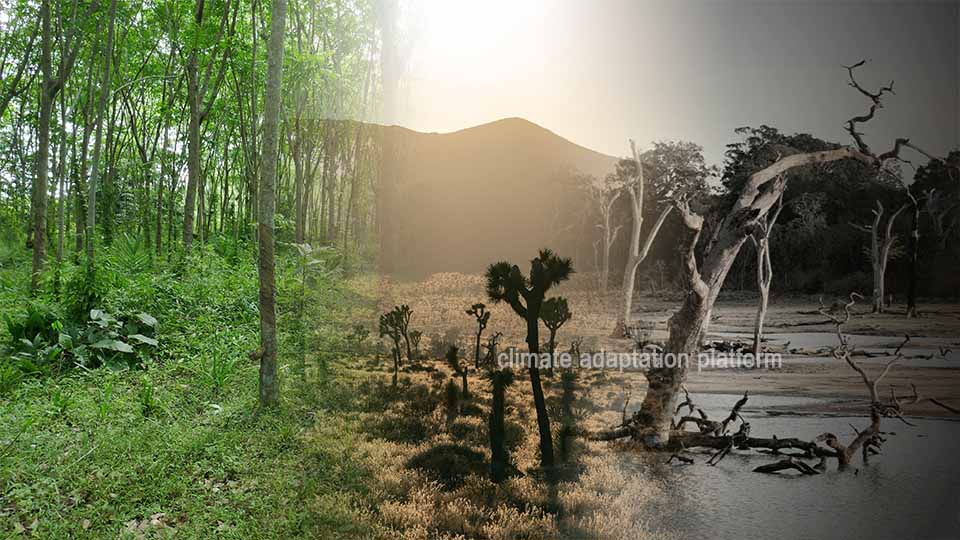
Land-use change has long been recognised as a major contributor to climate change. Clearing forests for agriculture alone accounts for roughly 25% of global greenhouse gas (GHG) emissions.
However, new evidence shows that this relationship works both ways: climate change is now actively reshaping the world’s landscapes.
A recent report by the World Resources Institute (WRI), using satellite imagery, reveals that climate change is accelerating the loss and degradation of forests, grasslands, wetlands, rivers, and farmland.
These changes are creating a dangerous feedback loop in which altered landscapes release more carbon, further intensifying global warming.
How climate change is reshaping landscapes
The WRI report highlights how climate-driven wildfires, droughts, and extreme storms are transforming ecosystems worldwide.
Rising temperatures are drying out soils and vegetation, creating conditions for more frequent and intense forest fires. The report finds a strong correlation between a warming climate and increased fire activity.
Compared to the previous decade, the area burned in forests, particularly in boreal and humid tropical regions, has doubled. Extreme fire seasons include Australia in 2019–2020, the western United States in 2020, and Canada in 2023. Beyond destroying forests, prolonged wildfires release vast amounts of carbon dioxide and severely degrade air quality.
Droughts, water stress, and ecosystem collapse
Climate change is also intensifying droughts, which destroy crops, kill trees, and deplete river basins. Iran offers a stark example: the country is experiencing its driest and hottest autumn on record, with major reservoirs rapidly depleting, raising concerns that water shortages could force evacuations in Tehran (Korol, 2025).
Similar patterns have emerged elsewhere. Southeastern Australia recorded its driest September in over a century in 2023, while the Amazon River reached record-low levels in October of the same year.
Combined with rising deforestation and fires, these conditions have heightened fears that parts of the Amazon rainforest could reach a tipping point, transforming into savanna-like ecosystems.
Extreme storms and land degradation
A warming climate is also fuelling stronger and more destructive storms. Intense rainfall events increase the risk of landslides, erosion, and flooding, while powerful winds can uproot vast numbers of trees, a phenomenon known as windthrow.
Satellite imagery from 2023 shows the devastating impact of extreme storms in Malawi, where landslides destroyed nearly 200,000 hectares of farmland, killing and displacing thousands of people. The frequency and intensity of storms in the region are increasing, further undermining food security and livelihoods.
The WRI report underscores a sobering reality: while land-use change has driven climate change for decades, climate change is now reshaping the land itself.
Without urgent action to reduce emissions and protect ecosystems, this feedback loop will continue to accelerate, with profound consequences for people, nature, and the global climate.
Read the WRI article: Land Use Changed the Climate. Now Climate’s Changing the Land
Source:
Hansen, M., & Hanson, C. (2025, November 11). Land Use Changed the Climate. Now Climate’s Changing the Land. World Resources Institute. Retrieved from https://www.wri.org/insights/land-use-climate-change-feedback-loop?
Korol, S. (2025, November 19). Tehran’s water crisis is a warning for every thirsty city. Vox. Retrieved from https://www.vox.com/future-perfect/468778/tehran-water-crisis-iran-day-zero-relocation-solutions
Abatzoglou, J. T., Kolden, C. A., Cullen, A. C., Sadegh, M., Williams, E. L., Turco, M., & Jones, M. W. (2025). Climate change has increased the odds of extreme regional forest fire years globally. Nature Communications, 16(1), 6390. https://doi.org/10.1038/s41467-025-61608-1
Leave a Reply