

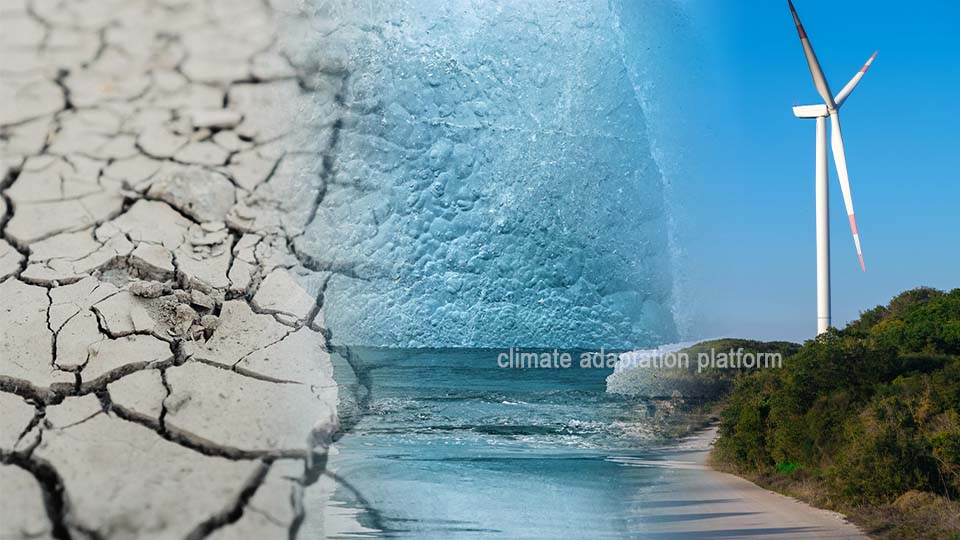
Climate change is not a future problem; its effects are already unfolding due to increased greenhouse gas (GHG) emissions from human activities.
These impacts are visible in the melting and shrinking of glaciers and ice sheets, shifting geographical ranges of plants and animals due to rising temperatures, and widespread changes in phenology. Plants are flowering, and trees are coming into leaf earlier than usual, while bird migrations and fruit ripening are occurring sooner than in previous decades.
According to the “Intergovernmental Panel on Climate Change” (IPCC), the United Nations body responsible for assessing climate science, some of these changes are irreversible for hundreds to thousands of years. The IPCC’s Sixth Assessment Report states that approximately 1.5°C of warming above pre-industrial levels is now effectively locked in. This has cascading consequences, including more frequent and intense extreme weather events, sea-level rise, shifting precipitation patterns, and ecosystem disruption occurring worldwide.
Why climate adaptation is now essential
This “committed warming” means that climate adaptation is no longer optional; it is essential for survival and resilience. Adaptation efforts are critical to safeguarding food security, water availability, public health, infrastructure, and economic stability. The urgency is especially acute for vulnerable and low-income countries, as well as for populations living in low-lying coastal areas, arid regions, and small island states.
While mitigation aims to reduce future emissions, adaptation focuses on adjusting systems and societies to manage unavoidable impacts. As warming continues, strengthening adaptive capacity becomes just as important as cutting emissions.
Measuring Global readiness: The ND-GAIN index
The “Notre Dame Global Adaptation Initiative” (ND-GAIN) evaluates countries’ vulnerability to climate change and their readiness to adapt. Its flagship tool, the ND-GAIN Country Index, ranks 185 countries annually using 20 years of data across 45 indicators grouped into two core components: vulnerability and readiness.
Vulnerability score
The vulnerability score assesses a country’s exposure and sensitivity to climate-related hazards across six life-supporting sectors: food, water, health, ecosystem services, human habitat, and infrastructure. Indicators include projected changes in temperature and precipitation, agricultural dependence, water stress, disease prevalence, and exposure to natural disasters.
Readiness score
The readiness score evaluates a country’s capacity to leverage investments for adaptation. It measures economic, governance, and social readiness using indicators such as ease of doing business, control of corruption, political stability, rule of law, regulatory quality, infrastructure, social inequality, education levels, and innovation capacity.
By combining vulnerability and readiness scores, the index identifies which countries are most at risk and least equipped to respond, and which are better positioned to adapt effectively.
Countries most prepared to adapt
According to ND-GAIN, the ten countries currently most prepared to adapt to climate change are:
- Norway
- Finland
- Switzerland
- Denmark
- Sweden
- Singapore
- New Zealand
- United Kingdom
- Germany
- Australia
Countries most vulnerable
At the bottom of the index — those least prepared and most vulnerable — are:
- Chad
- Central African Republic
- Eritrea
- Sudan
- Guinea-Bissau
- Democratic Republic of the Congo
- Republic of the Congo
- Afghanistan
- Bangladesh
- Burundi
Tools to support climate adaptation
ND-GAIN provides a suite of free, open-access tools and resources to help governments, businesses, and communities make informed decisions and prioritise investments across environmental, economic, and social sectors. These include:
- The Country Index
- The Urban Adaptation Assessment (UAA), which measures climate risk and readiness in US cities
- The Global Urban Climate Assessment(GUCA) offers comparable data on urban resilience across hazards, sensitivity, shock absorption, and adaptive capacity
- Adaptation Briefs, which curate evidence-based examples of effective adaptation strategies
Together, these tools aim to close the gap between climate risk and preparedness, helping societies build resilience in a warming world.
Source:
Earth Will Continue to Warm and the Effects Will Be Profound. (2024, October 23). NASA. Retrieved from https://science.nasa.gov/climate-change/effects/
Climate change widespread, rapid, and intensifying – IPCC. (2026). IPCC. Retrieved from https://www.ipcc.ch/2021/08/09/ar6-wg1-20210809-pr/
Helping countries and cities counter the risks of a changing climate. (2026). ND-GAIN. University of Notre Dame. Retrieved from https://gain.nd.edu/
ND-GAIN Country Index Scores Updated June 2025. (2026). ND-GAIN. University of Notre Dame. Retrieved from https://gain.nd.edu/our-work/country-index/
Leave a Reply