

Scientists and climate monitoring organisations, such as the National Oceanic and Atmospheric Administration (NOAA) and Copernicus, the European Union’s Earth observation programme, have announced the recurrence of El Niño this year.
El Niño is a Spanish word for “little boy”, a name Peruvian fisherman assigned to an event, a hundred years ago, when they noticed the disappearance of anchovies in the equatorial Pacific Ocean due to warmer ocean waters, which happens around Christmas time. Ocean surface waters would warm by 2°C to 2.5°C, and as anchovies prefer cooler waters, they move southward during El Niño.
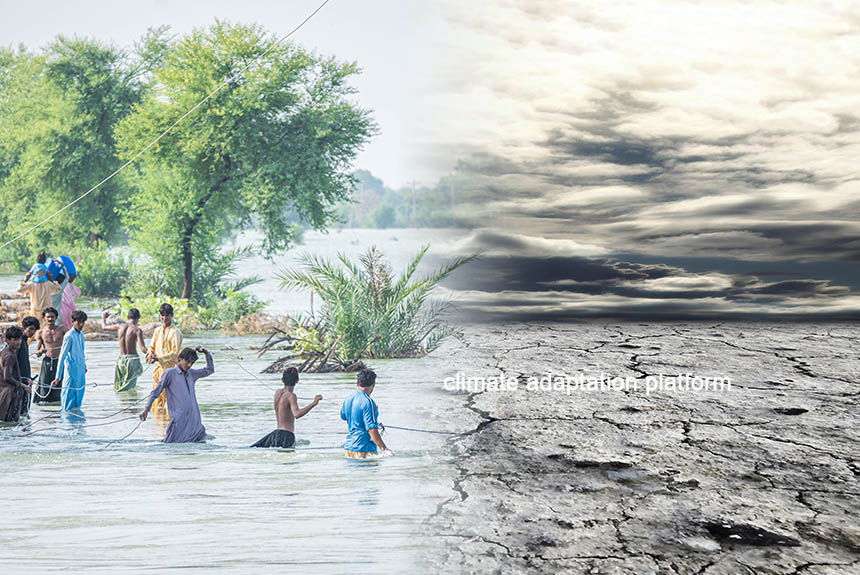
However, it is not only Peruvian fishermen who were affected by this recurring climatic pattern. El Niño also causes a vast redistribution of heat and moisture across the planet, bringing droughts in some places, heavy rain in others, heatwaves, wildfires and a general warming of the planet due to the interconnected nature of the global weather system.
Scientists warn that this year’s El Niño will resemble a young man more than a little boy. According to The Guardian, some scientists dubbed it a “super” or “Godzilla” El Niño based on the expected size of the temperature anomaly, which will push global heat higher at a time when extreme weather events such as Europe’s recent heatwaves and slew of storms are pushing the boundaries of what societies can handle (Niranjan, 2026).
The Economist notes that while El Niño is not caused by climate change, the two phenomena amplify each other’s effects. The article points out that El Niño has led to record-breaking temperatures, such as the strong El Niño in 1997-1998, which made 1998 the hottest year at the time, with average temperatures nearly 1°C above average. The same thing happened in 2015-16, with temperatures in 2016 exceeding 1°C. The current record holder is 2024, when temperatures were 1.55°C higher than the pre-industrial average. Climate modellers think 2027 could be hotter still.
The article also shows how El Niño effects vary across regions. For instance, the El Niño’s of 1997-98 and 2015-16 caused devastating droughts, reduced crop harvests, and hunger in eastern and southern Africa, Central America, and Oceania. Combined with other stressors this year – high fertiliser and fuel costs because of the war in Iran – El Niño effects could intensify the impacts on the world’s 68 poorest, according to The Guardian. These countries are experiencing debt distress or are at high risk of it, the International Monetary Fund warned in March.
The Famine Early Warning Systems Network projected in June that 115-125 million people would need urgent food assistance by December, with the risk of famine in Sudan, South Sudan, and Somalia. The threat of El Niño prompted the UN’s World Food Programme and its Food and Agriculture Organisation to issue their first joint appeal for funds to avert a crisis before it happens. The agencies said they were $167m short of the $202m needed to help 8.8 million people with drought-resistant seeds, flood defences, water storage systems and cash transfers.
Thankfully, El Niño’s effects, lessons learned from the past, its predictability, and improvements in weather forecasts and early warning systems have strengthened preparations that can mitigate its impacts. According to WMO’s secretary general, Celeste Saulo, the organisation’s forecasts are more of a call to action before hazards escalate into crises. Mr Saulo urged the world to intensify efforts to build multi-hazard early warning systems, as only 128 countries report having them in place.
A study by the European Commission’s Joint Research Centre, “From forecast to risk: an anticipatory analysis of the 2026-27 El Niño”, examines the potential global impacts of the expected 2026–27 El Niño climate event before its effects fully materialise. Rather than simply forecasting whether El Niño will occur, the report focuses on what risks governments, humanitarian agencies, and decision-makers should prepare for in advance.
“This document provides a comprehensive anticipatory analysis of the predicted 2026/27 El Niño event across several dimensions, with the main aim of providing scientific evidence for policy recommendations emphasising the importance of anticipatory action. It opens with a general brief introduction to the El Niño phenomenon in Section 1. Section 2 provides an analysis of what to expect in terms of temperature, drought, precipitation, floods and tropical storm patterns by region and event intensity. Section 3 analyses the latest forecasts. Section 4 then examines food price impacts, with scenario-based projections for maize, rice, soybeans, and wheat. Section 5 quantifies population exposure to climate hazards across key world regions and presents the countries with the highest risk of humanitarian impacts due to El Niño over the next six months. Section 6 presents an analysis of potential human mobility related to El Niño. Finally, section 7 provides an overview of collected NGO (non-governmental organisation), national and international responses and action plans underway to mitigate the effects of the phenomenon, together with a collection of news on the forecasted El Niño event and its possible impacts.”
Sources
The coming El Niño could be the strongest ever recorded. (2026, June 16). The Economist. Retrieved from https://www.economist.com/science-and-technology/2026/06/16/the-coming-el-nino-could-be-the-strongest-ever-recorded?
Niranjan, A. (2026, June 21). El Niño is back with a vengeance – and fears of ‘Godzilla’ strength may be the least of our worries. The Guardian. Retrieved from https://www.theguardian.com/environment/2026/jun/21/el-nino-fears-godzilla-strength-hunger-famine
Acosta Navarro, J., Toreti, A., Bavera, D., Barantiev, D., Carioli, A. et al., From forecast to risk: an anticipatory analysis of the 2026-27 El Niño, Publications Office of the European Union, Luxembourg, 2026, https://data.europa.eu/doi/10.2760/8279279, JRC147365.
Leave a Reply