

Land-based animal farming — including meat, dairy, and poultry production — accounts for 75% of global agricultural land use, up to 20% of the world’s greenhouse gas (GHG) emissions, and more than 30% of methane emissions. It is also a major driver of deforestation and land-use change.
As the world population rises — projected to reach 10 billion by 2050 — so too does the demand for meat, dairy, and eggs. This raises a critical question: How can the world meet growing food needs without worsening climate change and environmental degradation?
Why “Better Meat” isn’t always better for the planet
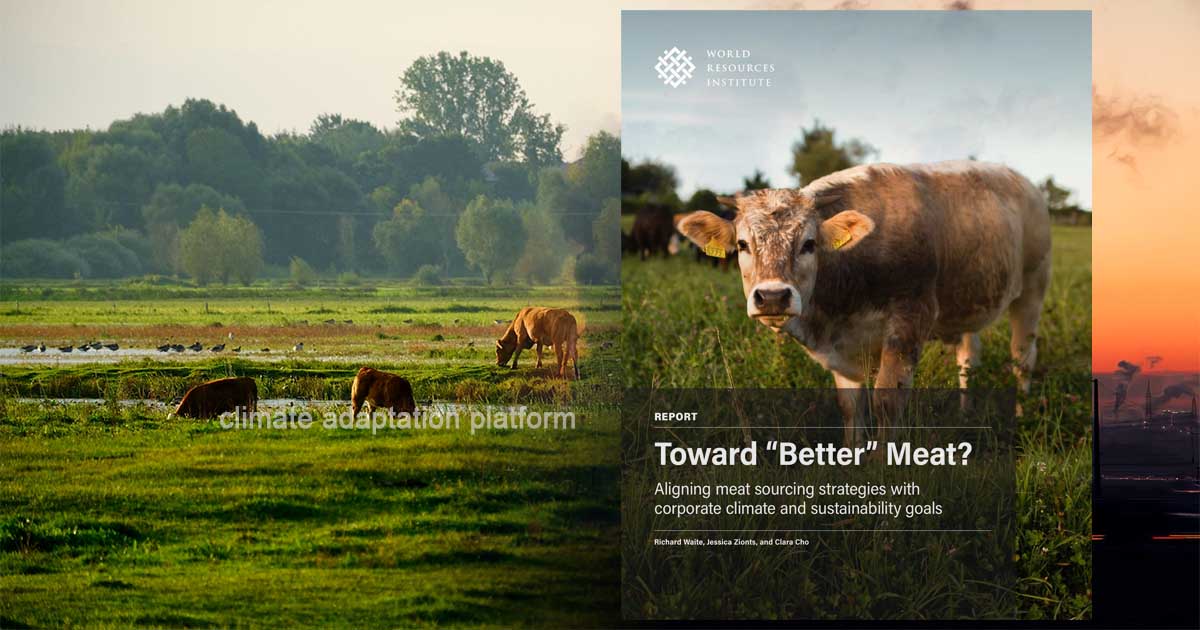
A recent analysis from the “World Resources Institute” (WRI) challenges common assumptions about “better meat.” While grass-fed, free-range, and organic systems are often perceived as more sustainable — due to benefits for animal welfare, soil health, and biodiversity — the report finds that they typically emit more GHGs per unit of meat compared to intensive, conventional livestock systems.
The study examines the varied definitions and attributes of “better meat” and compares environmental impacts between conventional and alternative production methods. Its central finding is clear: no livestock system simultaneously optimises environmental, animal welfare, social, and economic outcomes. Trade-offs are unavoidable.
Drawing on a literature review and interviews with stakeholders in North America and Europe, the analysis highlights several reasons why alternative livestock systems often result in higher environmental impacts:
- Grass-fed and free-range animals require significantly more land. Common in countries like New Zealand, these systems involve slower cattle growth and increased methane emissions over the animal’s lifetime. In contrast, grain-fed cattle in feedlots fatten more quickly, leading to lower agricultural emissions per gram of protein.
- Organic and extensive systems produce less output per hectare and per animal. This lower productivity means more land and more animals are needed to make the same volume of meat.
- Higher animal welfare standards can increase environmental pressure. Pasture-raised, grass-fed, and free-range systems require larger areas of land, intensifying strain on natural ecosystems. Replacing high-emissions meats such as beef and lamb with chicken also comes with trade-offs: producing the same amount of protein requires slaughtering more than 100 chickens for every one cow.
How companies can align meat sourcing with climate and nature goals
The WRI report recommends six steps for companies seeking to design responsible meat sourcing strategies that support climate and sustainability objectives while also addressing animal welfare concerns:
- Calculate baseline scope 3 emissions from food purchases. Establishing this baseline helps identify emissions hotspots and quantify the climate impact of meat in supply chains.
- Shift from high-emissions meat to lower-emissions products. Prioritising plant-based foods and alternative proteins is a triple win for climate, nature, and animal welfare.
- Define priorities by meat type. For beef, reducing climate and land-use impacts may be the priority. For chicken and eggs, the focus might shift to animal welfare, antibiotic stewardship, and water pollution reduction.
- Assess the impacts — both positive and negative — of sourcing changes. This should involve quantitative scenario modelling or qualitative assessments to evaluate trade-offs and likely outcomes.
- If “better meat” increases environmental impacts, source even less meat. If shifting to alternative livestock systems raises emissions, companies should move from a “less meat” to an “even less meat” sourcing strategy.
- Engage suppliers to improve practices and build transparency. This long-term effort may include setting supplier standards, using certifications, encouraging voluntary commitments, and investing in on-farm improvements.
Source:
Waite, R., J. Zionts, and C. Cho. 2024. “Toward ‘Better’ Meat? Aligning meat sourcing strategies with corporate climate and sustainability goals.” Report. Washington, DC: World Resources Institute. Available online at doi.org/10.46830/wrirpt.22.00006
Cho, C., Waite, R., & Santo, R. (2024, April 16). Is There Such a Thing As ‘Better’ Meat? It’s Complicated. World Resources Institute. Retrieved from https://www.wri.org/insights/better-meat-sourcing-climate-environmental-impacts
Toward “Better” Meat? Aligning Meat Sourcing Strategies with Corporate Climate and Sustainability Goals. (2024, April 16). World Resources Institute. Retrieved from https://www.wri.org/research/better-meat-sourcing-climate-sustainability-goals
Leave a Reply