

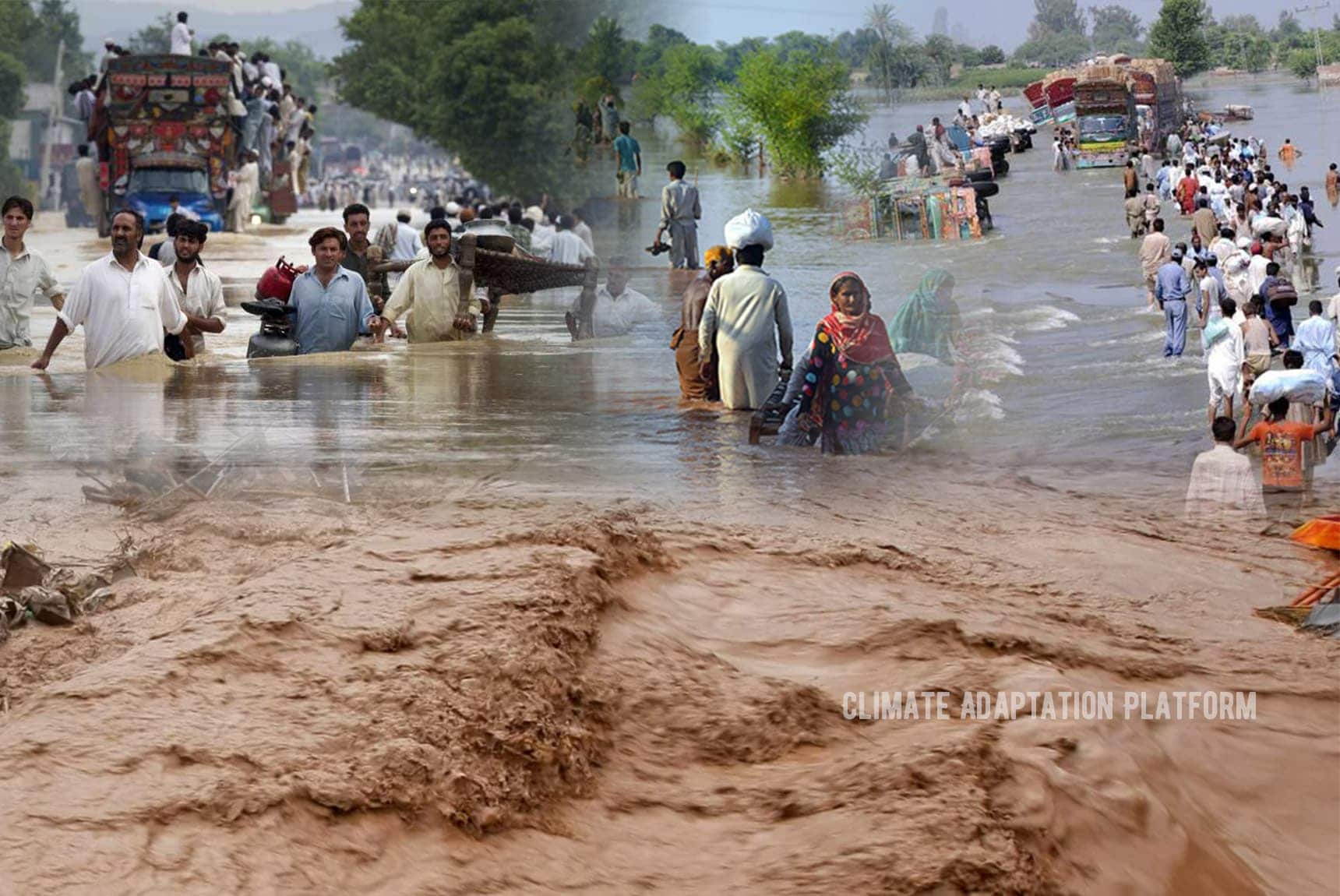
Annual monsoon rains in Pakistan are once again causing deadly flooding. The BBC reports that this year’s monsoon season, which began in June, has already killed more than 1,000 people.
It affected around 6.9 million, according to data from the United Nations Office for the Coordination of Humanitarian Affairs (OCHA).
Flash floods first struck northern Pakistan, where warming temperatures linked to climate change have accelerated glacial melt. As glaciers retreat, glacial lakes form and can suddenly burst, triggering devastating floods downstream.
These glacial lake outburst floods are extremely difficult to predict. Remote mountainous regions often lack reliable early warning systems and mobile connectivity, making it harder to communicate risks in time. In many cases, communities rely heavily on social capital — local networks and mutual support — to warn one another and respond to imminent danger.
Flooding Spreads South, Overwhelming Infrastructure
By late August, severe flooding had spread to southern Pakistan, including Punjab province, the country’s agricultural heartland. Floodwaters submerged around 4,500 villages.
In Lahore, the provincial capital, both affluent and low-income neighbourhoods were affected, although poorer communities suffered disproportionately. While wealthier residents were evacuated from their homes, many people in low-income areas were displaced to temporary tent settlements.
The Red Cross reports widespread destruction of critical infrastructure, including homes, roads, bridges, crops, and livestock. As a result, many communities have been left without access to safe drinking water, food, shelter, or healthcare.
The risk of disease outbreaks is rising, compounding the humanitarian crisis. In response, the Red Cross has scaled up emergency operations across the most severely affected areas.
Pakistan’s Acute Vulnerability to Climate Change
Pakistan is among the countries most vulnerable to the impacts of climate change. This year’s monsoon season alone has claimed thousands of lives, including many children, within just a few months.
According to the “National Disaster Management Authority” (NDMA), by 3 August at least 300 people had been killed nationwide, including 162 in Punjab and 70 in Khyber Pakhtunkhwa. Of these deaths, 140 were children, 103 adult males, and 57 adult females.
More than half were caused by collapsing houses. The floods also injured over 700 people and damaged more than 1,600 homes (NDMA, 2025). These events come just two years after the catastrophic floods of 2022 (WWA, 2022 Pakistan floods), highlighting Pakistan’s growing exposure to frequent and extreme rainfall events.
A 2025 study by World Weather Attribution analysed rainfall between 24 June and 3 July using observational data and climate models. It found that rain-triggered floods in northern Pakistan — the region hardest hit this monsoon season — have become more likely in a world that is 1.3°C warmer, with heavy monsoon rainfall now around 15% more intense.
These devastating floods underscore the consequences of rising global greenhouse gas emissions and highlight the urgent need for climate adaptation measures.
Without sustained investment in resilience, early warning systems, and community preparedness, vulnerable populations will continue to bear the brunt of intensifying climate change events.
Source:
Moshiri, A. (10 October 2025). Devastation on repeat: How climate change is worsening Pakistan’s deadly floods. BBC. Retrieved from https://www.bbc.com/news/articles/cgmx2e3nnw0o
Rising waters, rising needs: Pakistan’s escalating flood crisis. (2025, September 25). New Zealand Red Cross. Retrieved from https://www.redcross.org.nz/about-us/news/our-stories/rising-waters-rising-needs-pakistans-escalating-flood-crisis
Climate change intensified heavy monsoon rain in Pakistan, exacerbating urban floods that impacted highly exposed communities. (2025, August 7). Imperial College. Retrieved from https://spiral.imperial.ac.uk/entities/publication/78780ae7-ab6e-4309-90ae-656e59fb0a04
Leave a Reply