

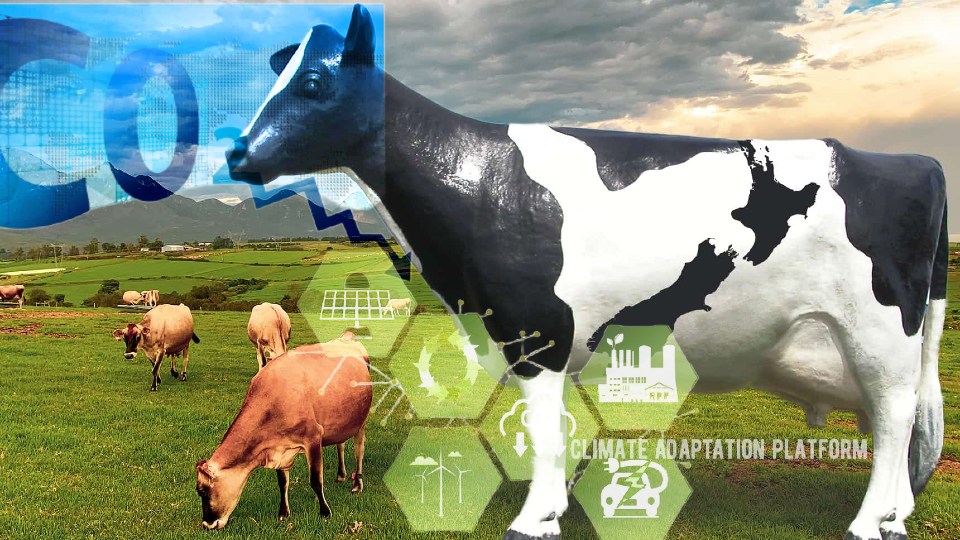
New Zealand’s Greenhouse Gas Inventory is the annual report produced by the Ministry for the Environment on April 15 each year. It compiles all human-induced greenhouse gas emissions and removals in Aotearoa New Zealand.
The inventory is part of Aotearoa New Zealand’s obligations under the Paris Agreement and the United Nations Framework Convention on Climate Change (UNFCCC).
The inventory details greenhouse gas emissions and removals, specifically focusing on carbon dioxide (CO2), methane (CH4), nitrous oxide (N2O), hydrofluorocarbons (HFCs), perfluorocarbons (PFCs), sulphur hexafluoride (SF6), and nitrogen trifluoride (NF3).
It covers five sectors: Agriculture, Energy, Industrial Processes and Product Use (IPPU), Land Use, Land-Use Change and Forestry (LULUCF), and Waste. This inventory also informs Aotearoa New Zealand’s climate change policy recommendations and helps us monitor our progress toward emissions reduction targets.
The latest report, New Zealand’s Greenhouse Gas Inventory 1990–2024, published in April 2026, contains data from 1990 (the base year for reporting) to 2024 (inclusive). It shows that the country’s GHG emissions have slightly dropped. Gross emission decreased by 0.1%.
Once forests and other carbon sinks were taken into account, net emissions declined by 2% percent, from 56 million tonnes of CO2-equivalent gases to 55 million tonnes, between 2023 and 2024.
The Agriculture and Energy sectors remained the largest contributors to gross emissions, accounting for 53% and 38%, respectively. Over half of gross emissions were from methane (48%) and nitrous oxide (9%), largely from agricultural sources. The remaining emissions were mostly carbon dioxide (41%), largely from the Energy and Industrial Processes and Product Use (IPPU) sectors (4% decrease).
The report notes that there are underlying factors behind the slight reduction in the country’s GHG emissions, and these are often linked. The low rainfall in 2024 has reduced hydroelectric generation and increased fossil fuel generation to fill the gap.
Electricity generation is the sector with the largest increase in GHG emissions. Because more fuel was being used for electricity generation, some manufacturing slowed or ceased to free up fuel supplies and reduce electricity consumption.
Methanol production decreased, resulting in lower emissions from fuel use for manufacturing. Most New Zealand methanol is exported for use in products ranging from plastics to construction materials.
Greenhouse gas emissions from the Agriculture sector decreased slightly by 0.3%, driven by reduced sheep numbers and lower urea and limestone application, partially offset by higher dairy cattle emissions (0.8%) due to increased animal productivity, as cows produced more milk.
The waste sector saw a 0.5% reduction in emissions due to improved landfill gas capture and ongoing reductions in the proportion of garden, food and paper waste disposed of to landfill.
The Land Use, Land-Use Change and Forestry (LULUCF) sector’s 5% increase in net removals is due to less deforestation and conversion to grassland in 2024 than in 2023, which reduced reported grassland emissions.
There were also increased removals from forests planted since 2019, as their growing rates have increased the amount of carbon they sequester.
Ministry chief science adviser Alison Collins said the latest report provided an “annual update on the health of the climate”.
“It helps all of us see which parts of the system are putting pressure on the atmosphere, which parts are easing that pressure, and we might need to focus effort” (Newton, 2026).
New Zealand’s latest Greenhouse Gas Inventory outlines both progress and ongoing challenges in emissions reduction. While there have been slight declines in net emissions and improvements in some sectors, sustained effort will be key to meeting long-term climate goals.
Sources
New Zealand’s Greenhouse Gas Inventory. (2026, April 16). Ministry for the Environment. Retrieved from https://environment.govt.nz/facts-and-science/climate-change/new-zealands-greenhouse-gas-inventory/
New Zealand’s Greenhouse Gas Inventory 1990–2024: Snapshot. (2026, April 16). Ministry for the Environment. Retrieved from https://environment.govt.nz/publications/new-zealands-greenhouse-gas-inventory-19902024-snapshot/
Newton, K. (2026, April 16). New Zealand’s annual greenhouse gas emissions drop slightly, latest data shows. RNZ. Retrieved from https://www.rnz.co.nz/news/top/592559/new-zealand-s-annual-greenhouse-gas-emissions-drop-slightly-latest-data-shows
Leave a Reply