

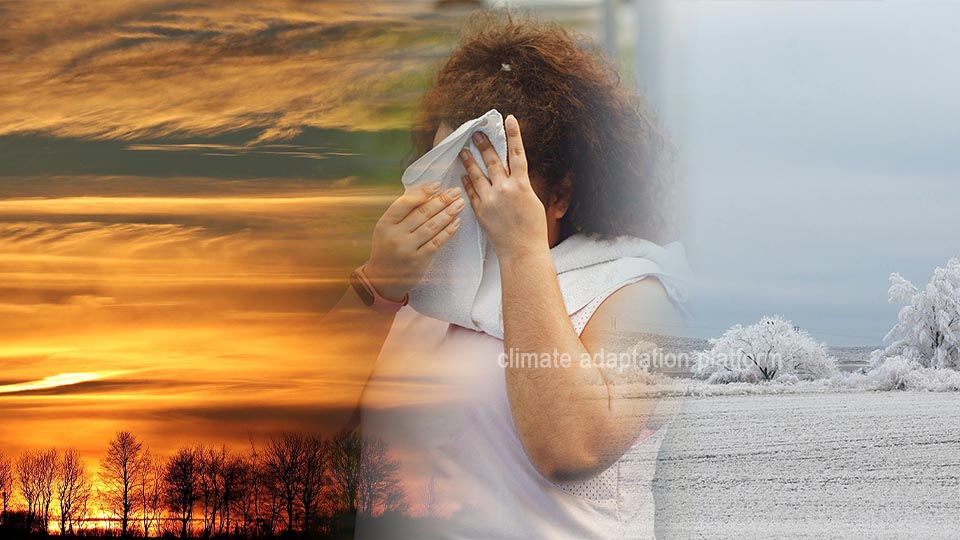
Extreme temperatures, both hot and cold, can lead to increased mortality, and there are many examples of such events.
For instance, the 2003 heatwaves led to 15,000 excess deaths in France and over 70,000 deaths across Europe. The 2008 cold spell that hit the 15 provinces in southern China increased mortality by 43.8%, resulting in 148,279 excess deaths.
But it’s not just extreme temperatures that increase mortality risk; humidity can amplify their effects, making temperatures feel hotter or colder than they actually are.
Humidity is a measure of water vapour in the air. In high humidity, there is so much water vapour in the air that it feels much hotter because our bodies can’t cool down. Moving and breathing feel more challenging. During hot weather, we perspire, and the evaporation of perspiration from our skin has a cooling effect.
However, when humidity is high, it is more difficult for our sweat to evaporate because the air is already saturated with water vapour and can’t hold any more.
For example, a 35°C temperature will feel hotter with just a 50% humidity. It is not actually hotter, but it feels that way because our bodies can’t cool down.
So even if we continue to sweat, our bodies don’t feel any relief, and this can be dangerous because our body temperature can rise, leading to heat-related illnesses such as dehydration, fainting, heat rash, heat exhaustion, or heat stroke.
High humidity can also worsen already existing health conditions like chronic obstructive pulmonary disease (COPD), asthma, heart disease or high blood pressure, diabetes, etc.
During cold weather, the chilling effect of humidity can lower body temperature. Hence, more information on the combined effects of humidity and temperature on health would enable a more accurate assessment of temperature-related health risks.
A recent study published in Scientific Reports on 16 April 2026, titled “Humidity may amplify the temperature-related health risks in the context of climate change”, examined how the combined effects of humidity and temperature can affect health risks under climate change and identified four high-risk thresholds: warm and wet, warm and dry, cold and wet, and cold and dry conditions, based on specific thresholds under climate change scenarios.
The study used nearly 2.5 million ambulance dispatch records from 13 large cities in China between 2013 and 2019, collected by local Centers for Disease Control (CDC) and ambulance services. These data provided an index of acute health outcomes.
Their analysis indicates that combined exposure to high humidity and high temperature poses greater health risks than exposure to low humidity and low temperature. One reason high humidity makes hot or cold weather feel more extreme is that it intensifies the perception of heat or cold, thereby decreasing human tolerance for temperature extremes.
Cold and dry conditions pose the highest risk, followed closely by warm and wet conditions. Additionally, warm and dry, as well as cold and wet, events demonstrate elevated risks.
Overall, the results show that public health warnings should consider both temperature and humidity, rather than just temperature alone, to accurately capture how weather affects human health. They also project that, with a changing climate, by 2100, these compound events will occur more frequently and affect larger areas.
Sources
He, Y., Dong, W., Zhao, L. et al. Humidity may amplify the temperature-related health risks in the context of climate change. Sci Rep (2026). https://doi.org/10.1038/s41598-026-48668-z
Malesu, V. (2026, April 19). Climate change could make humidity-driven heat risks more dangerous, study finds. News Medical. Retrieved from https://www.news-medical.net/news/20260419/Climate-change-could-make-humidity-driven-heat-risks-more-dangerous-study-finds.aspx
Leave a Reply