

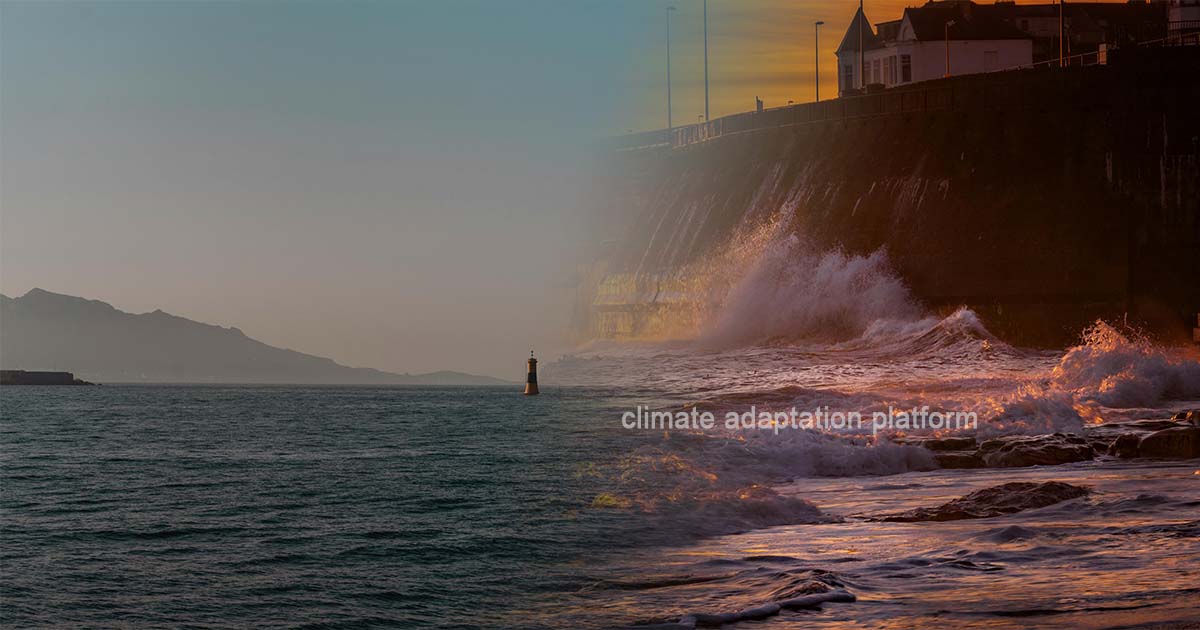
Climate change is posing escalating risks to coastal infrastructure worldwide. Rising sea levels, stronger storms, and increasingly frequent floods are placing growing pressure on coastal communities and the infrastructure that supports them.
These risks are projected to worsen towards the end of the century and are further intensified by continued development along low-lying coastlines. As a result, there is an urgent need for well-designed, adaptive coastal flood-protection policies that can mitigate these widening threats.
The limits of traditional infrastructure design
Conventional infrastructure design typically assumes fixed conditions throughout a system’s lifespan, often estimated at 50 to 100 years. However, many existing structures were designed for historical climate conditions and may not withstand future climate impacts.
Policymakers, urban planners, and engineers face the challenge of creating infrastructure that can remain effective despite the significant uncertainties associated with changing climate patterns. Committing to long-term infrastructure decisions based on outdated assumptions may lead to costly misjudgments over time.
A new framework for climate-resilient coastal infrastructure
A study published in Nature Communications in January 2025 explores how to design, maintain, and upgrade coastal infrastructure, such as seawalls, ports, flood defences, and roads, to minimise long-term costs and risks in the face of uncertain and shifting climate conditions, particularly sea-level rise, storm surges, and coastal erosion.
The authors propose a more effective way to manage climate risks by accounting for changes over time. Specifically, they highlight the use of Markov Decision Processes (MDPs) and Partially Observable Markov Decision Processes (POMDPs).
These models integrate real-time data, adjust to evolving conditions, and help decision-makers select the most effective actions as uncertainties unfold. According to the researchers, this adaptive method can reduce both financial costs and carbon emissions while addressing the inherent uncertainties of climate projections.
Integrating nature-based solutions and social costs
The proposed framework considers a broad range of climate adaptation strategies, including nature-based solutions such as wetland restoration. It also incorporates the environmental and societal impacts of carbon emissions, emphasising the need to account for the social cost of carbon when developing long-term adaptation plans.
The study concludes by outlining future directions for coastal planning. It highlights that adaptive decision-making, rather than rigid, long-term assumptions, is essential for minimising total costs and maximising resilience in the face of climate change.
Read the whole study by visiting the link below.
Source:
Bhattacharya, A., Papakonstantinou, K. G., Warn, G. P., McPhillips, L., Bilec, M. M., Forest, C. E., Hasan, R., & Chavda, D. (2025). Optimal life-cycle adaptation of coastal infrastructure under climate change. Nature Communications, 16(1), 1-18. https://doi.org/10.1038/s41467-024-55679-9
Leave a Reply