

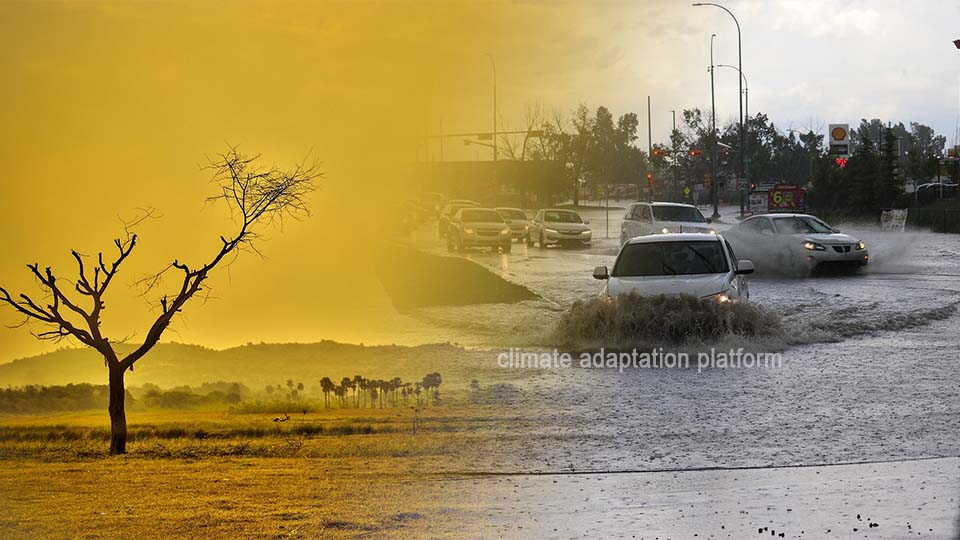
Emissions continue to rise, and many countries still rely on fossil fuels, even as extreme weather events become more intense and frequent. From record heat in Europe to destructive floods in Asia this year, is the world making progress on climate change?
How committed are countries, especially those with high historical and current emissions, to addressing the problem? While there is some progress and commitment from countries, it is highly insufficient, and actions are much slower than needed to halt climate change.
The United Nations Emissions Gap Report 2025 shows that, based on current policies, the world is heading for 2.8°C of warming above pre-industrial levels by the end of the century. Even if current climate commitments are met, temperatures are still expected to rise by 2.3 to 2.5°C.
Another report from the World Resources Institute, “State of Climate Action 2025,” found all the world’s governments are failing on all 45 indicators of progress towards limiting global heating to 1.5 degrees, and none is on track for 2030. The report has 5 progress categories for the indicators: “on track”, “off track”, “well off track”, “wrong direction”, and “insufficient data”.
Out of the 45 indicators, 35 show some progress in the right direction. However, 6 are off track, 29 are “well off track,” and 5 are actually moving in the wrong direction.
On 12 December 2015, the Paris Agreement, a legally binding international agreement signed by all Parties to the UNFCCC at COP 21 in Paris, was adopted to combat climate change and to accelerate and intensify the actions and investments needed for a sustainable low-carbon future.
In 2025, the Paris Agreement turns 10. A decade from the landmark agreement that united virtually all countries to deliver their fair share of climate action, the world is off track to meet its climate goals.
Does this mean the Paris Agreement has failed? Not at all.
The World Resources Institute points out several reasons why the agreement has made a difference and is worth celebrating, even ten years after it was signed.
Because of the Paris Agreement, the planet’s trajectory of warming to 4.8°C by 2100 compared to pre-industrial levels has been reduced to 2.3 to 2.9°C. The 4.8°C warming would have placed half of the world’s population under lethal levels of heat.
Thanks to the “nationally determined contributions” or “NDCs, the country’s climate plans, which they submit every five years, with the latest one expected to contain more ambitious climate goals, it has significantly curbed the warming trajectory.
Because of the country’s NDCs, renewable energy investments have grown significantly, and renewable energy generation has increased, while costs have dropped precipitously over the last few decades. Data from the International Renewable Energy Agency (IRENA) show that 91% of renewable energy projects in 2024 were cheaper than fossil-fuel alternatives.
Electric vehicle sales have also grown from less than 1% a decade ago to this year’s 23% share (1.9 million EVs sold) of the total car sales.
However, the progress made so far in slowing global warming, investing in renewable energy, and increasing EV sales is still not enough to meet the Paris Agreement’s temperature goals.
Governments and businesses worldwide need to do more, such as phasing out fossil fuels faster, reducing deforestation, expanding rapid transit, cutting beef and lamb consumption in countries with high meat intake, and increasing climate finance for both adaptation and mitigation.
Read the WRI article: The Paris Agreement at 10: A Celebration and a Call to Action to learn more.
Sources:
Dasgupta, A. (2025, December 11). The Paris Agreement at 10: A Celebration and a Call to Action. WRI. Retrieved from https://www.wri.org/insights/paris-agreement-progress-10-years
Schumer, C., S. Boehm, J. Jaeger, Y. Kirana, K. Levin, R. Santo, K. Lebling, D. Riedl, A. Lee, N. Singh, M. Sims, N. Chin, A. Majid, S. Cassius, W. Lamb, A. Gangotra, N. Grant, Y. Zhang-Billert, and M. Petroni. 2025. State of Climate Action 2025. Berlin, Germany, San Franciso, CA, and Washington, DC: Bezos Earth Fund, Climate Analytics, ClimateWorks Foundation, the Climate High-Level Champions, and World Resources Institute. https://doi.org/10.46830/wrirpt.25.00006
Boehm, S. & Schumer, C. (2025, October 22). The State of Climate Action in 2025: 10 Key Findings. World Resources Institute. Retrieved from https://www.wri.org/insights/climate-action-progress-1-5-degrees-c-2025
No sector on track to meet global climate goals, State of Climate Action 2025 finds. (2025, October 22). Climate Analytics. Retrieved from https://climateanalytics.org/press-releases/news-release-state-of-climate-action-2025
Leave a Reply