

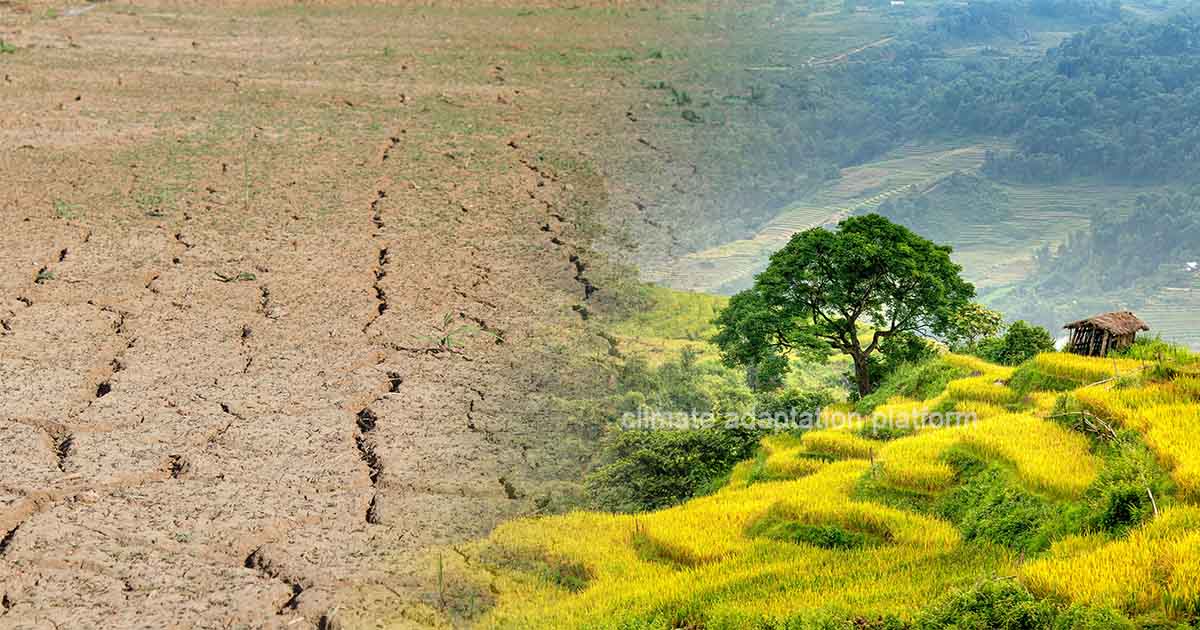
Climate change is driving more frequent and intense extreme weather events, including heatwaves, droughts, and floods. To reduce vulnerability and strengthen resilience, communities and sectors must prioritise climate adaptation, preparing for and adjusting to both current and projected impacts of a warming planet.
Rising temperatures, shifting rainfall patterns, and increasingly severe weather can cause crop failures, soil degradation, and water scarcity. These challenges threaten food production and the stability of food distribution systems worldwide.
As the global population continues to rise, so too does the demand for food, making it essential that food systems can withstand climatic stress. Adapting food production to harsher weather conditions, whether prolonged heat or heavier rainfall, includes developing climate-resilient crops.
What are climate-resilient crops?
Climate-resilient crops are specially bred or genetically modified varieties that can survive harsh environmental conditions such as drought, flooding, heatwaves, and increased soil salinity. Many of these crops are also more resistant to pests and diseases, making them more stable under unpredictable climate conditions.
A 2024 review article, “Climate Change—The Rise of Climate‑Resilient Crops”, published in the journal Plants, explores how climate change affects crop production and how plant breeding and agricultural innovation can support adaptation through resilient cultivars.
The review highlights how multiple stressors, including drought, heat, and elevated atmospheric carbon dioxide, can negatively affect plant growth and yield. It also provides examples of resilient crops that require fewer inputs, including reduced fertiliser use and less frequent cultivation, and that perform well during periods of water scarcity. Crops such as pearl millet, sorghum, rye, amaranth, camelina, and quinoa are already helping to safeguard food security in climate-vulnerable regions.
The analysis also recommends diversifying crop species, increasing the use of wild or underused plants, and shifting breeding priorities towards stability under stress rather than yield alone. It calls for more realistic field trials, improvements in field phenotyping, and stronger collaboration among breeders and scientists spanning genetics, physiology, agronomy, meteorology, proteomics, metabolomics, engineering, and data science.
Five hybrid crops designed for a warming world
Quartz highlighted several crop varieties developed to withstand the growing pressures of climate change, plants that could help keep food systems functioning as extreme weather becomes more common.
1. Northstar Broccoli
Researchers at Cornell University have developed Northstar, a bioengineered broccoli variety designed for colder regions such as New York, New England, and Quebec. Importantly, the crop also thrives in more diverse climates, offering alternatives as traditional growing regions like California face escalating heat, drought, and wildfire risks.
2. Kernza
Kernza is a wheat-like perennial cereal identified by researchers at the Rodale Institute in 1980 and later developed by the Land Institute in Kansas. This resilient grain offers strong drought tolerance, reduces soil erosion, absorbs significantly more nitrate pollution than maize or soy, and requires fewer tractor passes, benefits that reduce emissions and improve soil health (Nowell, 2022).
3. Carbon-Reducing Plants
Scientists at the Salk Institute in San Diego are engineering plants with deeper, more robust root systems containing higher levels of suberin, a carbon-capturing polymer. These roots sequester more carbon in the soil, reducing atmospheric carbon dioxide and also enhancing drought tolerance and soil health.
4. Supercharged Sweet Potatoes
Researchers at the International Potato Center (CIP) have developed a biofortified sweet potato that grows abundantly, withstands drought and disease, and offers high micronutrient content. Fortified with Vitamin A, it addresses nutritional deficiencies linked to childhood diarrhoea and blindness. The crop requires minimal water and matures quickly, making it ideal for climate-affected regions.
5. Taro’s Comeback
Although taro has been a dietary staple in Africa, Asia, and Oceania for millennia, it is now gaining traction in the United States, particularly in the southern states’ hotter climates. Chris Smith of the Utopian Seed Project is trialling diverse taro varieties and encouraging communities in North Carolina to incorporate the crop into local cuisine. As Smith told The Guardian, introducing taro can contribute to “a more secure food system”.
Strengthening food security through innovation
Climate change poses a significant threat to global food security. Developing and improving crops that can withstand extreme weather is essential.
Climate-resilient varieties provide farmers with reliable yields amid changing environmental conditions, helping prevent crop failures and economic instability. Breeders and scientists must continue advancing resilient crops to protect national and global food systems in an increasingly unpredictable climate.
Sources:
Kopeć, P. (2024). Climate Change—The Rise of Climate-Resilient Crops. Plants, 13(4), 490. https://doi.org/10.3390/plants13040490
Kesslen, B. (2025, October 6). 5 hybrid crops that could thrive in climate change. Quartz. Retrieved from https://qz.com/hybrid-crops-could-thrive-climate-change
Nowell, C. (2022, August 20). Diet for a hotter climate: five plants that could help feed the world. The Guardian. Retrieved from https://www.theguardian.com/environment/2022/aug/20/ancient-crops-climate-crisis-amaranth-fonio-cowpeas-taro-kernza
Leave a Reply