

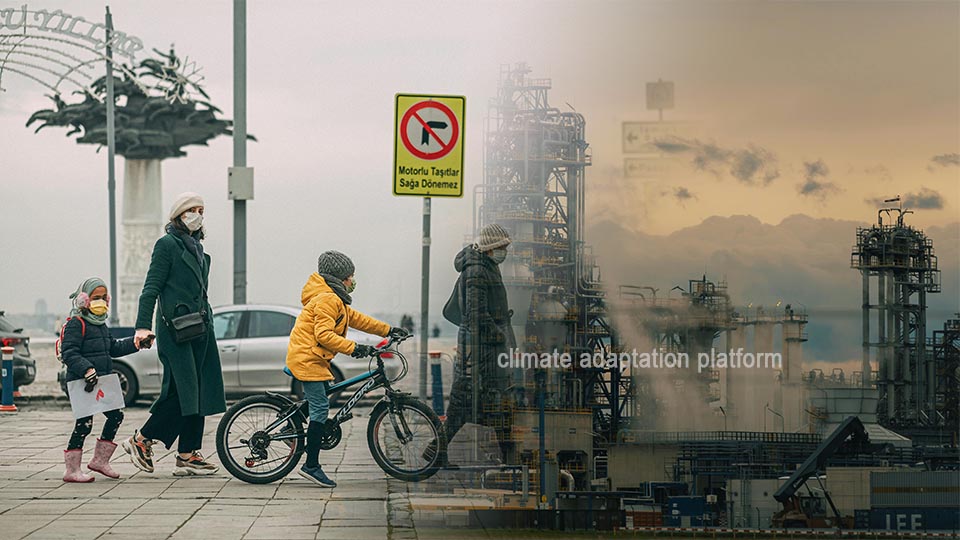
Fossil fuel infrastructure, including wells, refineries, pipelines, storage sites, and transport facilities, is located within one mile of nearly 47 million people in the United States, representing around 14% of the population.
A large proportion of this infrastructure is concentrated in urban areas and situated close to neighbourhoods that are predominantly home to non-white populations, including Hispanic, Asian, Black, and Indigenous communities.
Mapping fossil fuel infrastructure across the supply chain
The study, “High populations near fossil fuel energy infrastructure across the supply chain and implications for an equitable energy transition”, published in Environmental Research Letters on 25 November 2025, mapped fossil fuel infrastructure across the entire supply chain.
This includes extraction sites, midstream infrastructure such as pipelines, refining, processing, and storage facilities, and downstream activities such as fuel combustion for electricity generation and gas distribution to households.
The researchers note that while previous studies have linked residential proximity to fossil fuel extraction sites with adverse health outcomes, including reduced birth weight, paediatric asthma, childhood leukaemia, and symptoms of anxiety or depression, the health impacts associated with proximity to fossil fuel infrastructure across the full supply chain have not been systematically examined.
Given that many of these facilities are located within 800 metres to 1.6 kilometres of predominantly non-white communities, the findings raise serious environmental justice concerns and highlight the potential health risks faced by these populations.
Health risks and regional concentration
An expanding body of literature shows that fossil fuel infrastructure, from refineries to processing and storage sites, emits hazardous air pollutants through leaks, accidents, and routine operations. Exposure to these pollutants has been linked to increased risks of illnesses such as stroke, respiratory disease, and cancer.
The study identified fossil fuel infrastructure nationwide, mapped populations living within 800 metres and 1.6 kilometres of each type of facility, and analysed the demographic characteristics of these communities. While fossil fuel infrastructure exists across most regions of the United States, it is particularly concentrated in the Mountain West, states along the Gulf of Mexico, Appalachia, the Great Lakes region, and California, which hosts the highest total number of facilities.
Extraction and refining infrastructure is most prevalent in the Rocky Mountains, the Gulf Coast, Appalachia, and California, while transportation, storage, and end-use infrastructure is more widely distributed across the country.
Disproportionate impacts on marginalised communities
Of the nearly 47 million people living within 1.6 kilometres of at least one element of fossil fuel infrastructure, around 18.1 million live near a single facility, 12.7 million live near two to four facilities, and 15.8 million live near five or more.
The study also highlights significant racial and ethnic disparities. Approximately 16.4% of the US Hispanic and/or Latino population lives within 1.6 kilometres of fossil fuel infrastructure, followed by American Indian and Alaska Native populations (16.0%), Asian populations (15.4%), and Black populations (14.2%).
However, these patterns vary across the supply chain. Extraction infrastructure disproportionately affects American Indian and Alaska Native communities, while Hispanic and/or Latino populations are more likely to live near storage, transportation, and refining facilities. Asian populations are most disproportionately exposed to end-use infrastructure.
Jonathan Buonocore, the study’s lead author and Assistant Professor of Environmental Health at Boston University’s School of Public Health, explains that the research provides an important foundation for understanding exposure risks. “This study helps us estimate the scale of the problem and begins the process of identifying what hazards communities may be exposed to and how many people are affected, particularly for less visible forms of energy infrastructure,” he said (Gold, 2025).
Buonocore also emphasised the need for further investigation. “There are major knowledge gaps across the supply chain regarding exposure pathways, health impacts, and who is most affected. Characterising these hazards is a necessary first step towards understanding the health consequences,” he added (Gold, 2025).
The researchers hope their findings will support policymakers in developing stronger regulations, improved monitoring, and targeted healthcare interventions to better protect communities living near fossil fuel infrastructure as part of a more equitable energy transition.
Read the study: High populations near fossil fuel energy infrastructure across the supply chain and implications for an equitable energy transition
Source:
Gold, A. (2025). Nearly 47 Million Americans Are at High Risk of Potential Health Hazards from Fossil Fuel Infrastructure. BU Institute for Global Sustainability. Retrieved from https://www.bu.edu/igs/2025/11/17/fossil-fuel-health-hazards/
Buonocore, J., Mooney, F., Campbell, E., Sousa, B., van Loenen, B., Fabian, M P., Nori-Sarma, A., & Willis, M. (2025, November 17). High populations near fossil fuel energy infrastructure across the supply chain and implications for an equitable energy transition. Environmental Research Letters. Retrieved from https://iopscience.iop.org/article/10.1088/1748-9326/ae0da6
Nearly 47 million Americans at risk of health hazards from fossil fuel infrastructure, study finds. (2025, November 18). CBS News. . Retrieved from https://www.youtube.com/watch?v=Mtq_QfIWoG0
Leave a Reply