

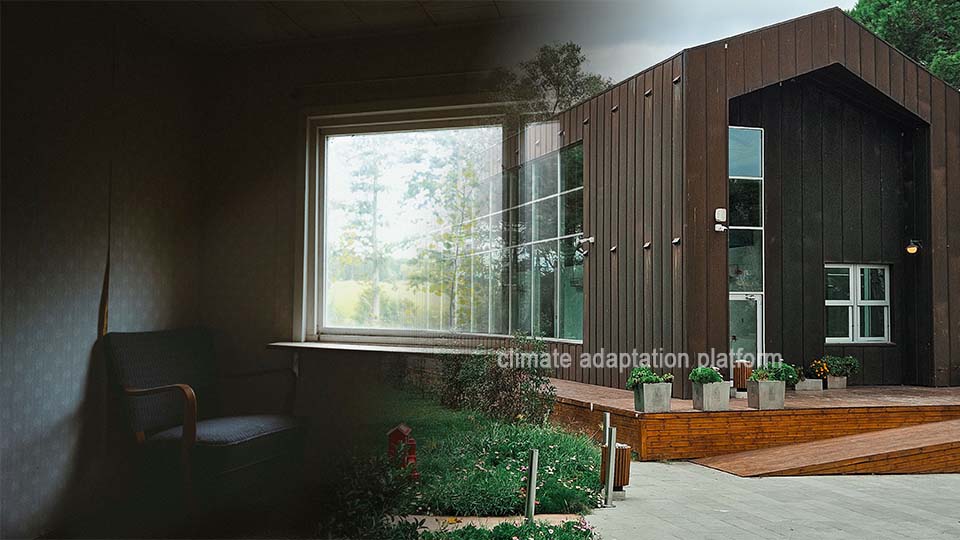
Harvard Health Buildings Research highlights how buildings – our homes, workplaces, and schools- can contribute to healthy living.
Their research focuses on key areas including indoor air quality, infectious disease control, climate adaptation and resilience, and healthier materials, all aimed at improving the health of homes, schools, and workplaces and supporting vulnerable populations.
According to their research, indoor air quality as a contributor to healthy living has been overlooked for far too long until COVID-19 came along, when all transmissions happened indoors.
Most of the buildings by design are not conducive to healthy living, hence the decisions made today going forward in terms of buildings – both our houses and workplaces will have an impact on our health today and in future generations.
A healthy home or building reduces moisture, improves ventilation, provides thermal comfort, and is energy-efficient. It also maximises natural ventilation and daylight, which enhances air quality and productivity.
A survey in six European countries – Germany, Denmark, Poland, Italy, France, and the UK conducted by Buildings Performance Institute Europe (BPIE), in collaboration with VELUX, a window and accessories manufacturer, asked 6000 plus participants regarding how their homes, schools, hospitals and offices affect their health, and what they want governments to do about it.
The results showed that over half of workers across the six countries said that the indoor climate in their office strongly impacts their well-being. Additionally, 60% of respondents said their homes were not suited to handle cold weather, and 45% said the same about extreme heat.
Key findings of the survey
Indoor environments directly affect well-being.
Thirty-nine per cent of people say conditions in their homes strongly affect their physical and mental health, and over half of workers say the same about their offices. Healthy buildings are therefore not just an energy or housing concern but a public health priority.
Buildings struggle with climate extremes.
Nearly half (45%) of respondents believe their homes are not equipped to handle extreme heat, while 25% say their homes cannot cope with cold conditions. The lack of a clear north-south divide in people’s perceptions across Europe highlights growing concerns about comfort, resilience and climate adaptation.
Strong support for healthier standards
Six in ten Europeans believe there should be stricter regulations to ensure buildings are designed and maintained to support health. Citizens see a clear role for policy in raising standards. At the same time, 70% of people say they are not aware of current healthy buildings standards – a major gap between public support for action and the perceived opportunities for implementation.
Practical barriers get in the way of healthy renovations
The main obstacles to improving homes are financial constraints and a lack of knowledge about effective solutions. This underlines the need for targeted financial support and accessible information.
Renovation over relocation
Only 35% would consider moving to a healthier home. Many people are deeply attached to where they live, reinforcing the importance of renovation, better standards and awareness-raising rather than relying on relocation.
The result clearly demonstrates that respondents understand the importance of healthy buildings and wanted to see actions from their governments – they expect that buildings should be subject to stricter design and maintenance rules to make them healthier. These actions also constitute adapting to local climates, achieving thermal comfort, good indoor air quality and adequate daily.
Green buildings and their impact on job performance and cognitive functioning.
An article on the World Green Building Council website highlights the benefits of green buildings.
In the US, tenant satisfaction scores were, on average, 6% higher than in non-green-certified buildings. Green-certified buildings also commanded 14% higher rental prices than their non-green counterparts.
In Australia, the overall comfort scores for Green Star-certified buildings are 10% higher than those for conventional buildings. In Taiwan, 75% of employees in green-certified buildings reported comfortable indoor environmental quality, whereas only 59% reported feeling at ease in non-green-certified buildings.
A 2004 study by Carnegie Mellon researchers found that natural ventilation or mixed-mode conditioning led to a 47-79% reduction in HVAC energy use and a 3-18% productivity gain, with an average ROI of at least 120%. This shows that allowing more outdoor air not only reduces electricity costs but also boosts worker productivity.
And lastly, a Harvard study showed that cognitive scores were 61% higher on the first day of worker exposure in a “green building” (with higher outdoor ventilation) and 101% higher on the second day than in a conventional building.
It is clearly supported by evidence and research findings that healthier, greener buildings not only benefit individual homes but also contribute to public health, climate resilience, and productivity.
As awareness grows on what a healthy home and building look and feel like, it is incumbent upon the government, engineers, urban designers, policymakers, and communities to prioritise and push for healthy building standards.
Sources
Healthy Buildings. (2026). Harvard T.H. Chan. School of Public Health. Retrieved from https://healthybuildings.hsph.harvard.edu/
Healthy homes research. (2025, February 4). BRANZ. Retrieved from https://www.branz.co.nz/healthy-homes-research/
Half of people in Germany say their home is not ready for heatwaves – survey. (2026, March 11). Clean Energy Wire. Retrieved from https://www.cleanenergywire.org/news/half-people-germany-say-their-home-not-ready-heatwaves-survey
Healthy Buildings, Healthy Lives: Understanding citizens’ perceptions across Europe. (2026). BPIE. Retrieved from https://www.bpie.eu/publication/healthy-buildings-healthy-lives-understanding-citizens-perceptions-across-europe/
Green buildings and healthy buildings. (2026). World Green Building Council. Retrieved from https://worldgbc.org/article/green-buildings-and-healthy-buildings/
Leave a Reply