

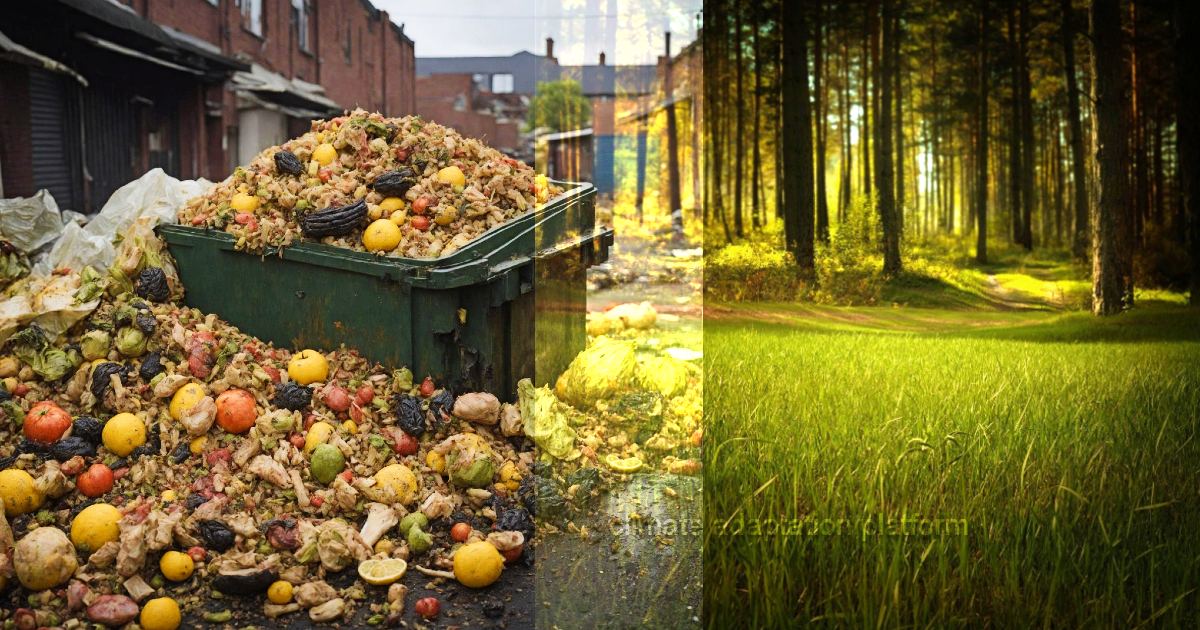
Holidays are often a significant source of food waste. With the United States just having finished celebrating Thanksgiving, experts at ReFED, a non-profit that tracks food waste, estimate that around 320 million pounds (145 million kilograms) of food went to the bin, at a price tag of $US 550 million.
This amount of food is equivalent to 267 million meals, or five meals each, for all the food-insecure people in the US, says Yvette Cabrera, food waste director at the Natural Resources Defence Council.
Around the world, people are yet to celebrate Christmas and the New Year, and most people mark the season with a feast. According to ReFED, overestimating food prepared and having too many leftovers uneaten are issues that contribute to the significant food waste problem.
In the US, nearly half (45%) of hosts send guests home with leftover food, 46% remake it into sandwiches or wraps, another 32% use it for breakfast or lunch the next day, and 31% create new dishes from the leftovers, such as casseroles or soups. However, 12% of the hosts do not have such a plan, which means a significant amount of food is scrapped.
How to reduce food waste
Food waste can be significantly reduced by taking just one simple step –careful planning and preparation. A host or cook who can prepare a close approximation of the meal can substantially reduce food waste afterwards. When it comes to how much meat to serve, the Natural Resources Defence Council’s food estimation tool recommends 0.75 pounds (0.34 kilograms) per person.
Planning what to do with excess food, like the side dishes, also helps. This includes using them up to make a dish, such as pancakes or waffles with leftover mashed potatoes, or meatballs or patties with leftover turkey. Food loss can also have negative environmental impacts, especially when it ends up in landfills, which emit significant amounts of greenhouse gases.
ReFED estimates that this year’s Thanksgiving waste alone emits 811,726 metric tons of carbon dioxide equivalent, equivalent to driving 190,000 gasoline-powered vehicles for a year. Of those emissions, 4,800 metric tons of methane come from sending food to the landfill, which is comparable to what 28,000 homes emit from electricity use over a year. Water is also wasted during all this food preparation, equivalent to around 39 billion gallons of water, enough to fill more than 59,000 Olympic-sized swimming pools.
The WRI article highlights the significant global issue of food waste and its financial implications. It points out that the amount of food wasted could be redirected toward valuable initiatives, such as healthcare. The article warns that if current trends continue, food waste is projected to double by 2050. Additionally, wasting food also wastes freshwater and fertilisers needed for crop production, which in turn contributes to greenhouse gas emissions and exacerbates climate change.
The article examines what contributes to global food waste in the entire supply chain – from the farm to transport, to consumers. It states that food waste results from several factors, including poor infrastructure, inadequate food storage and equipment, and incorrect food packaging.
From the consumer end, food can be wasted through unnecessary waste during cooking, a lack of knowledge or awareness of proper food storage and use at home, and a culture that normalises food waste.
The article emphasises the importance and advantages of reducing food loss and waste. Key benefits include enhanced global nutrition and food security, reduced greenhouse gas (GHG) emissions, financial savings for businesses and consumers, and greater financial stability for farmers. It mentions that reducing food waste by 20-25% could save between $120 billion and $300 billion annually.
The article also provides practical tips for minimising food waste and loss across all levels of the system – from the government and policy-making level to processors and manufacturers, food distributors, producers, retailers, restaurants, and individual households.
Source:
Clark, N. (2025, November 3). How much food will go to waste this Thanksgiving? About $550 million worth. ReFED. Retrieved from https://refed.org/articles/how-much-food-will-go-to-waste-this-thanksgiving-about-550-million-worth/.
Sideris, K., & Wells, C. (2025, November 26). The stunning amount of food thrown out after Thanksgiving and easy way to cut down on waste. Independent. Retrieved from https://www.independent.co.uk/news/world/americas/thanksgiving-shopping-leftovers-turkey-food-scraps-b2873251.html.
Goodwin, L. (2025, November 25). The Global Benefits of Reducing Food Loss and Waste, and How to Do It. WRI. Retrieved from https://www.wri.org/insights/reducing-food-loss-and-food-waste?utm_campaign=wridigest&utm_medium=email&utm_source=wridigest-2025-11-26.
Leave a Reply