

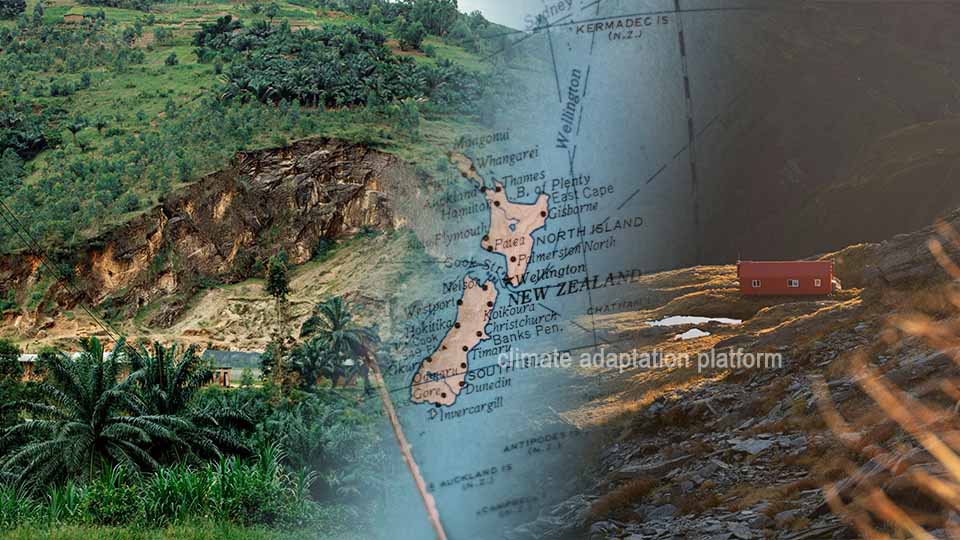
New Zealand is a country prone to landslides, and it is one of its deadliest hazards, killing over 1800 people since records began.
On 22 January 2026, a massive landslide swept through Tauranga’s Mount Maunganui Beachside Holiday Park, burying and killing six people, including two 15-year-olds.
Hours earlier from this incident, a separate landslide had also killed two people – a 71-year-old grandmother and her 10-year-old grandson when a landslide hit a house in Pāpāmoa.
More than 100 people from 30 homes were also evacuated in Pāpāmoa Beach, a suburb of Tauranga, located about 11 kilometres from the city centre, following another slip above the Mangatawa Marae.
In 2023, just three years ago, around 800,000 landslides were caused by Cyclone Gabrielle, making it one of the most extreme landslide-triggering events ever recorded globally, according to Earth Sciences New Zealand.
As the country grapples with the recent tragedy, New Zealanders are asking how they could better protect themselves and avoid deaths from these lethal slips going forward.
According to experts, three factors converge to make the country prone to these devastating landslides.
- First, New Zealand sits on a tectonic boundary, which pushes up land and creates slopes. Its maritime climate, with high rainfall, contributes to landslide risk.
- Second, land-use changes, such as deforestation and cutting slopes to build roads, transportation infrastructure, and residential areas, make the land more susceptible to slips.
- Third, climate change intensifies tropical storms; warmer air also holds more moisture, increasing rainfall; and prolonged, intense droughts dry up the soil, reducing its water-absorption capacity. All these elements combine to increase the threat of landslides in the country.
Professor James Renwick from Victoria University said that while climate change was not necessarily creating more storms, it was intensifying them. He says that the 1.5°C warming means seven or eight per cent more moisture in the air.
“One degree of warming can increase the frequency of high temperature extremes by a factor of three or four, and that’s the same idea with rainfall. An apparently small increase in moisture in the air – when you concentrate that and wring it out in a storm – can result in much larger – 10, 20, 30, 40 per cent increases in rainfall intensity depending on the time frame you’re looking at,” Renwick said (Hickman, 2026).
Early Warning for Landslips
The aftermath of the tragedy in Tauranga has spotlighted the issue of climate change in New Zealand and how each party sees fit to address it. The opposition party, Labour, wants to stick with the previous government’s carbon emissions target and budget, while the current government prioritises investing in infrastructure – flood resilience and road repairs- to respond to climate change.
According to a The Conversation article, northern regions of New Zealand’s North Island, including the Bay of Plenty, where the recent tragic landslip occurred, Coromandel, Northland, and Tairāwhiti are prone to intense rainfall, which can loosen soils and rocks, increasing the risk of landslides. The article notes that New Zealand’s landscapes are pockmarked with millions of landslides, and that even Mount Manganui, where the recent landslide occurred, bears scars from past landslides.
Recent technological developments like the Light Detection and Ranging (LiDAR), that uses pulses of laser light to measure distance and to create 3D representations of environments for applications like land management, natural hazards, climate change, surveying, engineering, and others, now allows scientists to see through vegetation to the bare ground beneath it creating a map of the bare earth surface.
LiDAR technology uses laser pulses emitted from an aircraft or drone. These pulses bounce back from various surfaces—some reflect off treetops, some off branches, and others penetrate gaps in the vegetation to reach the ground. This tool is particularly useful in regions like New Zealand, where dense vegetation and forests cover the slopes.
Without LiDAR, landslide scars would be difficult to detect from both aerial and ground perspectives. Additionally, LiDAR generates highly detailed elevation models that highlight changes in slope and terrain, indicating past landslides.
This was the case in the Mount Manganui landscape where A 2024 LiDAR-derived digital elevation model, confirmed findings from a geotechnical investigation done in 2000 – when it has found a loose debris called colluvium caused by an early landslides and erosion at the north end of the campground’s toilet block, this means that the campsite’s location sits at the remains of past slope failure.
The LiDAR images also show two round-shaped depressions that are side by side from past landslides, just above Mount Manganui’s campsite. These two landscape scars next to each other form a wedge or narrow strip of land that experts point to as the starting point of the 22 January landslip.
This is not surprising because when landslides occur, the remaining wedge of land near them can lose lateral support and collapse with heavy rain or land movement. When this happens in an area where people live, it can quickly turn into a disaster.
Access to technologies such as LiDAR and advanced computer models, such as Rapid Mass Movement Simulation (RAMMS), can be invaluable for predicting landslides. These tools simulate how landslide material might flow across the landscape, allowing for estimates of how far a landslide could travel and identifying areas that could potentially be affected.
The resulting predictions can be transformed into landslide hazard maps that highlight at-risk areas under various rainfall conditions. Although these predictions are not exact, they provide crucial guidance for land-use planning, emergency management, and raising public awareness.
Sources:
Hickman, B. (2026, January 27). Climate change making storms ‘more intense’. RNZ. Retrieved from https://www.rnz.co.nz/news/national/585073/climate-change-making-storms-more-intense
Corlett, E. (2026, January 28). New Zealand could see more deadly landslides as climate crisis triggers intense storms, experts warn. The Guardian. Retrieved from https://www.theguardian.com/world/2026/jan/28/new-zealand-landslides-climate-crisis-storms
Chung, F. (2026, January 28). ‘Much-loved’ grandmother and grandson killed in New Zealand landslide named. News. Com. Au. Retrieved from https://www.news.com.au/technology/environment/muchloved-grandmother-and-grandson-killed-in-new-zealand-landslide-named/news-story/88e84ad88629b09275386e311a5c721f
Sherwood, S. (2026, January 26). FENZ warned of slip near Mt Maunganui camp almost 4 hours before landslide. RNZ. Retrieved from https://www.rnz.co.nz/news/national/584999/fenz-warned-of-slip-near-mt-maunganui-camp-almost-4-hours-before-landslide
Elevation data. (2025, August 21). Land Information New Zealand. Retrieved from https://www.linz.govt.nz/products-services/data/types-linz-data/elevation-data
Brook, M. (2026, January 23). The Mount Maunganui tragedy reminds us landslides are NZ’s deadliest natural hazard. The Conversation. Retrieved from https://theconversation.com/the-mount-maunganui-tragedy-reminds-us-landslides-are-nzs-deadliest-natural-hazard-274201
Leave a Reply