

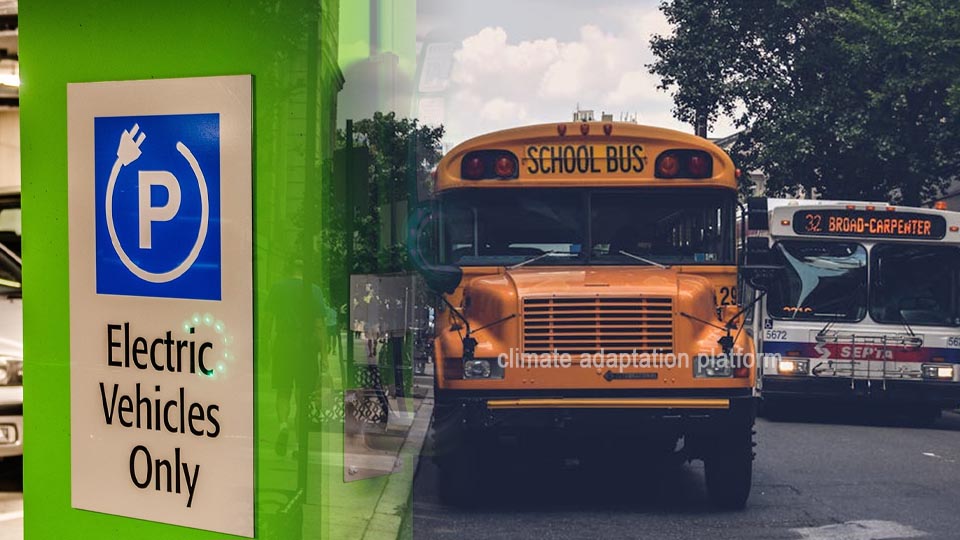
The WRI spotlights the rapid adoption of electric school buses by tribal schools in the United States and the benefits they offer to kids who use them daily, the school, and the community.
Data in the United States shows that Native children are more likely to ride school buses, they also have higher rates of asthma, and they have longer routes to school. These concerns make switching from the air-polluting diesel buses to zero-emissions electric buses the right decision.
The article notes that electric buses have the lowest GHG emissions of any school bus type, even when accounting for power generation emissions.
Electric buses in the US
Across the US, electric buses are rapidly growing in numbers. The WRI’s Electric School Bus Initiative shows that what started in the coastal and wealthier suburban school districts in the US has now expanded to all states and US territories, as well as to more than 20 tribal nations. Today, 265,000 students ride electric school buses, a significant increase from 21,000 just five years ago.
The top five states by the number of electric buses on the road are: California leads with 3,382 electric school buses, followed by New York (873), Maryland (738), Illinois (669), and Massachusetts (633). Looking at the regional distribution of electric buses, the figure appears more even: the Midwest now accounts for 15% of all electric school bus commitments, the Northeast for 21%, the South for 31%, and the West for 33%.
This shows the broad appeal of electric buses across political affiliations. Only the state of Wyoming does not have any electric school buses.
Funding played a significant role in the fast and broad adoption of electric school buses in the US. The WRI article mentions that the federal Clean School Bus Program, part of the Bipartisan Infrastructure Law passed by Congress in 2021, is playing a transformative role.
This program increased federal funding from $11 million in 2020 to $6 billion today. To date, the Clean School Bus Program has awarded nearly $3 billion to fund 8,600 electric school buses to 1,200 school districts.
Electric school buses’ remarkable growth across the United States
Of the 14,000 operational electric buses in the US, about 3% or over 400 serve the National communities across 70 school districts as of July 2025. School buses account for the largest share of these electric buses.
Native Schools in the US are embracing electric school buses the fastest
The article features four tribal nations and Native schools across the US that have embraced the electric buses the fastest, the benefits they offer the students and schools, and the challenges they faced at the beginning of the transition. These schools are
The Cherokee Central Schools in North Carolina, Sipayik Elementary School in Maine, Shawnee Public Schools in Oklahoma, and Endazhi-Nitaawiging Charter School in Minnesota.
While these schools vary slightly in their circumstances, they share similar experiences with the process of acquiring electric buses, the funding for them, the benefits they offered, and the challenges they faced.
Benefits of Electric School Buses
Benefits include quieter rides, no toxic fumes from fossil-fuelled buses, reduced fuel costs, reduced maintenance costs, and avoided CO2 emissions. Additionally, it offers upskilling for school and local technicians to operate, maintain, and even convert golf vehicles to solar-powered.
- Native children have higher rates of respiratory diseases such as asthma. Electric buses, with their zero emissions, offer a healthier alternative.
- Switching to electric buses provides the opportunity to integrate Native and tribal culture. For instance, buses play native songs to compensate for their lack of engine noise.
- Quieter rides have reduced children’s behavioural issues on buses, resulting in nearly a 50% drop in reported incidents. Children with sensory sensitivities were more comfortable riding again.
- Electric school buses protect students’ health, particularly on longer rural routes that take over an hour, compared to diesel buses.
- Electric buses have sparked the community-wide interest in renewable energy and EVs.
Challenges faced by Native schools
The high upfront costs of electric buses and charging infrastructure, and the growth in electricity demand from charging electric buses, lead them to adopt managed charging.
In general, the initial struggles of obtaining electric buses and navigating an unfamiliar technology and industry have paved the way for momentum. The success of these pilot buses, though, in building the right partnerships with manufacturers, has encouraged other tribal schools and leaders also to pursue their electric buses.
The WRI provides valuable lessons learned from experiences with tribal schools. Key takeaways include:
- Start early—taking the time to conduct infrastructure assessments and complete grant applications is essential.
- Build strong partnerships, especially with utility companies, community stakeholders, and established manufacturers.
- Provide training for technicians to ensure they are well-prepared.
- Engage the community to garner their support.
- Incorporate cultural practices into the initiatives.
- Keep the transition focused on the needs of the people.
Watch the video from Electric School Bus Initiative to see how the Native Electric project is driving change in Tribal and Native Communities, Students, Schools, and in the state:
Sources:
Curran, A., Walker, C., & Compton, M. (2025, October 8). How Tribal Nations Are Charging Ahead with Electric School Buses. World Resources Institute. Retrieved from https://www.wri.org/insights/tribal-nations-electric-school-bus-transition
Native Electric: Powering the Future with Electric School Buses in Cherokee, North Carolina. (2025, October 29). Electric School Bus Initiative. Retrieved from https://electricschoolbusinitiative.org/native-electric-powering-future-electric-school-buses-cherokee-north-carolina#
Zepka, B. (2025, July 31). Accelerating Electric School Bus Progress in the US: 5 Years of Growth. World Resources Institute. Retrieved from https://www.wri.org/insights/where-electric-school-buses-us#:~:t
Leave a Reply