

The World Meteorological Organisation predicts an El Niño event with an 80% likelihood between June and August this year, and a 90% probability of persisting until November.
The El Niño-Southern Oscillation (ENSO), or El Niño for short, is a naturally occurring weather phenomenon that occurs every two to seven years and is caused by unusually warm ocean waters in the tropical Pacific.
“El Niño conditions are developing and are set to influence global temperature and rainfall patterns, increasing the risk of extreme weather over the coming months”, according to the World Meteorological Organisation (WMO).
However, scientists predict this will develop into a super El Niño, which happens every 10 to 15 years. It occurs when ocean temperatures in the Pacific rise by more than 2 degrees C (3.6 degrees F) above average, altering atmospheric conditions more than usual.
The result could be stronger, more persistent impacts worldwide, including droughts, floods, cyclones, extreme heat, and more, according to the WRI.
The impacts of this year’s El Niño will be exacerbated by climate change, bringing drier, warmer conditions that will affect food systems worldwide.
Super El Niño Impacts
The WRI article discusses the impacts of El Niño on global systems such as food production, forest fires, and water supplies, and how it will affect various regions worldwide.
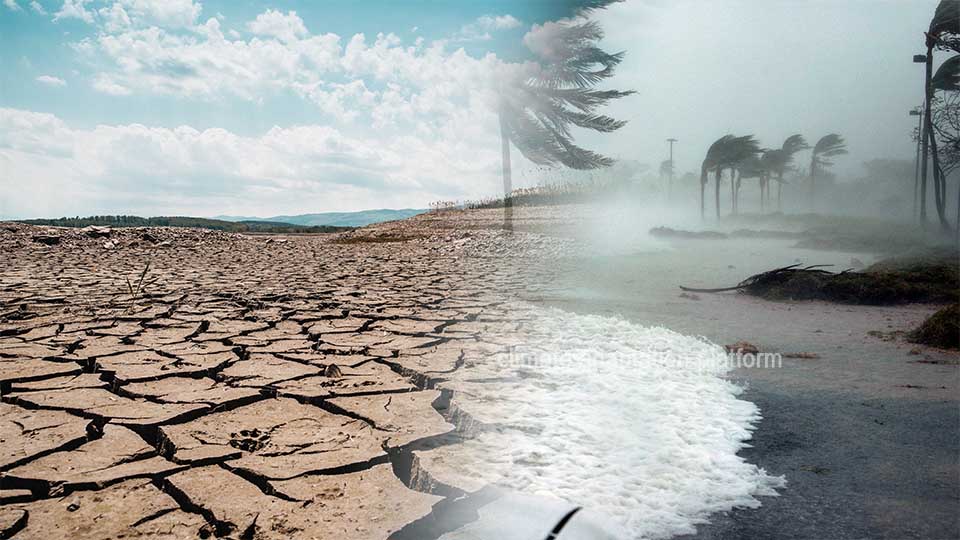
The Caribbean, Central America, northern Brazil, central and northern India, central and southern Africa, Indonesia, the Philippines, and Australia will face drought and reduced water availability, straining their agriculture and increasing pressure on reservoirs and groundwater supplies.
In contrast, areas such as the southern United States, parts of Peru, Ecuador, eastern Africa, and regions of the Middle East and Central Asia will experience increased rainfall.
While this may temporarily replenish reservoirs and improve water supplies, it could also increase the risk of flooding and damage infrastructure in some locations.
Food production
Rainfed and low-income regions like Southern Africa have experienced reduced cereal production during El Niño events due to drier, hotter seasons. But this year, the impacts are expected to be much worse, owing to a warming world – the last 11 years have been the hottest on record.
Rising temperatures suck moisture out of the soil, making it harder for crops and plants to grow and for livestock to thrive.
Forest Fires
El Niño amplifies the effects of climate change, bringing even drier and hotter conditions that increase fire risks. It can accelerate the spread of forest fires, whether intentional or accidental.
“The two most recent strong El Niño events, in 2015-2016 and 2023-2024, both produced record-breaking fire seasons in Brazil. In both 2016 and 2024, fires burned more than 2.3 million hectares of forest in Brazil — more than 4 times the annual average from 2001 to 2025, according to data on WRI’s Global Forest Watch platform.”
El Niño also elevates fire risk to Southeast Asia and Australia. In Canada, it contributed to its warmest winter on record, thinned its snowpack, and to its record wildfire season in the fall of 2023.
Mitigating El Niño’s Impacts
According to the Royal Geographical Society, since El Niño is a natural event, we can never mitigate it. Reducing our GHG emissions will not stop it, but this doesn’t mean we shouldn’t take steps to slash our carbon emissions. The best way to address El Niño is to adapt to its impacts.
The article notes that, due to our increased ability to cope with extreme events such as cyclones, droughts, and snowstorms, their negative effects have diminished. Our better understanding of El Niño and our ability to predict its impacts with greater accuracy also help.
However, there is still room for surprises, and the effects of climate change can make them more complex. The best way to go is to learn from past successes and mistakes.
The article discusses how governments and NGOs play a significant role in managing the effects of El Niño, while in more developed countries, insurance is crucial for reducing vulnerability to extreme events and disasters.
Communities can take practical steps to prepare for El Niño, as highlighted by the World Resources Institute (WRI).
These anticipatory actions, supported by the UN’s Food and Agriculture Organization (FAO), include repairing and constructing irrigation systems, strengthening flood protection measures, and providing cash transfers to families so they can evacuate before floods occur.
Additional interventions include distributing drought-resistant, short-cycle crop seeds to help farmers adapt to changing environmental conditions.
In the agricultural sector, which directly impacts food production, steps can include reducing GHG emissions and deforestation. On the consumption side, it reduces food waste and maximises the use of finite cropland, water, and fertilisers, prioritising food production.
Sources
WMO: Prepare for El Niño. (2026, June 2). World Meteorological Organisation. Retrieved from https://wmo.int/news/media-centre/wmo-prepare-el-nino
The societal responses to El Niño. (2026). Royal Geographical Society. Retrieved from https://www.rgs.org/schools/resources-for-schools/the-societal-responses-to-el-nino
Parsons, S. (2026, June 3). How Might a ‘Super El Niño’ Affect Food, Forests and Water? World Resources Institute. Retrieved from https://www.wri.org/insights/super-el-nino-impacts-explained?
Wholf, T. (2026, June 9). You Asked: What Exactly Is a ‘Super’ El Niño? State of the Planet. Retrieved from https://news.climate.columbia.edu/2026/06/09/you-asked-what-exactly-is-a-super-el-nino/
Leave a Reply