

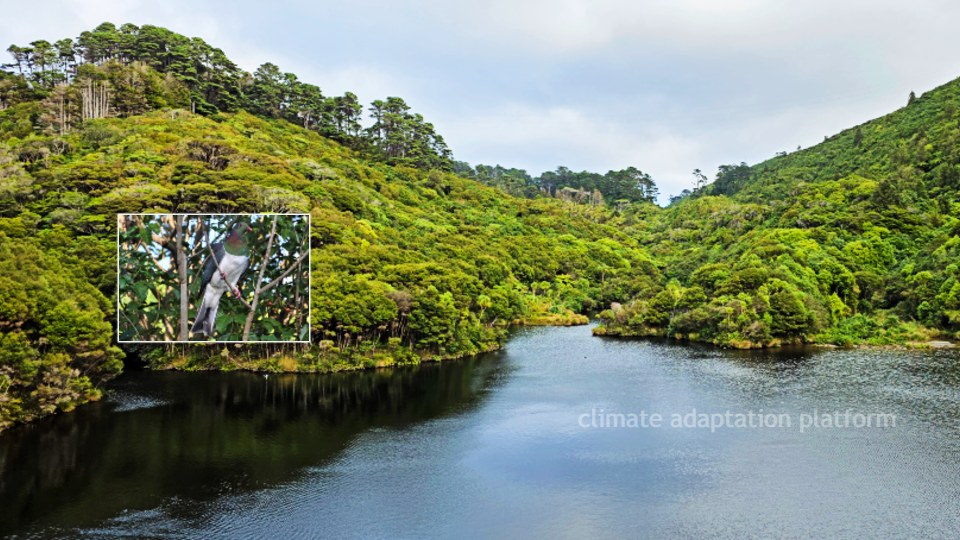
A Māori-led study in Aotearoa, New Zealand, reveals that climate change is altering the phenology of the forest’s native fruit-bearing trees in the North Island forests of Te Urewera and Whirinaki.
The shift in the fruit trees’ phenology also has a cascading effect on the health and abundance of animals such as pigeons (o(orererū) in Māori and feral pigs, two important food species for the community in the forest.
The study titled “Māori Practitioner Knowledge Indicates a Shift in Forest Fruit Biomass and Phenology Over 75 Years,” published in the New Zealand Journal of Ecology in December 2025, presents a detailed account of the impacts of climate change on New Zealand forests.
This research involved 39 forest practitioners, 70% of whom were over 60. The study conducted a series of interviews and knowledge-verification workshops from 2004 to 2018.
The study documented changes in fruit production and reproductive phenology of native woody species, which are dominant in New Zealand, Aotearoa, as observed by Māori elders and practitioners over the last 75 years.
Based on oral accounts from practitioners, researchers developed a phenological calendar and collated te reo Māori (Māori language) terminology to capture the timing, condition, and biomass of fruiting events in this forest type.
The study also recorded what practitioners believe are the driving forces behind shifts in phenology and their cascading impacts on animals’ weight and population, forest soil quality, and on New Zealand’s indigenous people, who rely on the forest’s biodiversity for food and culture.
Lastly, the study considered the consequences of these changes for the knowledge and language systems of Indigenous Peoples.
In this study, practitioners reported that over the past 30 to 40 years, key tree species in New Zealand’s North Island Forest have shown signs of delayed ripening, lower production, reduced size, and poorer fruit quality. They linked these changes to broader warming trends and to a decrease in the frequency and timing of frost events in autumn.
Whilst frosts can cause blistering or bursting of fruit in orchards and vineyards, practitioners reported that these cold events were crucial for priming fruit condition and persistence during the lead-up to and peak fruiting periods.
Through a series of interviews and workshops, practitioners noticed climate shifts since the 1990s, such as longer, hotter summers, more frequent storms, and fewer frosts, a pattern that aligned with broader climate change in New Zealand. This climate change dries out the forest and makes it more fragile; invasive animals like goats and deer compound the impact.
Practitioners noticed that the forests are becoming windier, which is causing the forest floors to dry out and become compacted by invasive species.
One of the oldest practitioners reported that during the 1940s and 1950s, feral pigs seldom dug for food because the volume of fallen fruit on the forest floor was so great. The abundance of food also correlates with their population.
Nowadays, with less food on the ground, pigs must dig for food, which alters the flavour of their meat, which now has a “muddy” taste, according to one practitioner. Their numbers have also declined noticeably.
Regarding the kererū (New Zealand pigeons), practitioners have reported changes in their condition since the late 1970s, which they attribute to changes in fruit biomass and phenology.
Between 1950 and 1970, it was common for kererū to be so excessively fat that they would hit the ground and burst open when shot.
However, since the 1970s, hunters have noticed that kererū no longer reach this level of fatness and are now more frequently found in poor condition, to the extent that they have stopped hunting them.
Additionally, fewer fruits falling on the forest floor have reduced worm activity and the nutrients they impart to the soil. Lower soil nutrient levels mean less vigorous forest vegetation growth.
Understanding the timing of plant reproductive events—such as flowering, fruiting, and seeding—has been essential for food production and cultural practices, particularly for hunter-gatherer societies like the Māori.
Indigenous peoples deeply understand the consistent rhythms and phenology of their forests, which helps them identify important seasons and events. However, climate change is causing these patterns to gradually disappear, leading to the loss of vital environmental references and the traditional knowledge that accompanies them.
The study states that as climate change intensifies, it will disrupt the seasonal cycles of plants and wildlife. Consequently, traditional knowledge about species abundance, productivity, and phenology—the study of seasonal changes in living organisms—will become increasingly important for predicting future changes in species abundance, redistribution, and phenology.
Therefore, climate-adaptive management practices tailored to specific locations will be essential for responding to and mitigating the impacts of climate change.
Source
Phil O’B. Lyver, Joanna K. Carpenter, David A. Wardle, Sarah J. Richardson, Brenda Tahi, David B. Carson, Puke Timoti. (2025) Māori practitioner knowledge indicates a shift in forest fruit biomass and phenology over 75 years. New Zealand Journal of Ecology 49(1): 3622
Leave a Reply