

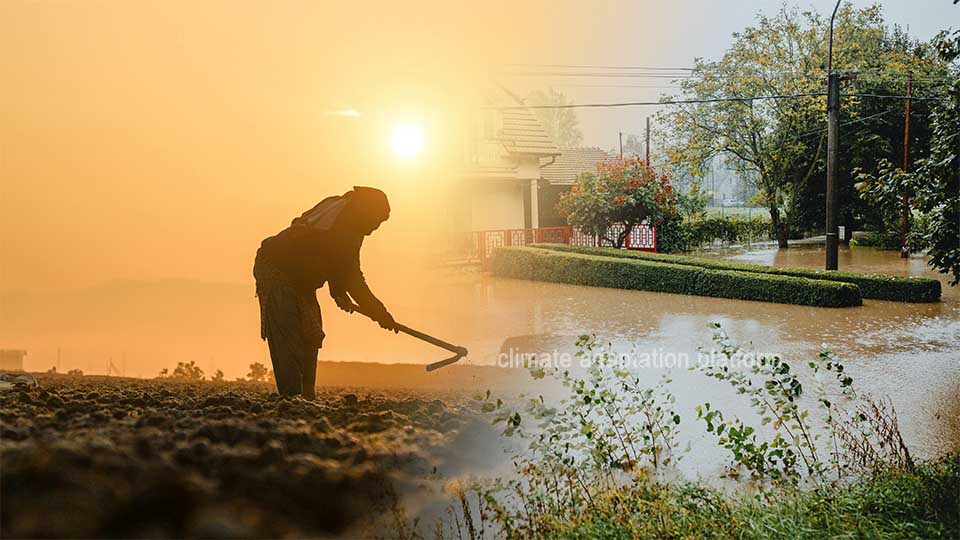
In 2024, Latin America and the Caribbean faced numerous extreme events. The World Meteorological Organization’s (WMO) report on the State of the Climate for Latin America and the Caribbean 2024 highlights the increasing impact of weather, climate, and water extremes on lives, livelihoods, and food supply chains in a region already grappling with poverty and insecurity.
According to the report, in 2024, the mean temperature in Latin America and the Caribbean was +0.90 °C above the 1991–2020 average, making it the warmest or second-warmest year on record, depending on the dataset used. Precipitation also varied across the LAC region; some areas experienced above-normal precipitation, while others experienced below-normal precipitation.
Glaciers and ice covers in Latin America are also disappearing as temperatures rise and precipitation patterns change. In 2024, Venezuela became the second country in the world to be completely deglaciated, with the disappearance of Humboldt as its last remaining glacier.
Rising temperatures are not only affecting the glaciers and ice covers, but also the sea. Around 90% of the excess heat from the atmosphere is absorbed by the ocean, resulting in temperature changes at various depths. Melting glaciers and snow ice cover are also causing sea levels to rise.
Sea surface temperatures matter in Latin America and the Caribbean because they influence El Niño and La Niña years, which play an important role in the global climate system.
The report notes that the increasing frequency and intensity of droughts, floods, and heatwaves, as well as the intensification of hurricanes, pose a growing risk to agriculture and food security in the region. The losses of crops and livestock, and the interruption of supply chains, have significantly affected the availability of food, income, and the stability of rural livelihoods.
The growing climate-related risks call for strategies to strengthen agricultural resilience and food systems, and for implementing multi-hazard early warning systems to improve preparedness and anticipate actions.
The good news is that 2024 saw growth in renewable energy generation in LAC, reaching nearly 69% of the region’s energy mix, with solar and wind experiencing a remarkable 30% increase in capacity and generation compared to 2023.
Early warnings and climate services from National Meteorological and Hydrological Services (NMHSs) are saving lives and increasing resilience throughout Latin America and the Caribbean.
WMO is enhancing the capacity of NMHS to support the development and integration of renewable energy through artificial-intelligence-based wind forecasting, solar and wind atlases, and climate services, in collaboration with national and regional partners.
Nature-Based Solution Projects in Latin America and the Caribbean
Infrastructure losses in the Caribbean alone due to hurricanes, earthquakes, tsunamis, and floods are approximately $12.5 billion annually.
To address the growing impacts of climate change in Latin America and the Caribbean, especially on infrastructure, the Inter-American Development Bank (IDB) assists countries in the region in developing and implementing nature-based solutions (NbS) across various sectors.
The IDB also published a guide to help developers prepare sustainable infrastructure projects using NbS.
The IDB article features nature-based solutions for social infrastructure projects, such as schools, hospitals, and homes, that it supports in various LAC countries.
Nature-Based Solutions (NbS) provide a cost-effective way to protect, sustainably manage, and restore natural or modified ecosystems. These solutions incorporate natural elements, such as “green infrastructure,” to safeguard infrastructure and improve resilience against extreme weather events.
Nature-based solutions projects in LAC.
In Belize, the IDB financed a school laboratory in Belize City that features a green façade to protect against solar radiation and improve classroom comfort. The green façade, combined with other architectural and technological solutions, helped the building achieve 24% energy savings compared with traditional buildings.
In Colombia, the company Groncol has installed more than 150,000 m² of green roofs and vertical gardens in urban environments, improving stormwater management and air quality while generating energy savings.
Green roofs, for instance, can retain up to 90% of rainwater, reduce runoff, and reuse organic waste, while improving insulation, reducing energy consumption by 10–20%, and increasing property values by 10%.
The Comprehensive Electromobility and Resilience Project for Public Transportation Infrastructure in Panama City, financed by the IDB, includes a sustainable stormwater drainage system to mitigate flooding along bus routes, as well as urban landscaping.
The CityAdapt project in Xalapa, Mexico, implemented NbS to manage water resources and reduce flood risk. Actions included creating parks and green corridors with more than 6,000 plants and 3,900 trees to reduce landslide and erosion risks, improve water regulation, and restore watersheds, thereby strengthening urban resilience.
Parks, green corridors, and conservation areas help absorb rainwater, reduce flooding, and improve air quality.
In the San Salvador Metropolitan Area, with IDB support, an urban green infrastructure strategy was developed to strengthen resilience to floods and heat waves.
The initiative included training municipal technicians using tools such as i-Tree to assess ecosystem services and developing a roadmap to integrate green corridors and urban parks.
Restoring ecosystems like wetlands, rivers, and coastal areas is crucial for enhancing urban and territorial resilience.
Wetlands and mangroves strengthen urban and coastal areas by acting as natural sponges that absorb and release rainwater, helping reduce flood risk.
Other benefits include preventing coastal erosion and storm damage, providing essential habitats for biodiversity, and absorbing carbon to mitigate climate change.
Sources
State of the Climate in Latin America and the Caribbean 2024. (2025, March 28). World Meteorological Organization. Retrieved from https://wmo.int/resources/publication-series/state-of-climate-latin-america-and-caribbean/state-of-climate-latin-america-and-caribbean-2024
Extreme weather and climate impacts bite Latin America and Caribbean. (2025, March 28). World Meteorological Organization. Retrieved from https://wmo.int/news/media-centre/extreme-weather-and-climate-impacts-bite-latin-america-and-caribbean
Six Innovative Nature-Based Solution Projects for Social Infrastructure in Latin America and the Caribbean. (2026, January 12). IDB. Retrieved from https://www.iadb.org/en/blog/nature-climate-and-disaster-risk/six-innovative-nature-based-solution-projects-social-infrastructure-latin-america-and-caribbean
Leave a Reply