

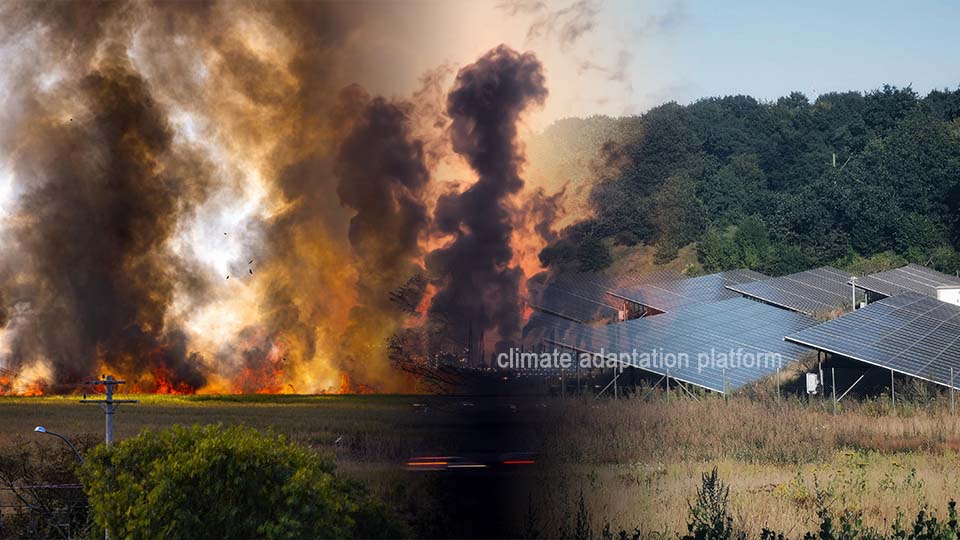
The World celebrated Earth Day on 22 April 2026, an annual event that started in 1970 to show support for environmental and natural resource protection for future generations, while celebrating what has already been achieved. Now the celebration includes coordination with the global community through Earth Day Network (earthday.org).
With the climate change issue gaining prominence worldwide, Earth Day emphasises the importance of addressing its effects, offers an opportunity for reflection and action, and calls for climate action, innovation, youth engagement, and the harnessing of community-led solutions to address climate change.
This year, over 10,000 events were organised worldwide, showing that environmental progress is going strong and real despite policy uncertainty. Local systems, cities, schools, Indigenous people, and communities continue to implement solutions that strengthen sustainability, conserve resources, and reduce climate risks and vulnerability.
Events organised globally for Earth Day include community cleanups, teach-ins, peaceful demonstrations, tree planting, town hall meetings, and community organising, each of which strengthens the environmental advocacy movement.
Earth Day 2026 affirms that environmental progress is real, resilient, and ongoing despite policy uncertainty. Innovation, education, and community problem-solving remain durable. Local systems — cities, schools, Tribal nations — continue implementing solutions that strengthen energy reliability, conserve resources, and reduce risk because they are grounded in economic sense and public safety. Explore our resources and actions for Earth Day 2026 and year-round.
The Earth Day.org website shows a map of where events are happening worldwide and what they are.
The WRI features climate actions worldwide that demonstrate ongoing progress and deliver measurable, tangible results for people, nature, and the climate.
In Shenzhen, China, there are 113 near-zero-carbon demonstration projects that are creating measurable environmental and socioeconomic benefits. These solutions range from solar panels and smart energy management systems to energy-efficiency retrofits and expanded green space and walkways.
Ghana’s practise of agroforestry by planting cocoa alongside their crops. The country has already lost 13% of its forests to cocoa plantations. Farmers have adopted better farming methods through agroforestry: planting cocoa while preserving their forests allows them to restore degraded lands and replenish soil nutrients, boosting cocoa production.
Bogotá, Colombia, is using smart urban design to slash air pollution. The city’s pollution levels are 7 times the World Health Organization’s recommended limit. To reduce air pollution, the city implemented several strategies. The first is Barrios Vitales, where the city introduced new pedestrian zones in mixed-use areas. Bike lanes replaced busy roads, encouraging people to walk, bike, or use public transportation.
The city also added green spaces and installed benches. To measure air pollution levels, the city partnered with WRI, which uses NASA atmospheric modelling tools and local air quality monitoring data to produce accurate, city-specific forecasts. This upgrade allowed the city to predict air quality up to five days in advance.
In Oregon, the state’s tribal youth, through the Lomakatsi Restoration Project, are reviving traditional practices such as prescribed burns to restore forest health, protecting watersheds, and creating jobs. The outcome means improved air quality, fewer evacuations, protection of homes for the local community, and safeguards the headwaters of the Williamson River and Upper Klamath Basin. These vital systems supply drinking water for over 70,000 residents, provide irrigation for crops, and serve as habitat for salmon and other wildlife. Healthy forests play a critical role in regulating stream temperatures, reducing erosion and sedimentation, and improving water quality.
Three African cities – Kigali, Rwanda; Dire Dawa, Ethiopia; and Johannesburg, South Africa – are applying nature-based solutions, such as tree planting and riverbank restoration, to combat urban sprawl that is degrading their watersheds. The consequences are groundwater depletion, contamination of freshwater supplies, and increased flooding risks. Efforts include reforestation and afforestation in watershed areas and the removal of invasive trees that affect local biodiversity. These actions aim to protect precious water supplies and improve groundwater recharge in a water-scarce area.
Family-led land restoration in the Amazon’s degraded farmlands that were once used for industrial-scale palm oil and livestock production. Thanks to 700 farming families, the 11,000 hectares of bare, soil-depleted land are now transformed into a thriving, fertile landscape.
Using the technique of agroforestry that involves planting trees alongside crop, families who have relocated in the area through Brazil’s government-supported farm settlements that offer land, housing and resources to those who can’t afford to buy property, are now making a living from growing staple crops with strong markets — like cassava, açaí or cocoa, alongside mainly native tree species, such as Brazil nut trees and cupuaçu (similar to cocoa), that help regenerate the land.
One of the many beneficiaries of this government settlement program is Jessica Soraia, who left Belém, Brazil, with her family to help restore a small slice of the Amazon. “Here,” she says, “you can work without harming the environment, without having to deforest, without having to destroy what already existed.”
Istanbul’s Caferağa tackles tourism crowds and climate issues together by reimagining its streets, from creating more pedestrian areas to adding trees to have a livable area that caters to both residents and tourists. Caferağa’s reputation for cultural richness and historic charm makes it a popular tourist destination. More than 2.3 million visitors flock to the city, but the sheer number of tourists is overwhelming the neighbourhood’s 22,000 residents and their narrow sidewalks, which visitors often block.
To address the problems the city implemented solutions that includes: prioritise pedestrian spaces by creating wider pavements, accessible ramps, and visible raised crossings to ensure safety, particularly for people with disabilities, encourage cycling and micro-mobility by expanding bike lanes and developing an e-bike sharing programme with designated parking, and introduce a local shuttle system, free for mothers and residents aged 65 and over, to improve local connectivity to metro, tram, and ferry lines.
The United States are switching to more electric school buses. Electric school buses are hitting the road in city centres, rural counties and suburban communities across the country. State and federal funding has made a clean ride for kids more affordable for school districts, with almost 5,000 electric school buses now operating in 49 states, more than four U.S. territories and 55 tribal nations.
The transition to electric school buses affects hundreds of community members, from students and parents to teachers and transportation staff. Bus drivers reap the benefits as well. They are experiencing the health benefits of a cleaner, zero-tailpipe-emissions ride firsthand and learning about the switch to electric vehicles on the job.
The stories and actions from around the world are a reminder that meaningful change is possible when communities come together.
The diverse initiatives featured here, from restoring ecosystems to advancing clean transportation, demonstrate that progress in environmental protection and climate action is going strong through continued campaigns, collaboration, and innovation.
Sources
Earth Day 2026. Earthday.org. Retrieved from https://www.earthday.org/earth-day-2026/
Qui, S., Lin, J., Palmieri, M., & Anzilotti, E. (2026, April 20). Shenzhen, China Pioneers ‘Near-Zero Carbon Communities’. WRI. Retrieved from https://www.wri.org/insights/shenzhen-china-near-zero-carbon-communities?
Kantor, J., & Riedl, D. (2025, August 6). Drivers Reap the Benefits of Electric School Buses. WRI. Retrieved from https://www.wri.org/insights/bus-drivers-reap-electric-school-bus-benefits
Amoako, A., & Salgueiro, A. (2025, October 15). From Degraded Land to Thriving Farms: A Regeneration Story in Ghana’s Cocoa Belt. WRI. Retrieved from https://www.wri.org/insights/restoring-land-ghana-cocoa-belt
Cardenas, B., Meneses, S., Gomez, D., Elliot, B., & Palmieri, M. (2025, October 20). Bogotá, Colombia, Uses Data and Smart Urban Design to Cut Air Pollution. WRI. Retrieved from https://www.wri.org/insights/bogota-colombia-uses-data-and-smart-urban-design-cut-air-pollution
Collins, N., Greco, T., Anderson, J., Ramirez, L., & Lair, M. (2025, September 22). Tribal Youth Step Up to Fight Wildfires in the American West. WRI. https://www.wri.org/insights/tribal-youth-restore-western-forests-fight-wildfires
Takele, E., Manyifika, M., Habinshuti, J., Kebede, A., Tassew, A., Gcanga, A., Mbedzi, M., & Mahadeo, N. (2025, March 12). 3 African Cities Restore Nature to Revitalise Their Rivers. WRI. Retrieved from https://www.wri.org/insights/nature-based-solutions-river-restoration-african-cities
Calixto, B., Alves, L., Oliveira, M., Gonçalves, A., Silva, R., & Orengo, M. (2024, November 19). On Former Palm Oil Plantations, Small Farmers Are Bringing Brazil’s Forests Back to Life. WRI. Retrieved from https://www.wri.org/insights/amazon-restoration-brazil-agrarian-reform-settlements
Yilmaz, Y., Oğuz, C., Anzilotti, E., & Palmieri, M. (2025, July 2). Istanbul Tackles Tourist Crowds and Climate Issues Together. WRI. Retrieved from https://www.wri.org/insights/istanbul-tackles-overcrowding-climate-issues
Leave a Reply