

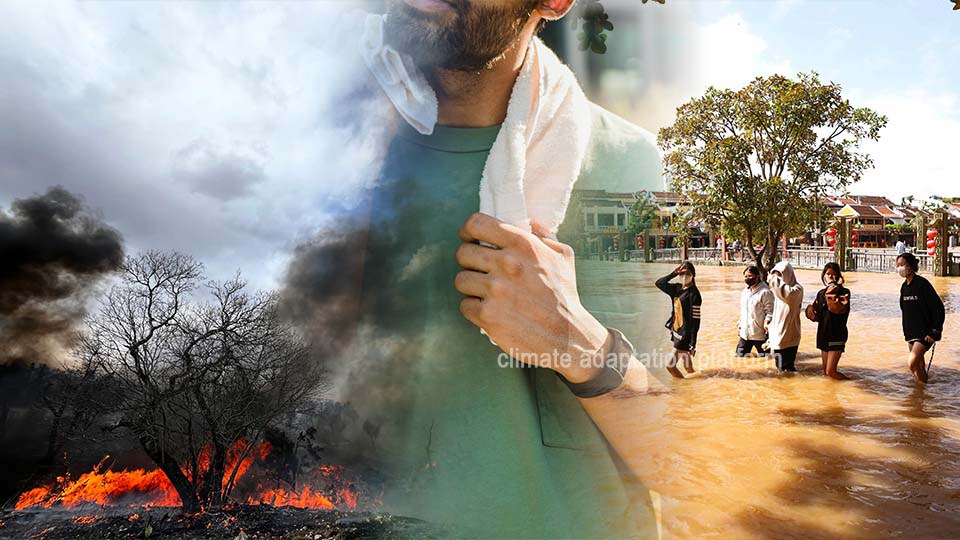
Climate change is intensifying extreme weather and climatic events, such as heatwaves, wildfires, floods, storms, and landslides, as well as irregular rainfall patterns.
These changes are also fostering environmental conditions that promote the growth and spread of diseases.
According to the World Health Organisation, climate can increase the spread and transmission of vector-borne diseases. Flooding can cause sewage to overflow and contaminate freshwater supplies, increasing the risk of illness. Extreme heat is also a health hazard.
Between 2000 and 2019, approximately 489,000 heat-related deaths occurred each year, with 45% of these in Asia and 36% in Europe. (Heat and health, 2024).
According to the American Psychological Association’s 2021 report, climate change has a significant impact on mental health. The report highlights that disasters driven by climate change can lead to various mental health issues, including trauma, shock, PTSD, anxiety, and depression.
These conditions can result in suicidal thoughts, risky behaviours, feelings of abandonment, as well as physical health problems like digestive issues and a weakened immune system.
Climate change significantly impacts human health, making it essential to implement proactive measures for climate adaptation. These measures aim to safeguard the population from health risks driven by climate change.
As climate change affects both physical and mental health, climate adaptation should also include proactive, explicit strategies to protect the population’s overall health, encompassing physical, mental, and social measures.
A study, “Cities need an integrated and holistic approach to health adaptation in climate planning”, published in the journal Nature Cities in January 2026, highilights climate change costly and significant impacts of climate change on human health, noting that it will cause an additional 250,000 deaths per year due to heat stress, malnutrition, and diseases.
Around the world, 3.6 billion people live in areas extremely vulnerable to the effects of climate change. Low-income countries or small developing states are 15 times more at risk of these climate-related hazards than other countries. Urban areas are at greater risk of heat extremes, affecting older residents and women more.
The study examined climate adaptation plans of 55 cities from 2016 to 2024 for comprehensiveness of health, health dimensions (physical, mental, and social), equity, and implementation readiness.
These 55 countries represented all regions – East Asia (24% of cities), Europe and Central Asia (20%), Sub-Saharan Africa (16%), Latin America and the Caribbean (16%), North America (15%), South Asia (5%) and Middle East and North Africa (4%).
Of the cities’ climate adaptation plans, 47% (nearly half) were from high-income countries, 33% from upper-middle-income countries, 18% from lower-middle-income countries, and 2% from low-income countries.
An analysis of the cities’ climate adaptation plans, based on their prioritisation of health, reveals the following finding: 20% of cities did not meaningfully incorporate health considerations into their plans. Additionally, 29% of cities recognised the health impacts of climate change but lacked specific health-related climate adaptation strategies.
Furthermore, 40% of cities included some form of health-related adaptation strategy, while 11% developed health-specific adaptation strategies. However, none of the plans met the study’s criteria for a prioritised, holistic integration of health.
On average, 80% of plans included health in some capacity, whereas only 50% included health-relevant adaptation strategies, and just 11% had health-specific adaptation strategies. Similarly, only 49% of plans included justice or equity.
In the study, three dimensions of health were examined: physical, mental, and social health. Among these, physical health is the most prominent in the cities’ health integration plans. Mental health was seldom addressed, except in Houston, which included a dedicated section on it in its plan. Houston recognised the lasting mental impact that previous disasters had on its residents, even years later.
Regarding social health, only 10 city plans incorporated elements of social capital, such as establishing resilience hubs, integrating social support into emergency response, creating elderly support networks, and developing neighbourhood emergency plans.
When it comes to equity and vulnerability, 49% of the plans sufficiently addressed justice, with 33% having a dedicated section and 65% using the words “justice” or “equity”. 75% of plans mentioned vulnerable populations, with varying levels of inclusion. This could be one or two sentences, up to a dedicated section on vulnerability and specific adaptation strategies. Furthermore, 40% of plans mentioned informal settlements and 29% mentioned climate displacement.
To gauge the implementation readiness of cities’ climate adaptation plans, the study based readiness on responsibility designation and the presence of monitoring indicators. They find that 62% of plans designate a city department, a lead agency, or a supporting agency responsible for each adaptation strategy. Also, 51% of plans included indicators, but these were sometimes distantly related to the adaptation strategy.
In conclusion, the study provides recommendations for cities to enhance climate adaptation planning in order to better safeguard public health. These recommendations include treating health as a fundamental objective of climate adaptation plans, complete with its own goals, actions, and budget.
Instead of merely referencing “health impacts” in background sections, cities should transition from a basic awareness of health risks to intentional health actions. This can be achieved by establishing specific programs that address issues related to heat, air quality, disease, mental health, and social vulnerability.
Find additional information about the study by exploring the links provided in the “Sources” section below.
Sources:
Sovacool, B. K. (2025). Cities need an integrated and holistic approach to health adaptation in climate planning. Nature Cities, 3(1), 38-47. https://doi.org/10.1038/s44284-025-00364-1
Environment, Climate Change and Health. (2026). World Health Organisation. Retrieved from https://www.who.int/teams/environment-climate-change-and-health/emergencies/disease-outbreaks#:
Heat and health. (2024, May 28). World Health Organisation. Retrieved from https://www.who.int/news-room/fact-sheets/detail/climate-change-heat-and-health
Clayton, S., Manning, C. M., Speiser, M., & Hill, A. N. (2021). Mental Health and Our Changing Climate: Impacts, Inequities, Responses. Washington, D.C.: American Psychological Association, and ecoAmerica. Retrieved from https://www.apa.org/news/press/releases/mental-health-climate-change.pdf
Leave a Reply